Why Clients Reject Your Freelance Proposals (And How to Fix Each Reason)
Getting rejected on proposals is painful — but avoidable. Here are the 7 most common reasons clients say no and exactly how to fix each one.

Proposal rejection is part of freelancing. But there's a massive difference between "this client wasn't a fit" and "I'm making the same fixable mistakes on every proposal."
Most rejections fall into 7 patterns — each with a specific fix.
Rejection #1: "Your price is too high"
What it usually means: They can't see enough value to justify the cost. The price itself isn't the problem — the perceived ROI is.
Fix: Lead with outcomes, not deliverables. Instead of "I'll build a 5-page website for $4,500," write "I'll build a website optimized for [their goal] — based on the clients I've worked with, this typically generates [result] within 90 days."
If price truly is the issue (budget mismatch), offer a scoped-down version: "If budget is a constraint, I could start with [smaller scope] for $X and expand from there."
Rejection #2: "We went with someone more experienced"
What it means: Your portfolio didn't demonstrate relevant expertise convincingly.
Fix: Never show everything — show specifically relevant work. If they're a SaaS company, show only your SaaS projects. Include one detailed case study per proposal: the problem, your approach, and the measurable result.
If you lack direct experience in their industry, bridge the gap: "While I haven't worked with [exact industry], I've worked with [adjacent industry] which shares [specific relevant challenge] — here's how I solved it."
Rejection #3: No response at all
What it means: Your email either didn't land (deliverability), didn't get opened (subject line), or didn't get read (first line).
Fix: Check your deliverability (custom domain, SPF/DKIM set up). Test subject lines. Make your first line something specific to them — not "I hope this email finds you well" or "My name is..." Start with: "I noticed [specific thing about them]..."
Then follow up 3 times before moving on — most responses come on follow-ups 2 or 3.
Rejection #4: "We decided to go in a different direction"
What it means: Unclear, but often means either: (a) they chose a different approach entirely, not a different freelancer, or (b) they chose someone whose positioning was clearer.
Fix: In your initial discovery call, ask: "What would success look like 6 months from now?" and "What other solutions are you considering?" Understanding the alternatives helps you position against them directly.
Rejection #5: "The timing isn't right"
What it means: They're genuinely interested but something changed (budget freeze, competing priority, internal politics).
Fix: This is not a rejection — it's a delay. Reply: "Completely understand — when would be a better time to revisit? I'll set a reminder." Most freelancers abandon these leads. The ones who follow up 60–90 days later often win.
Rejection #6: "We'll be handling this in-house"
What it means: They've decided to hire rather than contract, or someone internally convinced them they could DIY it.
Fix: Have a response ready: "Understood — if you find you need support while you're hiring or ramping up, I'm happy to provide interim coverage." Many "in-house" decisions reverse in 3 months when the hire doesn't work out.
Rejection #7: "You're not the right fit culturally"
What it means: Something in your communication — tone, responsiveness, flexibility — didn't match what they expected.
Fix: Tailor your communication style to the client's. A fast-moving startup founder wants bullets and speed. A corporate marketing team wants formality and process documentation. Read the room.
The Post-Rejection Ask
Always ask for feedback when rejected: "Thanks for letting me know — would you mind sharing what was missing from my proposal? I'm always looking to improve."
You won't always get a response, but when you do, it's invaluable. One pattern of feedback can improve your close rate by 20%.
[Build better proposals with iCloseLeads's AI →](https://icloseleads.com/features/ai-proposals)
Visual workflow
See the system before you build it
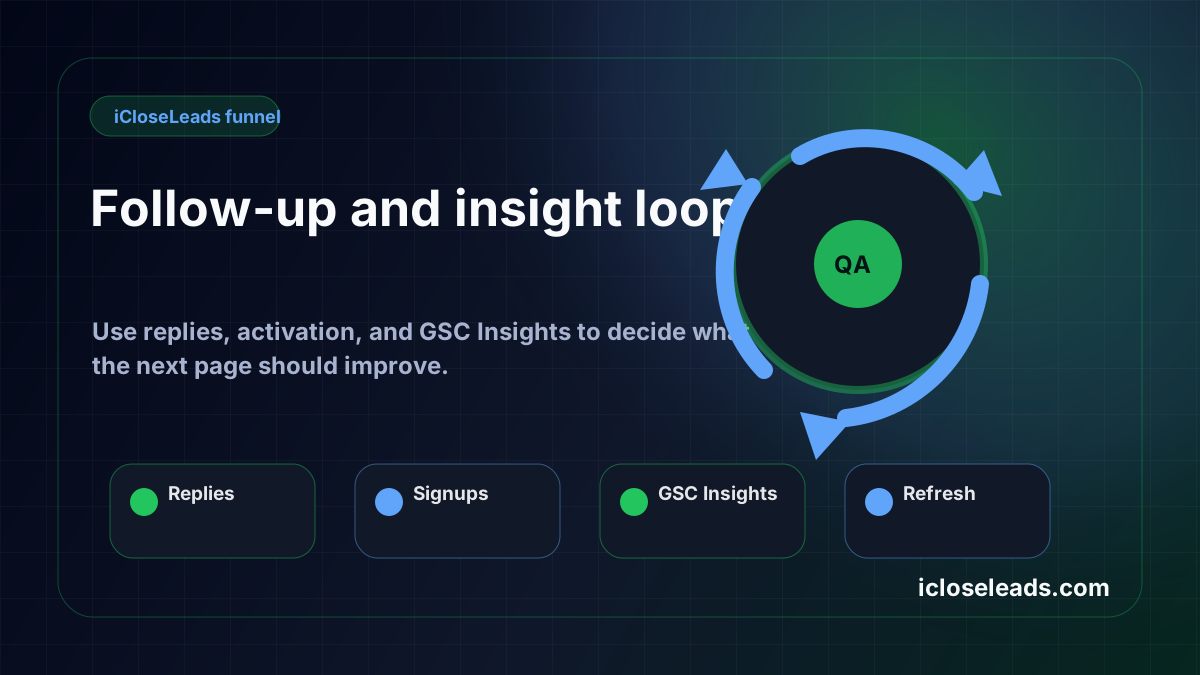
Turn the article into a lead workflow
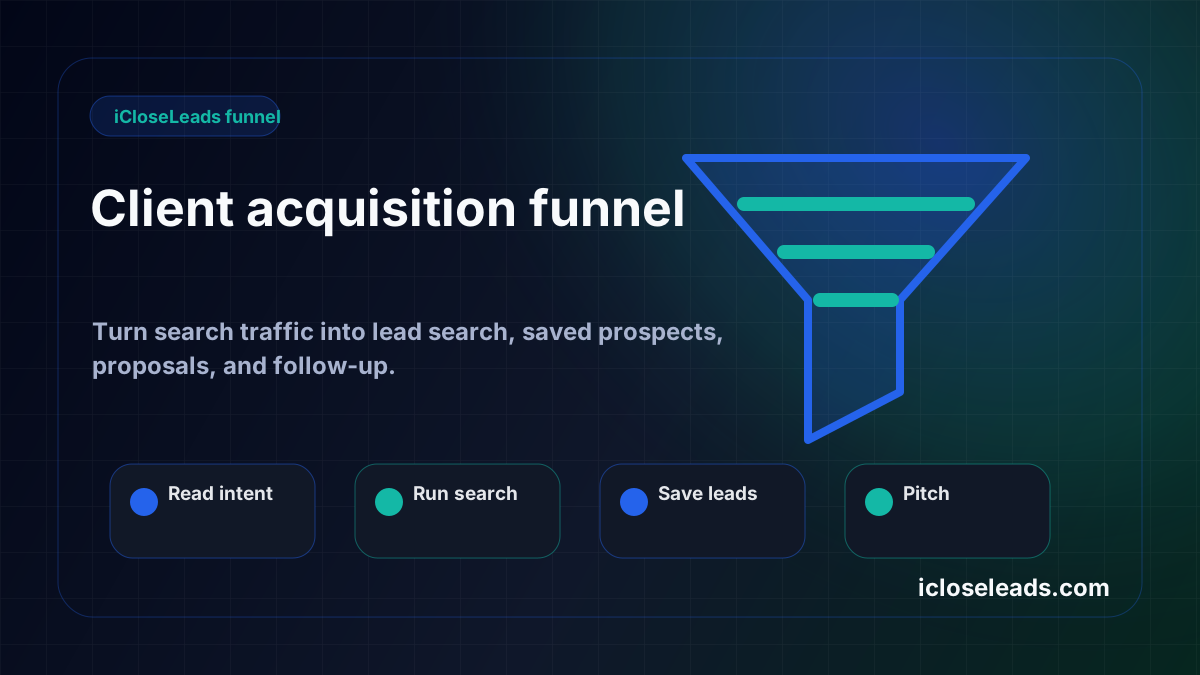
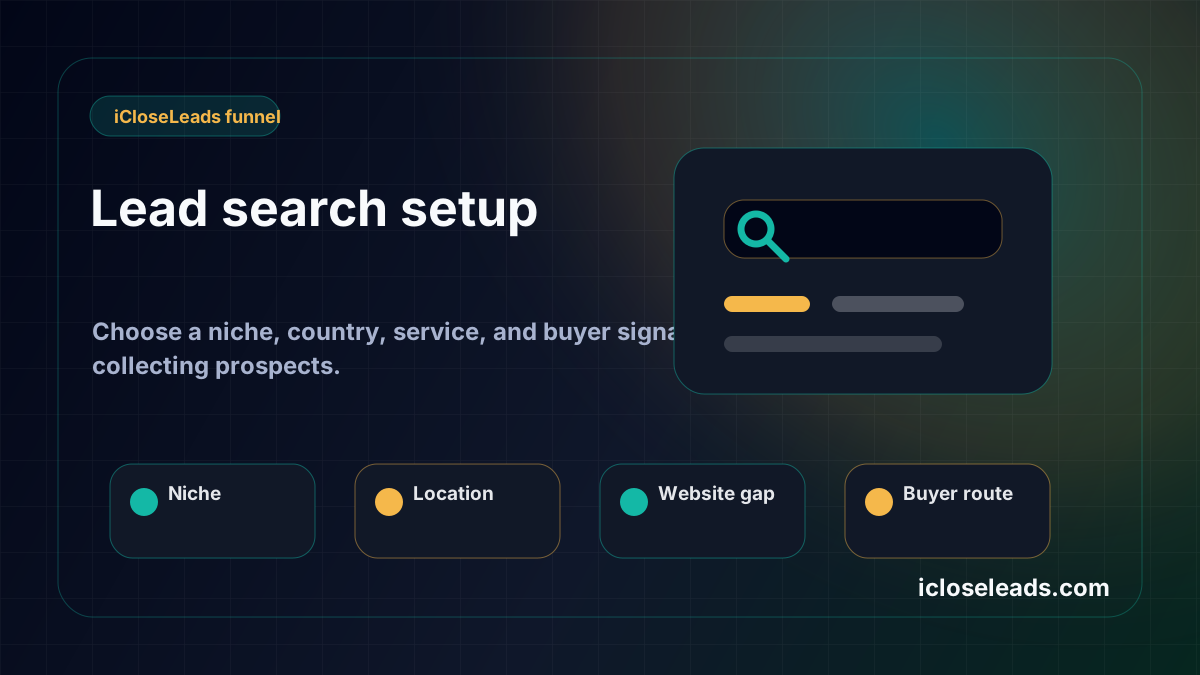
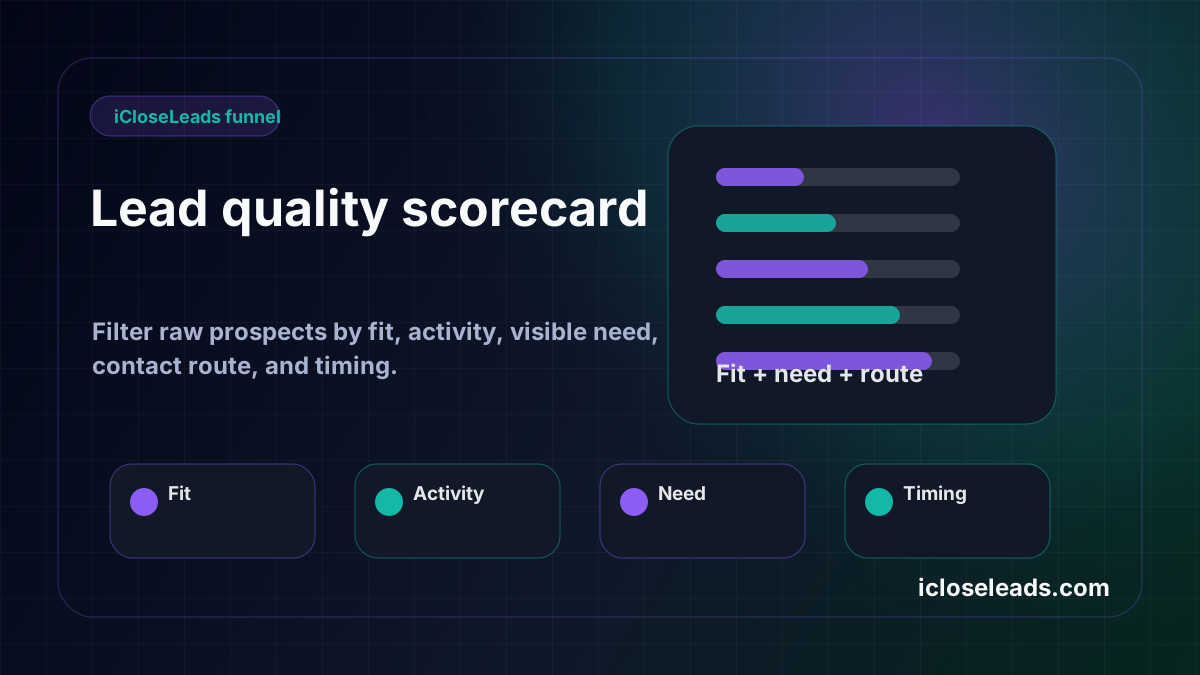
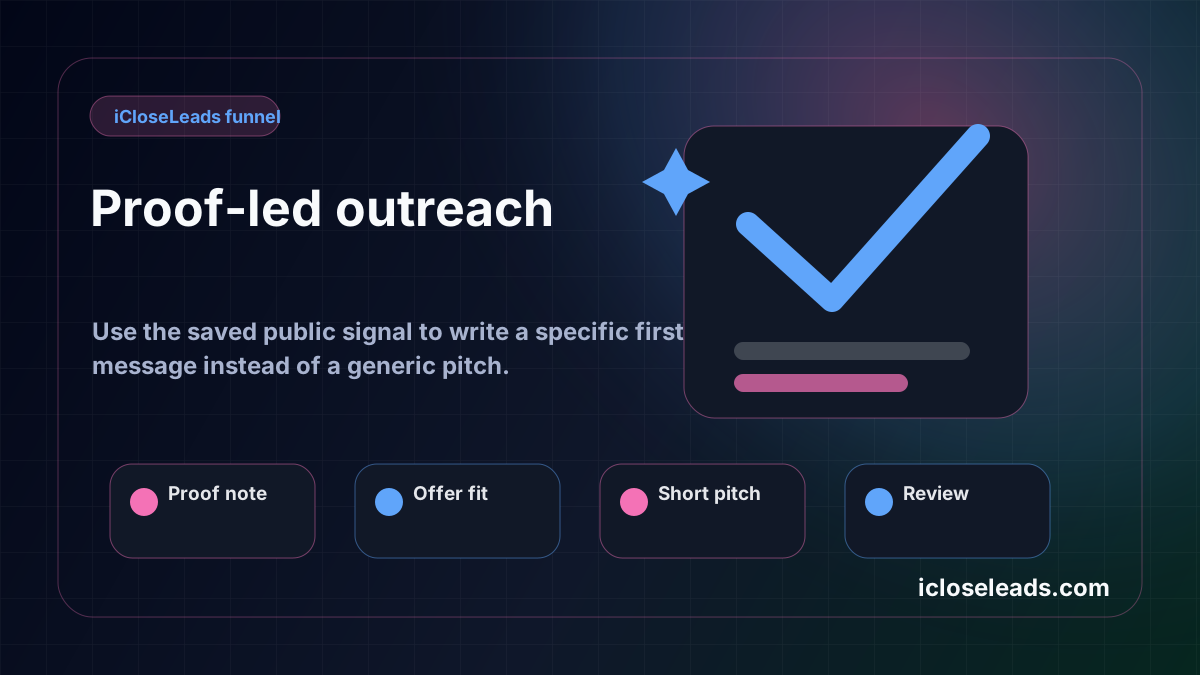
Use the idea from this guide to find prospects, save only the best opportunities, prepare a specific pitch, and keep the follow-up attached to the original lead. Free users can start with 600 lead searches, then use the first saved lead as the test.
iCloseLeads Team
Helping freelancers build sustainable client pipelines through direct outreach and AI-powered tools.


