Local Business Lead Generation for Web Designers: How to Find Paying Clients in Your City
Most web designers wait for referrals or post on Upwork. Here is a practical system for finding local businesses that need a website or redesign — and turning them into clients.

Most web designers have a visibility problem, not a skills problem.
They know how to build great websites. They just do not have a reliable way to find businesses that are ready to pay for one. Referrals dry up. Job boards get competitive. And cold outreach to random emails rarely lands.
Local business lead generation solves this differently. Instead of waiting for someone to post a job, you go find businesses that already have the problem — they just have not hired anyone to fix it yet.
Why Local Businesses Are Still One of the Best Markets for Web Designers
Local businesses — restaurants, clinics, contractors, salons, law firms, gyms, real estate agents — are often sitting on revenue they cannot capture online. They get walk-in customers but lose the ones who search online and cannot find a decent site.
That gap is your opportunity.
Unlike remote job boards where dozens of designers compete for the same post, local markets are less saturated. A plumber in your city is not comparing fifty proposals. They probably have not even thought seriously about hiring a designer yet. Your job is to show up with a specific observation and a clear offer before anyone else does.
The other reason local markets work well is trust. Proximity helps. Mentioning that you work with businesses in their area, or showing a local case study, shifts the conversation from "who is this stranger" to "this person knows my market."
What to Look for When Prospecting Local Businesses
Not every local business is worth pursuing. Good leads share a few common traits.
No website or a very thin one. A business with an active Google Business Profile, real reviews, and a phone number — but no working website — is a strong candidate. They are clearly operating. They just have not built their online presence.
Outdated design. A site that looks like it was built in 2012, loads slowly on mobile, or has broken contact forms signals a business that has not invested in its web presence recently. If they are still in business and earning, the problem is not budget — it is that no one has asked them to fix it.
No booking or contact flow. A business that does most of its work through phone calls or walk-ins may be losing customers who prefer to book online. A simple form, booking widget, or quote page can solve that directly.
Competitors outranking them. If a business's competitors have stronger web pages and show up higher on Google, that is a concrete argument for why they need a better site. You can make this point without any technical jargon.
Recent activity. New reviews, recent posts, or a recently claimed business profile suggest the owner is actively managing their presence. That is a better signal than a dormant business that has not posted in two years.
How to Find These Businesses Without Cold Calling Every Directory
Manually browsing Google Maps or Yelp is slow. A better approach is to use a tool that aggregates local business data and flags the ones with visible gaps.
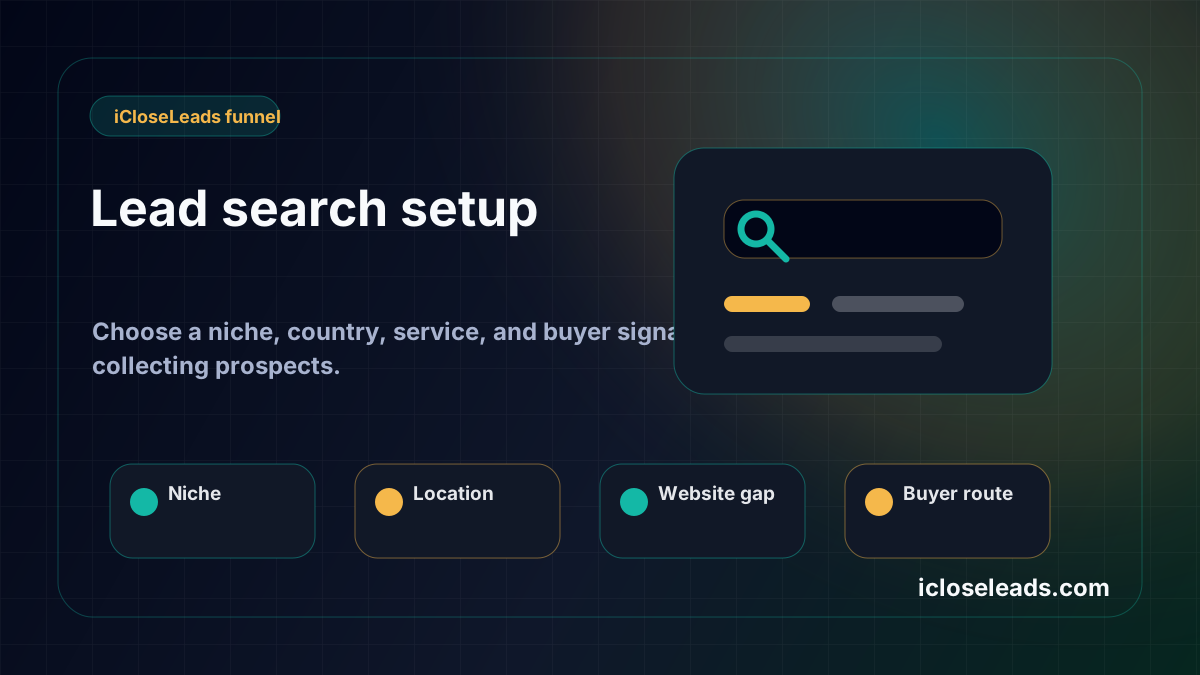
iCloseLeads pulls from local business databases and surfaces leads based on your niche — web design, SEO, landing pages, whatever you offer. You can filter by city, category, and lead quality, so instead of sifting through hundreds of listings manually, you start with a prioritized list of businesses that fit your criteria.
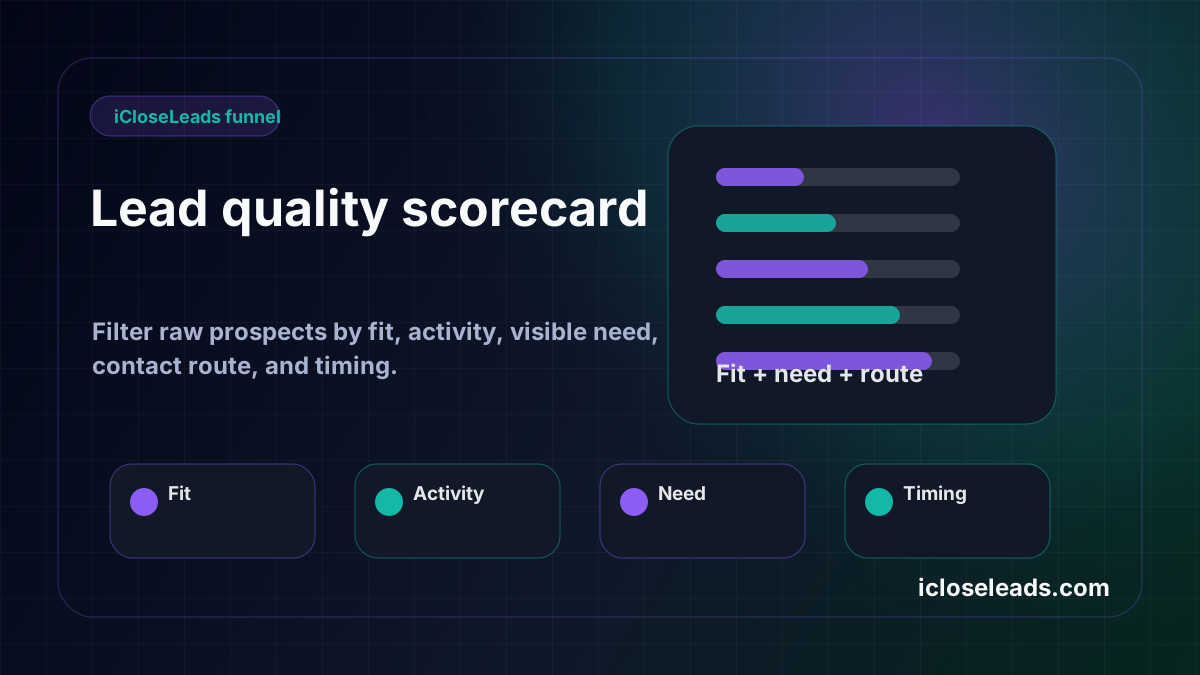
Each lead comes with available contact information, a relevance score, and enough context to write a specific opening line instead of a generic pitch.
Writing Outreach That Local Business Owners Actually Read
The message matters as much as the lead. Local business owners are not looking for web designers in the abstract — they are looking for someone who noticed something specific about their situation.
Compare these two openers:
Generic: "Hi, I am a web designer and I help small businesses improve their online presence."
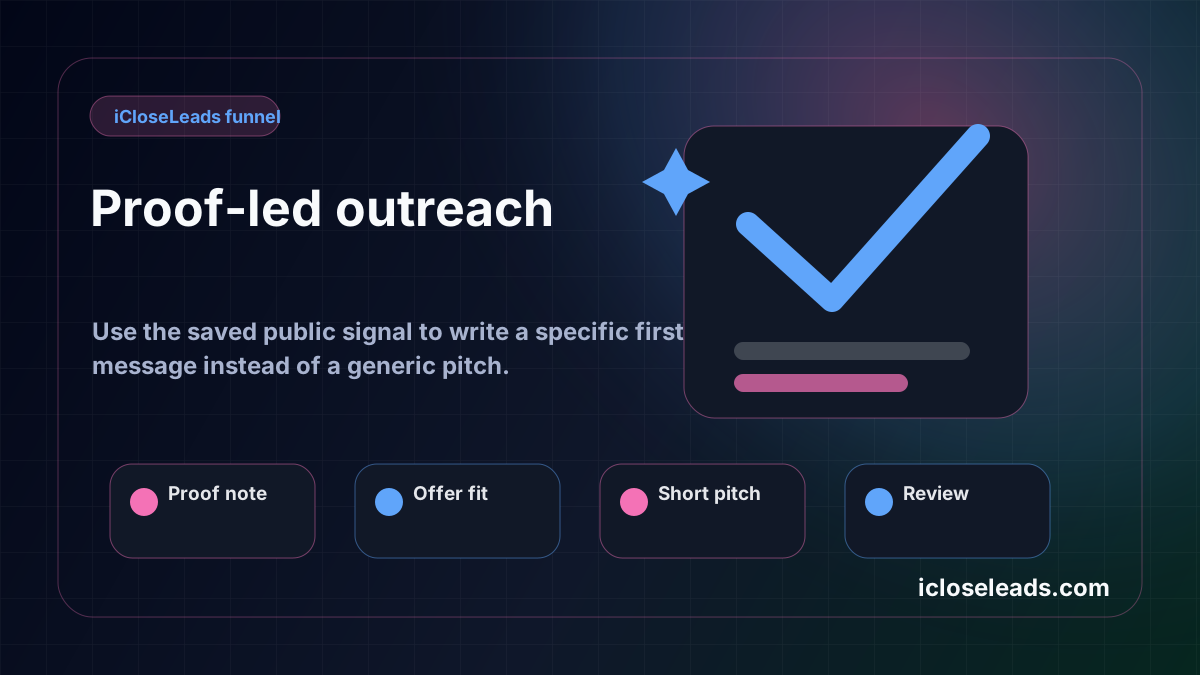
Specific: "I came across your landscaping business on Google — you have great reviews but no easy way for new customers to request a quote online. I built a similar page for a local contractor last month that started generating three to five new inquiries per week."
The second one does not require a harder sell. It shows you looked, it identifies the gap, and it offers a result the owner can picture.
Keep the message short. State what you noticed, why it matters to their business, and what you are offering to do about it. A one-paragraph email with a clear next step outperforms a detailed capability overview every time.
What to Offer as a Starting Project
A full website redesign is a big commitment for a local business owner who does not know you. A better entry point is a smaller scoped offer.
A landing page for one specific service. A contact form and booking flow overhaul. A mobile speed fix with a redesigned homepage. A free audit with two or three specific observations.
Starting small gets you a client, a case study, and a relationship. From there, most designers find it easy to expand the engagement once the owner sees results.
Turning This Into a Weekly System
The freelancers who consistently land local clients are not doing anything exotic. They are running the same research and outreach loop every week.
Pull 20 to 30 local business leads from a source like iCloseLeads. Check each one for a visible gap — no site, slow site, no contact flow, weak mobile experience. Write five to ten personalized messages based on what you actually observed. Follow up once after a week if no reply.
That is the whole system. Done consistently, it produces a pipeline without depending on referrals, platform algorithms, or bidding wars.
Local businesses need web designers. They just need to be found and shown, specifically, what they are missing. That is the work. The rest is follow-through.
Start finding local business leads now — free during Early Access at iCloseLeads.
Visual workflow
See the system before you build it
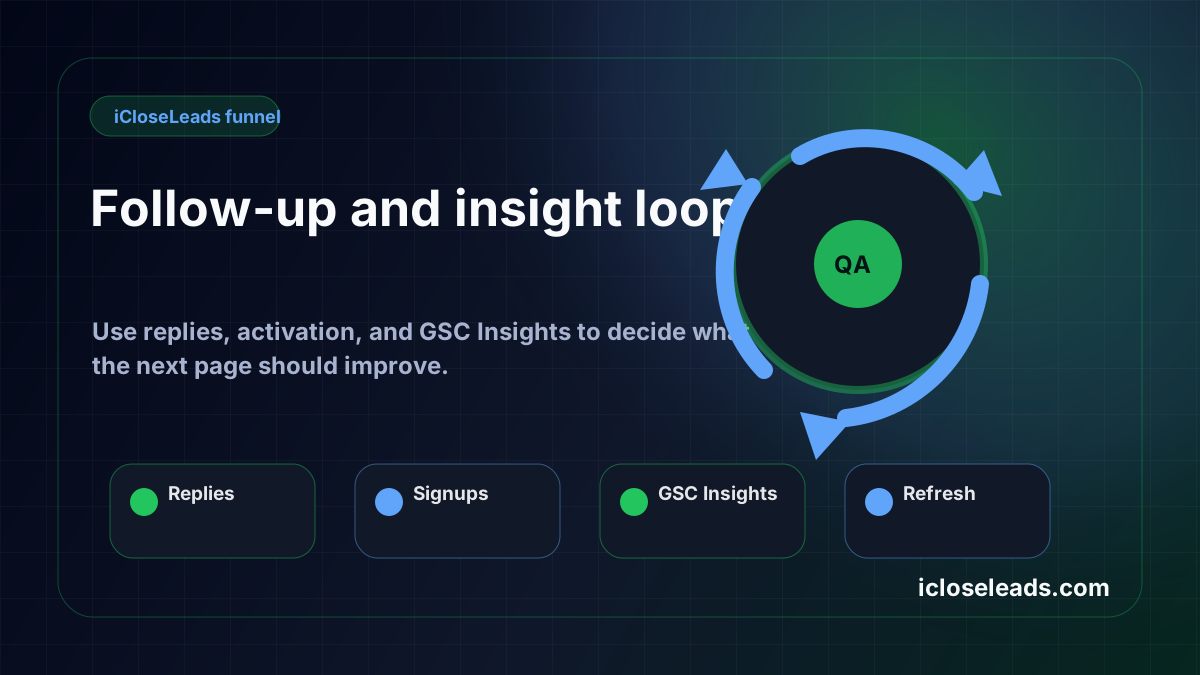
Turn the article into a lead workflow
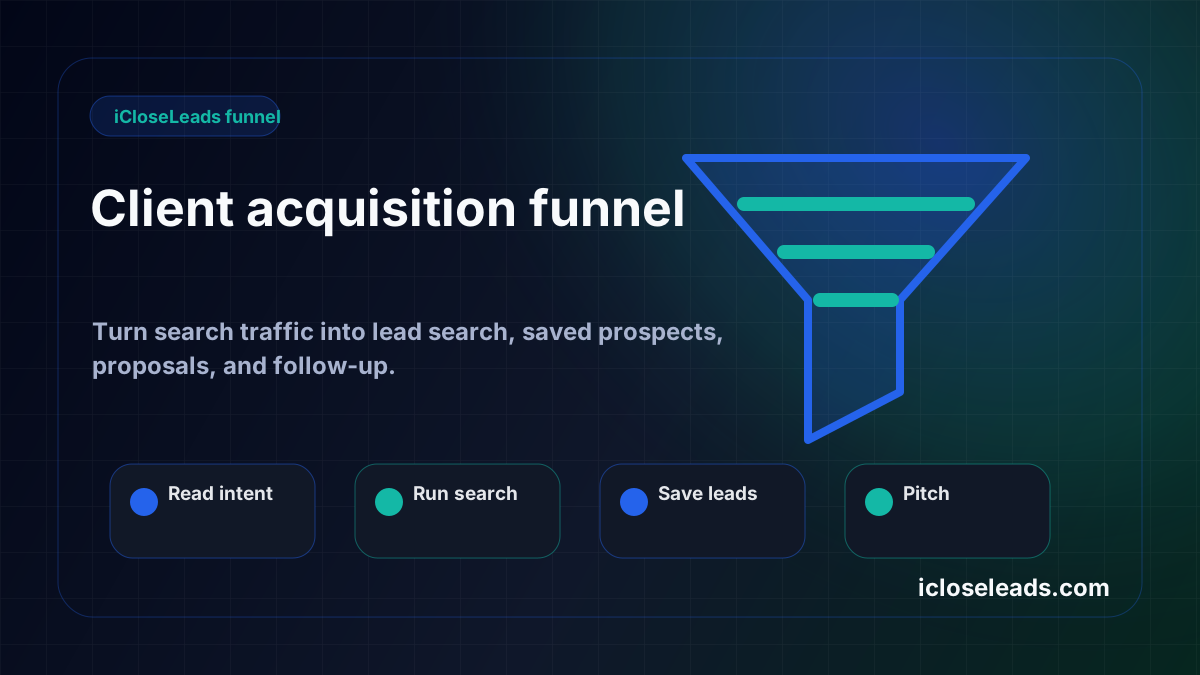
Use the idea from this guide to find prospects, save only the best opportunities, prepare a specific pitch, and keep the follow-up attached to the original lead. Free users can start with 600 lead searches, then use the first saved lead as the test.
iCloseLeads Team
We study what works in freelance client acquisition so you don't have to. Subscribe for weekly insights.


