AI Lead Generation for Freelancers in 2026: How to Find Clients Before Everyone Else
AI search, live lead signals, local business gaps, and better proposal workflows are changing freelance client acquisition. Here is a practical 2026 system for finding better clients without sounding automated.

Freelancers do not need more random leads in 2026. They need better timing.
The market has changed. Clients are using AI to research vendors, job posts are getting copied across multiple boards, inboxes are full of generic messages, and everyone with a prompt template thinks they are doing "AI lead generation." That creates noise, but it also creates an advantage for freelancers who use AI in a more disciplined way.
The winning approach is not to blast more people. It is to find stronger buying signals, understand the context faster, and send outreach that proves you noticed something real.
This guide gives you a practical AI lead generation system for freelancers who want high-quality clients without relying only on marketplaces, cold calling, or manual spreadsheet work.
What AI Lead Generation Means for Freelancers
AI lead generation is the process of using automation, live data, and AI-assisted research to find prospects who are likely to need your service soon.
For a freelancer, that usually means one of four lead types:
- A company has posted a remote role or contract opportunity that matches your niche.
- A local business has a visible business problem, like no website, an outdated website, or weak conversion flow.
- A founder, marketer, or operator is asking for help in a public community.
- A company shows growth intent through hiring, new offers, content updates, new locations, or a visible marketing push.
AI is useful because it helps you sort and interpret these signals quickly. It can summarize job posts, score relevance, draft first outreach, identify missing details, and turn messy notes into a clear proposal.
But AI should not replace judgment. If your message sounds like it was generated for a thousand people, it will be ignored. The job of AI is to speed up research and drafting so you can spend more energy on strategy, personalization, and follow-up.
Why 2026 Is Different
Freelance client acquisition used to be split into two simple buckets: apply to jobs or send cold emails. Now the best opportunities appear in more places and disappear faster.
Buyers may mention a need in a job post, a community thread, a website update, a local business profile, or a hiring page before they ever publish a formal "freelancer wanted" request. That means freelancers who only check one marketplace are late.
At the same time, clients are more skeptical. They have seen enough generic AI outreach to recognize it immediately. A message that says "I hope this email finds you well" and then praises their company in vague terms is not enough.
The new advantage is signal quality. If you can find a specific reason a prospect might need help and explain it clearly, your outreach feels useful instead of intrusive.
The Five Buying Signals Worth Tracking
Most freelancers waste time because they treat every company as a potential lead. A better system starts by looking for signals that indicate timing, pain, or money.
1. Hiring and Role Signals
If a company is hiring for a role related to your service, that is a strong signal. A startup hiring a growth marketer may also need landing pages, ad creative, email sequences, SEO pages, or analytics cleanup. A company hiring a designer may need overflow help, a website refresh, or product marketing support.
Do not only pitch the exact role. Look at the underlying business need. If the job post says they need someone to improve conversion, your pitch can be a focused conversion audit or a project-based landing page sprint.
2. Local Visibility Gaps
Local businesses are still one of the most practical opportunities for web designers, SEO consultants, copywriters, and automation specialists. A business with reviews, phone activity, and no strong website is not a "small" lead. It may be a business already making money but losing online demand.
Useful local signals include:
- No website attached to the business profile.
- A slow or outdated site.
- Missing service pages for high-value work.
- Weak mobile layout.
- No booking form, quote form, or clear call button.
- Competitors ranking with better pages and stronger reviews.
These signals let you pitch a business outcome, not a design preference.
3. Tool and Workflow Pain
Companies often reveal operational pain through the tools they mention. If a job post asks for help with HubSpot, Shopify, WordPress, Webflow, Google Analytics, Meta ads, Zapier, Notion, Airtable, or AI automations, there may be a project behind the post.
For example, "we need someone to clean up our CRM" can become a sales pipeline cleanup offer. "We need a Webflow developer" can become a launch support package. "We need Meta ads help" can become a creative testing and landing page bundle.
4. Content and Conversion Gaps
Many companies have traffic but weak conversion. Their website may have generic copy, unclear offers, missing proof, or no strong next step. AI can help you audit those pages faster, but the insight still needs to be specific.
Instead of saying "your website could be improved," say something closer to:
"Your service page explains what you do, but the quote request is buried below three sections. I would test a shorter hero, a clearer proof block, and a sticky mobile call button before rebuilding the full site."
That is a useful diagnosis. It proves you looked.
5. Recent Activity Signals
Fresh activity often means a company is open to change. Watch for new job posts, new locations, new service pages, recent funding, seasonal campaigns, active social posts, or recent reviews mentioning wait times, confusing booking, or poor communication.
Recent activity gives you a reason to reach out now. It also makes your message easier to frame: "I saw you are expanding into Austin" is better than "I wanted to introduce myself."
A Practical AI Lead Generation Workflow
You do not need a complex stack. You need a repeatable weekly routine.
Step 1: Choose One Offer
Before searching for leads, define the outcome you want to sell. Not your skill, your outcome.
Weak: "I build websites."
Better: "I help local service businesses turn more mobile visitors into quote requests."
Weak: "I do SEO."
Better: "I help consultants and agencies build service pages that rank for high-intent local searches."
Weak: "I run Meta ads."
Better: "I help service businesses test Meta ad creatives with landing pages that turn interest into booked calls."
Your lead search becomes easier when your offer is specific. AI can help write the pitch, but it cannot rescue unclear positioning.
Step 2: Search by Signal, Not Just Keyword
Most freelancers search only by service keyword: WordPress, copywriter, SEO, designer, developer. That works, but it misses adjacent opportunities.
Search for the business problem too:
- "conversion rate"
- "landing page"
- "website redesign"
- "bookings"
- "lead generation"
- "technical SEO"
- "email sequence"
- "Meta ads"
- "marketing automation"
- "CRM cleanup"
- "local SEO"
Then combine it with industries you understand. A WordPress specialist might search for healthcare clinics, contractors, consultants, SaaS startups, or ecommerce brands depending on the offer.
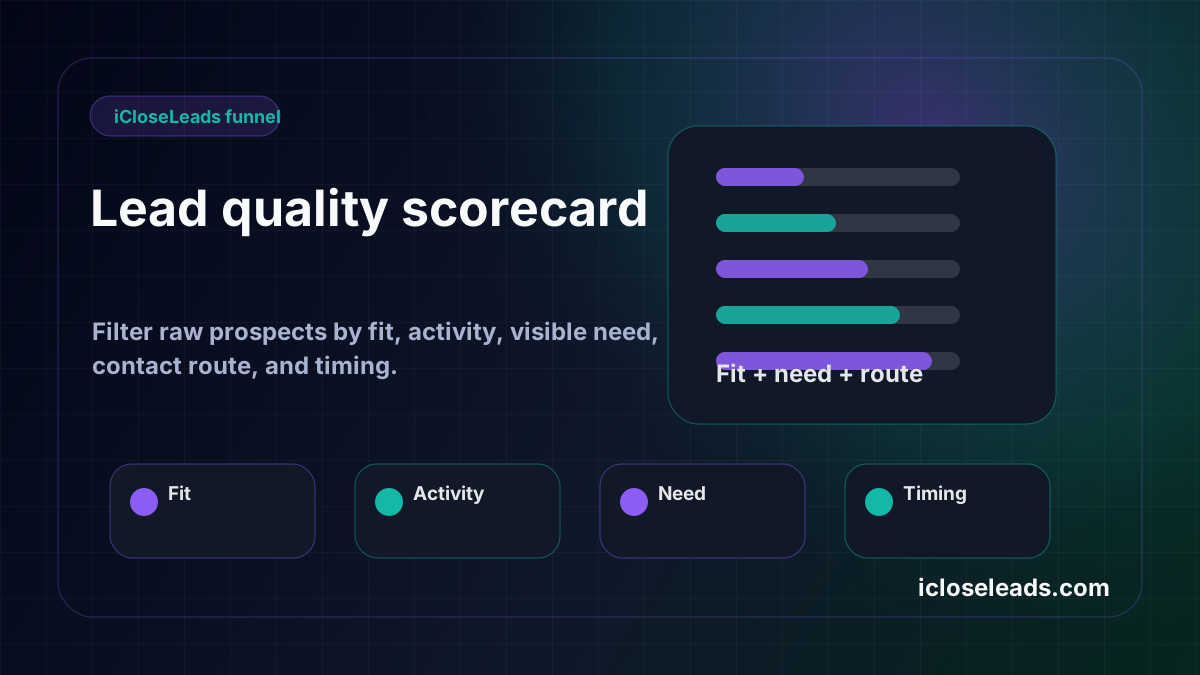
Step 3: Score Leads Before You Pitch
Use a simple five-point score:
- Fit: Does the business match your niche and offer?
- Timing: Is there a recent signal that suggests urgency?
- Pain: Can you identify a specific problem?
- Contactability: Is there an email, contact form, or profile link?
- Value: Is the potential project worth your time?
Only pitch leads that score high. This is where tools like iCloseLeads help because you can discover, save, and act on leads from one dashboard instead of jumping between tabs and spreadsheets.
Step 4: Use AI for Research Compression
AI is strongest when you feed it real context.
Give it the job post, business page, niche, your offer, and one specific issue you noticed. Ask it to summarize:
- What the buyer likely needs.
- What outcome matters most.
- What risk or objection they may have.
- What first offer would feel low-friction.
- What evidence you should mention from your own portfolio.
This turns a messy lead into a focused outreach angle in minutes.
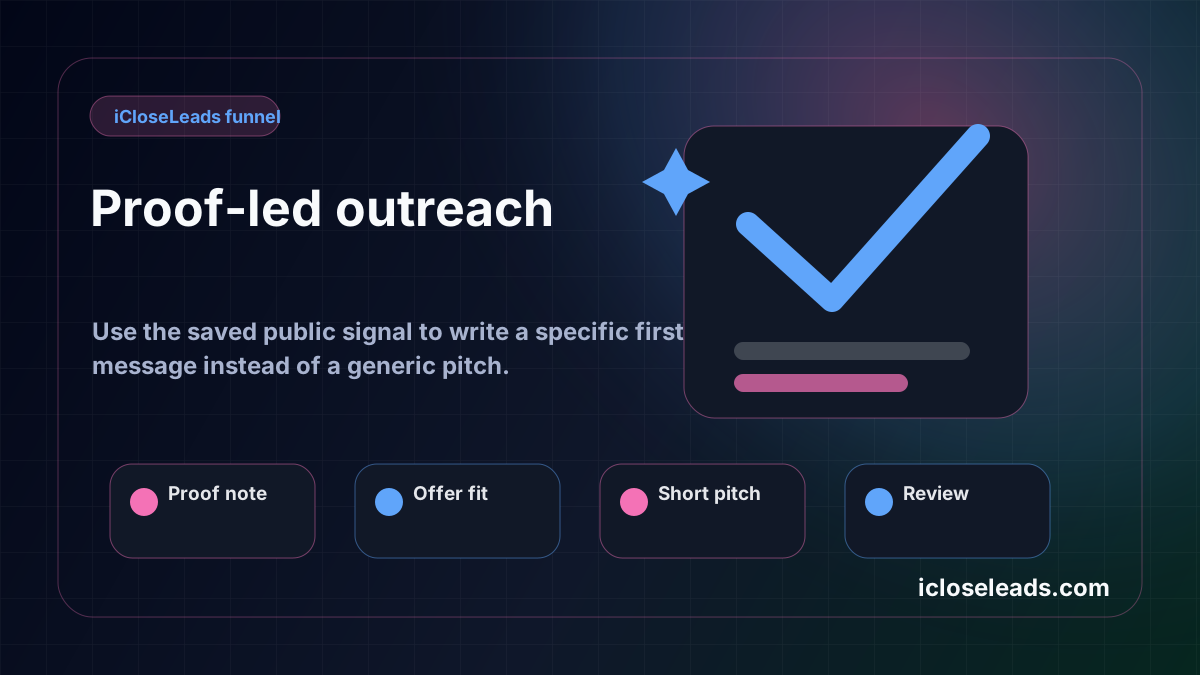
Step 5: Write a Human First Message
Your first message should be short, specific, and easy to reply to.
Use this structure:
- Mention the specific signal.
- Connect it to a business problem.
- Suggest a small useful next step.
- Ask a low-pressure question.
Example:
Hi Sarah,
I saw you are hiring for growth support and noticed the demo page still sends visitors through a fairly broad contact form.
I help B2B teams turn warm traffic into booked calls by tightening the landing page, proof blocks, and follow-up flow. The fastest win may be a dedicated demo page for the specific campaign you are running instead of sending everyone to the same form.
Would it be useful if I sent a quick three-point teardown?
That message does not need hype. It is specific, clear, and easy to say yes to.
The Best AI-Assisted Offers for 2026
Some services fit AI lead generation better than others because the buying signals are easier to spot.
Web Design and Conversion
Look for outdated websites, weak mobile pages, poor calls to action, slow pages, missing service pages, or paid ads sending to generic homepages. Pitch a focused audit or landing page sprint.
SEO and Local Visibility
Look for businesses with strong reviews but weak service pages, missing location pages, poor title tags, thin content, or competitors outranking them for obvious local terms. Pitch a local SEO page plan or technical cleanup.
Copywriting and Email
Look for companies hiring marketers, launching offers, posting new content, or running campaigns with weak messaging. Pitch a homepage rewrite, email welcome sequence, or sales page refresh.
Meta Ads and Paid Acquisition
Look for businesses with strong offers but weak landing pages, no clear lead magnet, or inconsistent creative. Pitch a test plan that combines ad angles, landing page changes, and follow-up email.
Automation and CRM
Look for teams hiring operations help, mentioning messy workflows, or using tools that clearly need integration. Pitch a cleanup package with one measurable outcome, like faster lead response or fewer manual steps.
Common Mistakes to Avoid
The biggest mistake is using AI to create more average outreach. Volume is tempting because it feels productive, but it also burns your reputation fast.
Avoid these traps:
- Sending the same AI-written message to every lead.
- Pitching before you understand the signal.
- Overloading the email with your bio.
- Asking for a call before showing any useful insight.
- Chasing low-fit leads because the list is large.
- Forgetting follow-up after the first message.
- Using fake urgency or exaggerated claims.
Good outreach feels like a helpful observation from a specialist. Bad outreach feels like a mail merge with a first name.
A 30-Day AI Lead Generation Plan
If you are starting from zero, use this simple plan.
Week 1: Pick Your Lane
Choose one niche, one offer, and one type of lead signal. For example: "I help home service businesses improve quote requests from mobile website visitors." Build a short portfolio proof block, even if it is based on one strong project.
Week 2: Build Your First Lead List
Find 50 leads that match your signal. Save the business name, website or post link, contact path, one specific issue, and one likely business outcome. Do not pitch yet. Just learn what good leads look like.
Week 3: Send 15 Strong Messages
Choose the best 15 leads and write short, specific outreach. Use AI to help draft, but edit every message until it sounds like you. Track sent date, follow-up date, and response.
Week 4: Follow Up and Improve
Follow up twice. Look at replies and non-replies. If nobody responds, your offer may be too broad or your first line may not be specific enough. If people reply but do not book calls, your next step may feel too big. Tighten the ask.
After 30 days, you should know which signals produce conversations. That is the point. A good lead system improves every week.
How iCloseLeads Fits In
The hardest part of freelance lead generation is not writing one good email. It is staying consistent while you are already doing client work.
iCloseLeads is built for that full workflow: find live opportunities, discover local business leads, save prospects, generate AI proposals, prepare outreach, and track your pipeline. It gives freelancers a repeatable process instead of a scattered set of tabs.
You still bring the positioning, judgment, portfolio, and human follow-up. The platform helps you move faster through the parts that usually drain your time.
Final Takeaway
AI lead generation in 2026 is not about replacing sales skill. It is about finding the right moment faster.
The freelancers who win will not be the ones sending the most messages. They will be the ones who identify real buying signals, understand the business context, and reach out with useful ideas before everyone else.
Start with one offer. Track one signal. Send 15 good messages. Follow up. Improve. Repeat.
That simple loop, supported by AI and live lead discovery, is enough to build a pipeline that does not depend on luck.
Visual workflow
See the system before you build it
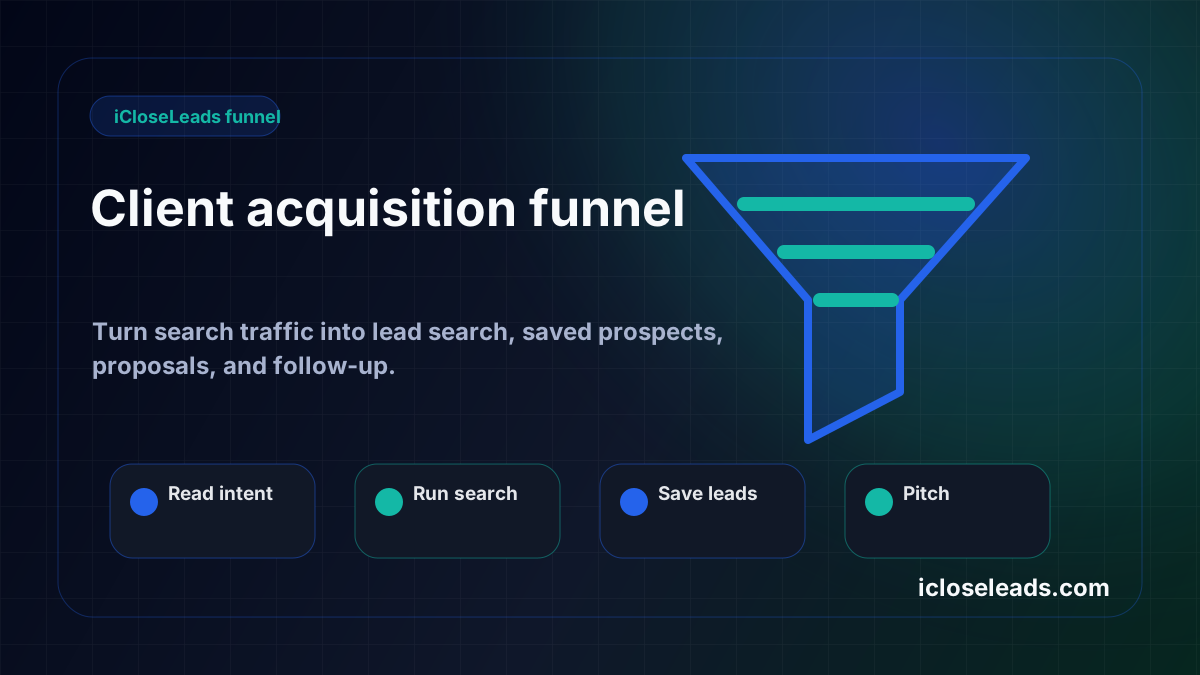
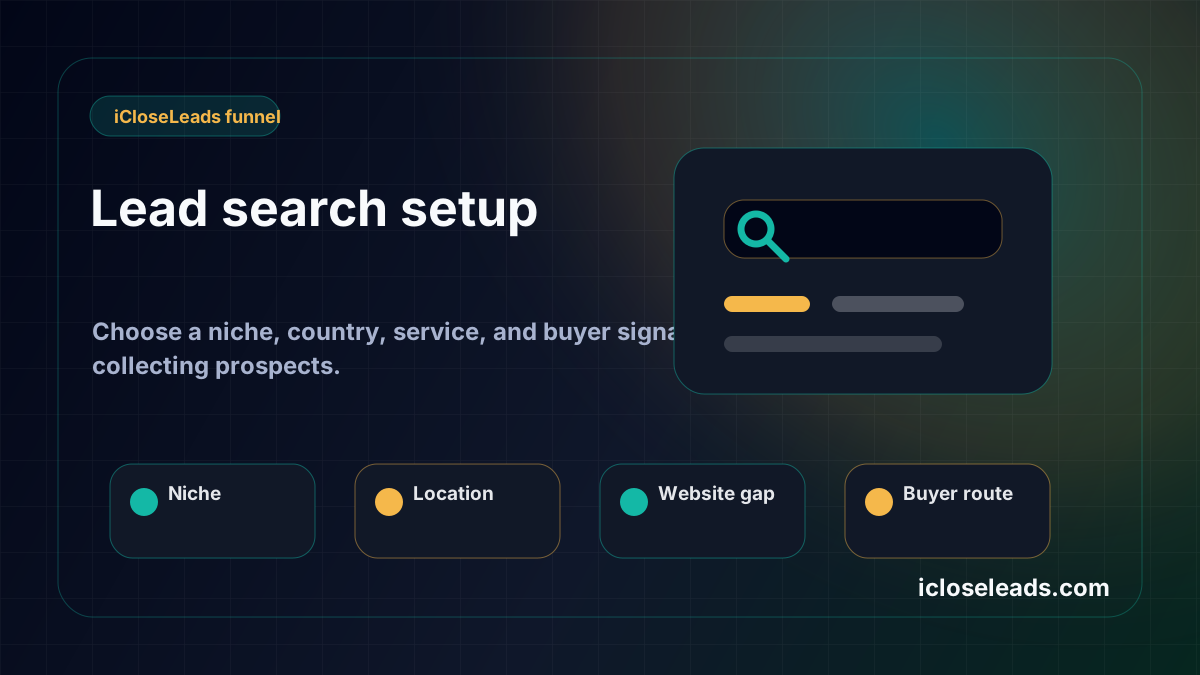
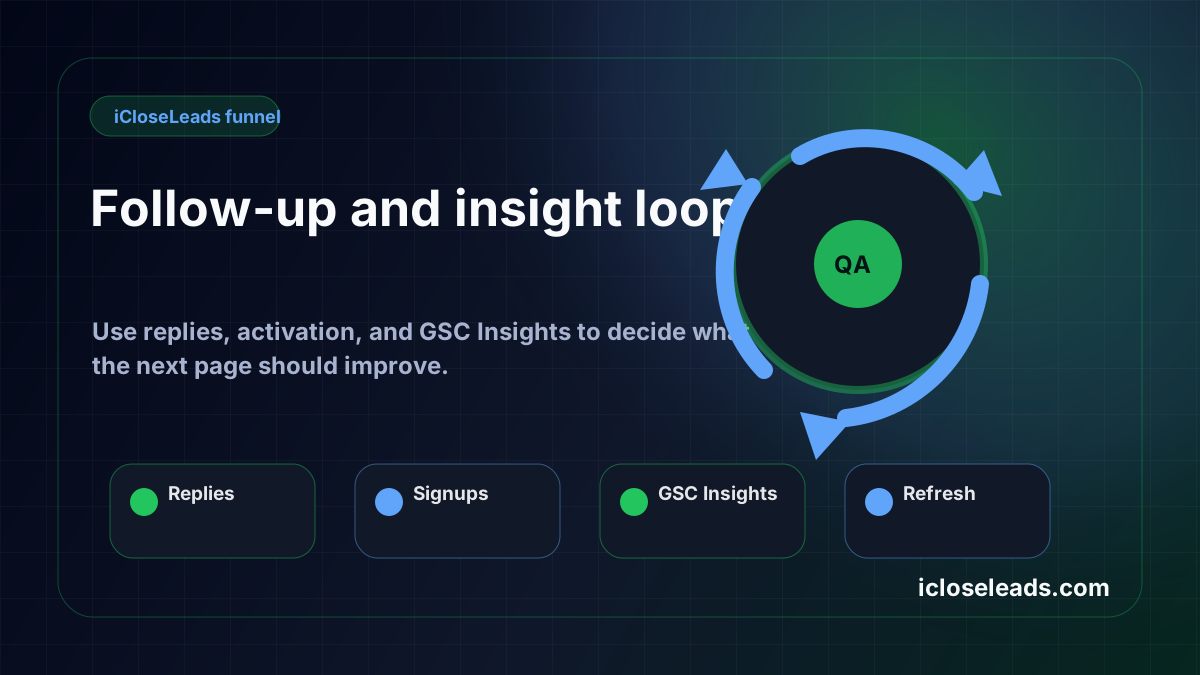
Turn the article into a lead workflow
Use the idea from this guide to find prospects, save only the best opportunities, prepare a specific pitch, and keep the follow-up attached to the original lead. Free users can start with 600 lead searches, then use the first saved lead as the test.
iCloseLeads Team
We study what works in freelance client acquisition so you don't have to. Subscribe for weekly insights.


