How to Write Winning Freelance Proposals in 2025 (With AI)
A great proposal can 10x your win rate. Learn the exact structure, psychology, and AI tools that top freelancers use to win more projects at higher rates.

Most freelance proposals fail before the client reads the second paragraph. They start with the freelancer's resume, list services in bullet points, and end with a vague price range.
The proposals that win do the opposite: they lead with the client's problem, show specific evidence of solving it, and present a clear path forward.
Here's how to write proposals that win — and how to do it fast with AI.
The Psychology of a Winning Proposal
Before the structure, understand what your client is thinking when they read your proposal:
- "Does this person understand my problem?" — This is the first filter. Fail here and nothing else matters.
- "Have they done this before?" — Social proof and relevant examples are essential.
- "Can I trust them?" — Credibility signals: specific results, professional presentation, clear process.
- "Is the price worth it?" — They're not asking if it's cheap. They're asking if the ROI justifies the cost.
- "What happens next?" — A clear call to action removes friction.
The 6-Part Winning Proposal Structure
Part 1: The Mirror
Start by demonstrating you understand their situation better than they do. Reference specific details from their job post or website.
> "Based on your post, it sounds like you're launching a SaaS product in Q3 and need a landing page that clearly communicates your value proposition to non-technical buyers. You mentioned the current design isn't converting, which tells me the issue is likely messaging clarity more than visual design."
This is more impressive than any credential you can list.
Part 2: The Solution
Describe your specific approach — not generic services. "I'll build your website" is boring. "I'll start with a messaging workshop to nail the value proposition, then build a landing page with A/B test infrastructure so you can optimize from day one" is compelling.
Part 3: Relevant Proof
One specific case study is worth more than 10 client names. Format: "[Client type] → [Problem] → [What I did] → [Measurable result]"
Example: "I helped a B2B fintech startup in a similar position. Their old landing page converted at 2.1%. After a complete rewrite and new structure, it hit 6.8% within 30 days."
Part 4: The Investment
Price with confidence. Don't give a range ("$2,000–5,000") — it signals you don't know the scope. Give a specific number with clear deliverables.
Include a breakdown that justifies the price:
- Discovery + strategy: [X hours]
- Design + development: [Y hours]
- Testing + revisions: [Z hours]
- Total: $[Amount]
Part 5: Your Process
Outline what working with you looks like. A clear process removes uncertainty and makes the client feel safe:
> Week 1: Discovery call + brief
> Week 2: Initial concepts + feedback
> Week 3: Build + revisions
> Week 4: Testing + launch
Part 6: Clear Next Step
Don't say "Let me know if you're interested." Say: "If this looks like a fit, the quickest next step is a 30-minute call on Tuesday or Wednesday — here's my calendar link."
Writing Proposals 10x Faster With AI
Manually writing a strong proposal for every lead takes 45–90 minutes. Multiply that by 20 leads a week and you're spending 15–30 hours just on proposals that may not convert.
[iCloseLeads's AI Proposal Writer](https://icloseleads.com/features/ai-proposals) analyzes the job post or lead details and generates a fully personalized proposal following this exact structure — in seconds.
You get a ready-to-send proposal that you can review, tweak, and send. What used to take an hour takes 5 minutes.
The AI pulls in:
- The client's stated problem (from job post)
- Relevant industry context
- A compelling solution narrative
- A suggested pricing approach
Proposal Mistakes to Avoid
❌ Starting with "I" — start with "You" or with their company name
❌ Listing your skills — list your results
❌ Vague timelines — give specific milestones and dates
❌ Long proposals — under 500 words unless the project is complex
❌ No call to action — every proposal ends with a specific next step
❌ Attachments — PDFs add friction. Keep it in the email body or a simple doc link.
The Follow-Up
50% of proposals that win require at least one follow-up. Send a follow-up 2–3 days after your initial proposal:
> "Hi [Name], just wanted to make sure my proposal didn't get buried. Happy to adjust the scope or approach if anything doesn't fit — I'm flexible. Let me know either way?"
Short, direct, no pressure.
[Generate your first AI-powered proposal free →](https://icloseleads.com)
Visual workflow
See the system before you build it
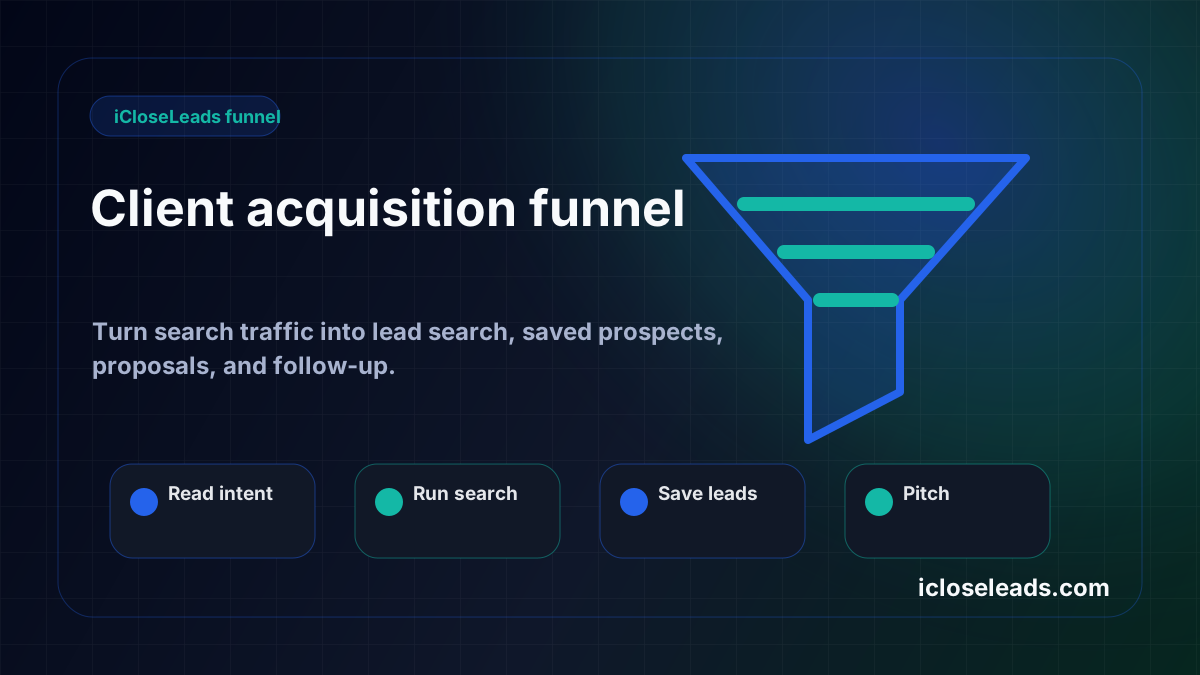
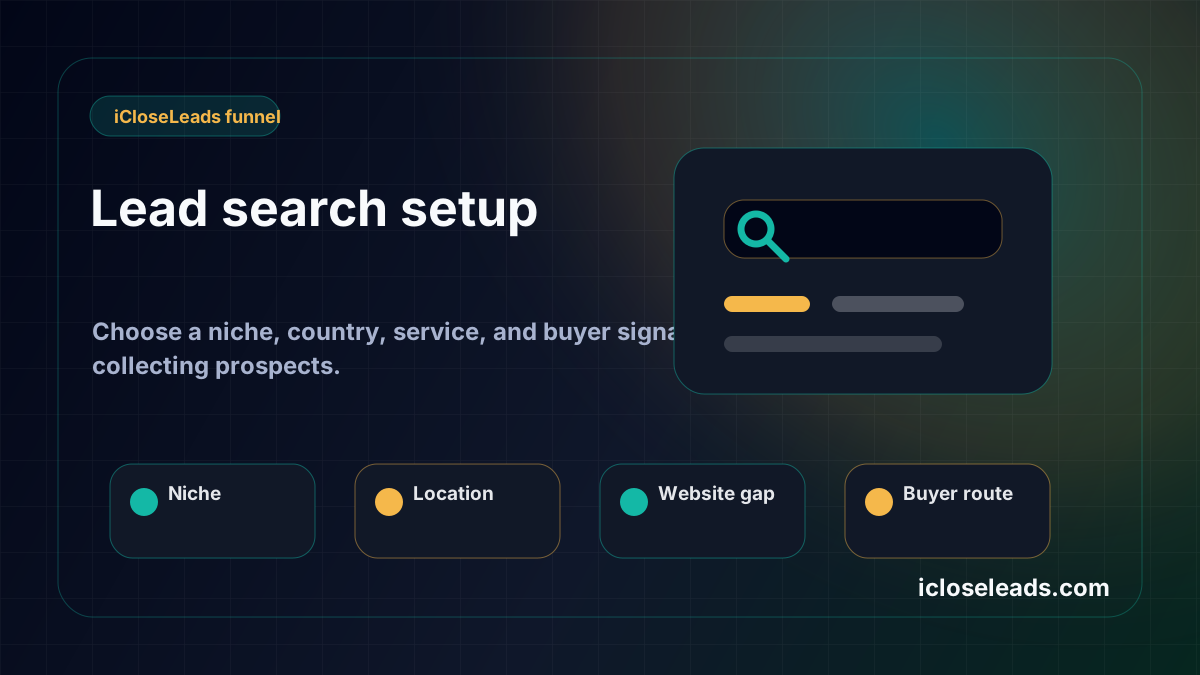
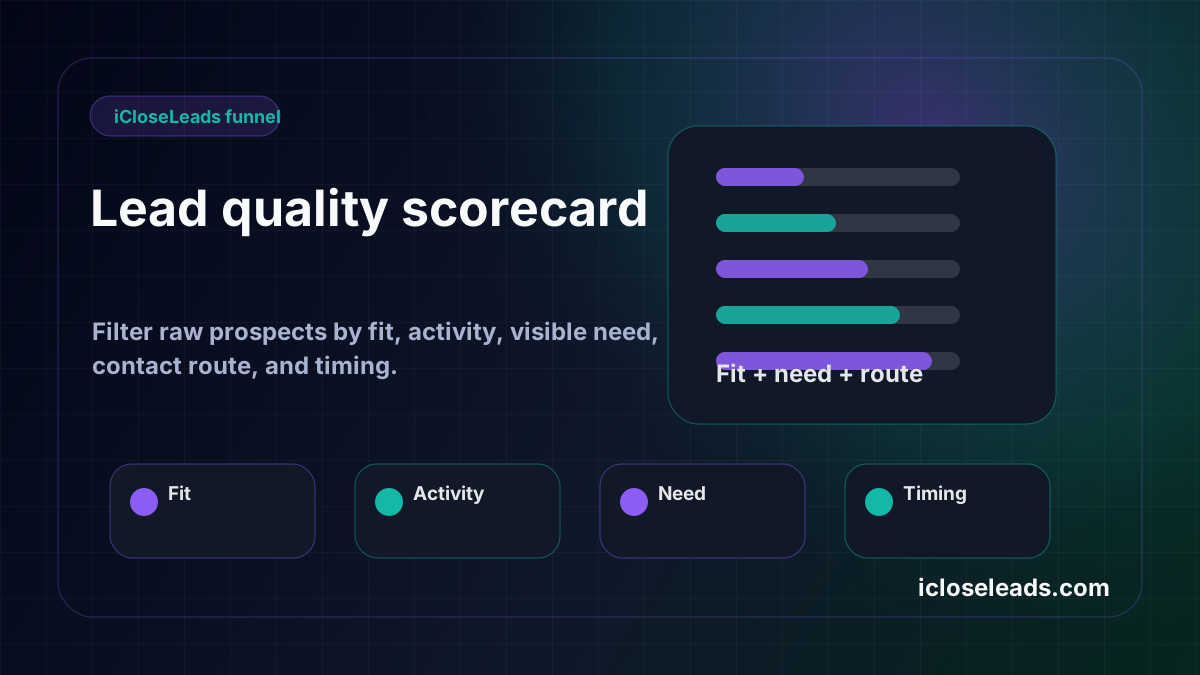
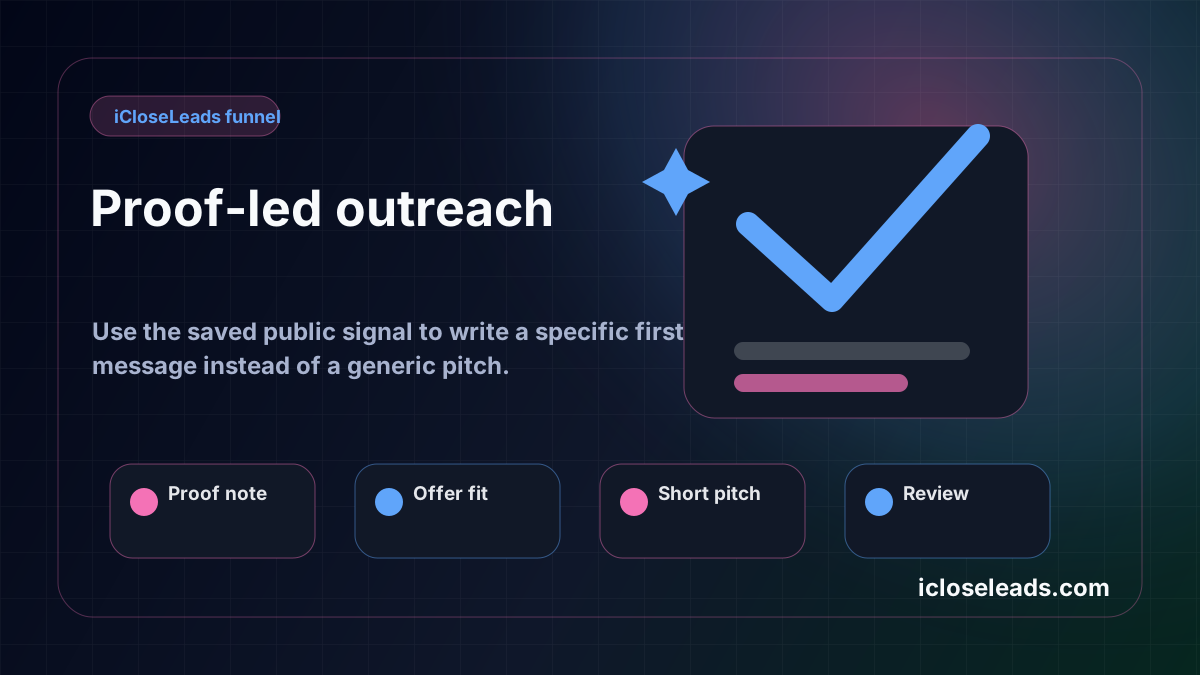
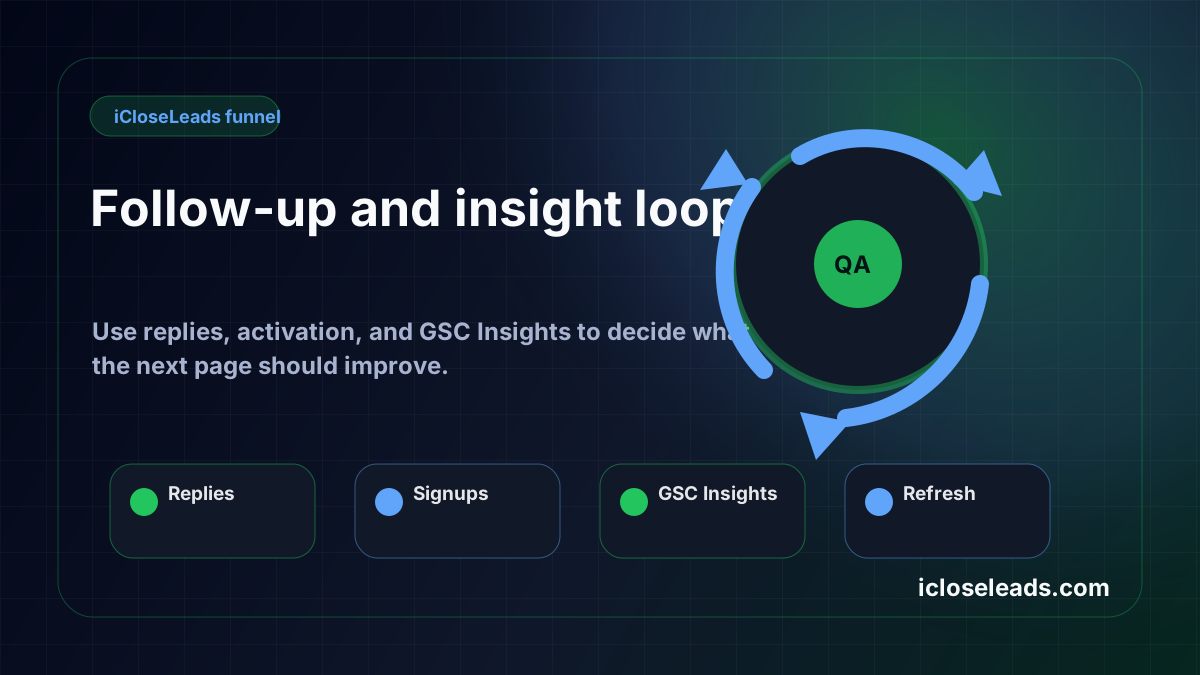
Turn the article into a lead workflow
Use the idea from this guide to find prospects, save only the best opportunities, prepare a specific pitch, and keep the follow-up attached to the original lead. Free users can start with 600 lead searches, then use the first saved lead as the test.
iCloseLeads Team
Helping freelancers build sustainable client pipelines through direct outreach and AI-powered tools.


