AI Proposal Generator for Freelancers: How to Write Faster Without Sounding Generic
AI can help freelancers write proposals faster, but only if the output is grounded in real lead context. This guide shows the right workflow.

AI proposal generator for freelancers is not about collecting as many names as possible. It is about finding the small group of prospects who have a visible reason to care about a proposal workflow that uses AI for speed while preserving human judgment. For freelancers who write proposals for remote jobs and direct outreach, the difference between a weak lead and a strong lead is usually timing, context, and the next step you can offer.
Generic AI proposals are easy to spot and easy to ignore. Buyers respond when the message reflects their actual situation.
This article shows how to feed AI the right context, edit the draft, and create outreach that feels researched. The goal is not to create noisy outreach. The goal is to build a calm, repeatable system that helps you find proposal-ready leads, save the right details, write a better first message, and follow up with discipline.
Why This Keyword Matters Now
People searching for AI proposal generator for freelancers are usually not looking for abstract theory. They are trying to solve a practical problem: where do I find prospects, how do I know which ones are worth my time, and what do I say when I reach out?
That intent is exactly where iCloseLeads fits. The platform brings together remote job leads, local business discovery, live job signals, saved lead tracking, AI-assisted proposals, Gmail-ready outreach, and pipeline visibility. A freelancer still needs judgment, positioning, proof, and good communication. The software removes the scattered tab work that makes client acquisition feel heavier than it needs to be.
The market also rewards specificity. Buyers can recognize generic AI outreach quickly. They are more likely to respond when the message references a real signal and offers a useful next step. That means the quality of your lead source matters as much as the quality of your writing.
The Core Idea
The best proposal-ready leads usually show at least one of these traits:
- Lead source: a reason the prospect may be closer to action than a random company.
- Buyer pain: a reason the prospect may be closer to action than a random company.
- Timeline: a reason the prospect may be closer to action than a random company.
- Industry: a reason the prospect may be closer to action than a random company.
- Portfolio proof: a reason the prospect may be closer to action than a random company.
- Next-step fit: a reason the prospect may be closer to action than a random company.
These signals do not guarantee a sale. They help you decide where attention belongs. A lead with three strong signals is worth research. A lead with one weak signal may be worth saving for later. A lead with no fit should be skipped even if the company looks impressive.
Examples of Good-Fit Leads
Here are realistic examples of what this can look like in the field:
- a remote WordPress job: this can be a strong opportunity when the visible problem connects directly to your offer and you can explain the next step in plain language.
- a local business website gap: this can be a strong opportunity when the visible problem connects directly to your offer and you can explain the next step in plain language.
- a Meta ads lead with a clear campaign problem: this can be a strong opportunity when the visible problem connects directly to your offer and you can explain the next step in plain language.
The common thread is not the industry. It is the presence of a business reason. If the prospect has a problem you can name, a contact path you can use responsibly, and a first step you can make easy, the lead is stronger than a generic list entry.
A Practical Workflow
1. Start with lead context
The draft should know what the buyer asked for, what problem is visible, and why your offer fits that situation. Start by turning your service into a specific outcome. A buyer does not wake up wanting a freelancer. They wake up wanting a launch finished, a page fixed, a campaign improved, a workflow cleaned up, or more qualified inquiries. Your search should follow that outcome.
In iCloseLeads, that means using the relevant workflow for the lead type. Remote job leads are useful when the buyer has already described a need. Local business leads are useful when the public profile shows a digital gap. Live job leads are useful when freshness and urgency matter.
2. Ask for an angle before a full message
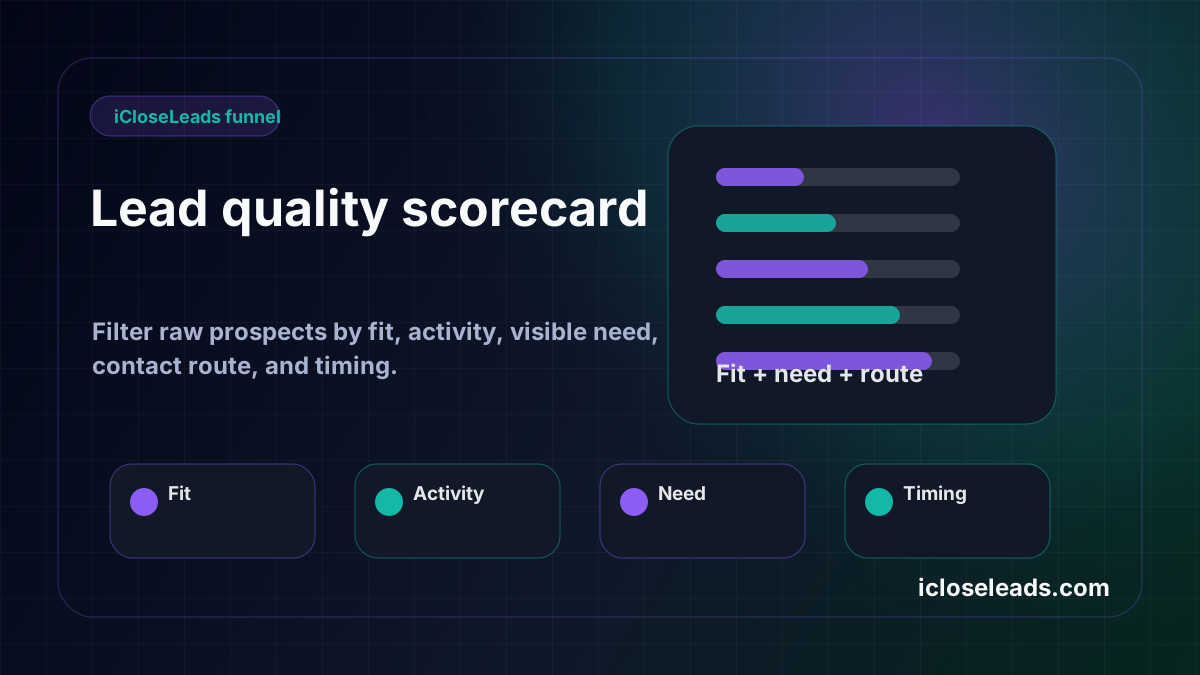
A good AI workflow first identifies the strongest pitch angle, then turns that angle into a subject line and body. Qualification protects your time. Before writing a message, ask whether the prospect matches your niche, whether the pain is visible, whether there is a responsible contact path, and whether the potential project is worth the effort.
A simple score can help:
- Fit with your service.
- Timing or urgency.
- Specific pain.
- Contactability.
- Value of the possible project.
If a lead scores poorly, skip it. Saying no to weak leads is part of a professional acquisition system.
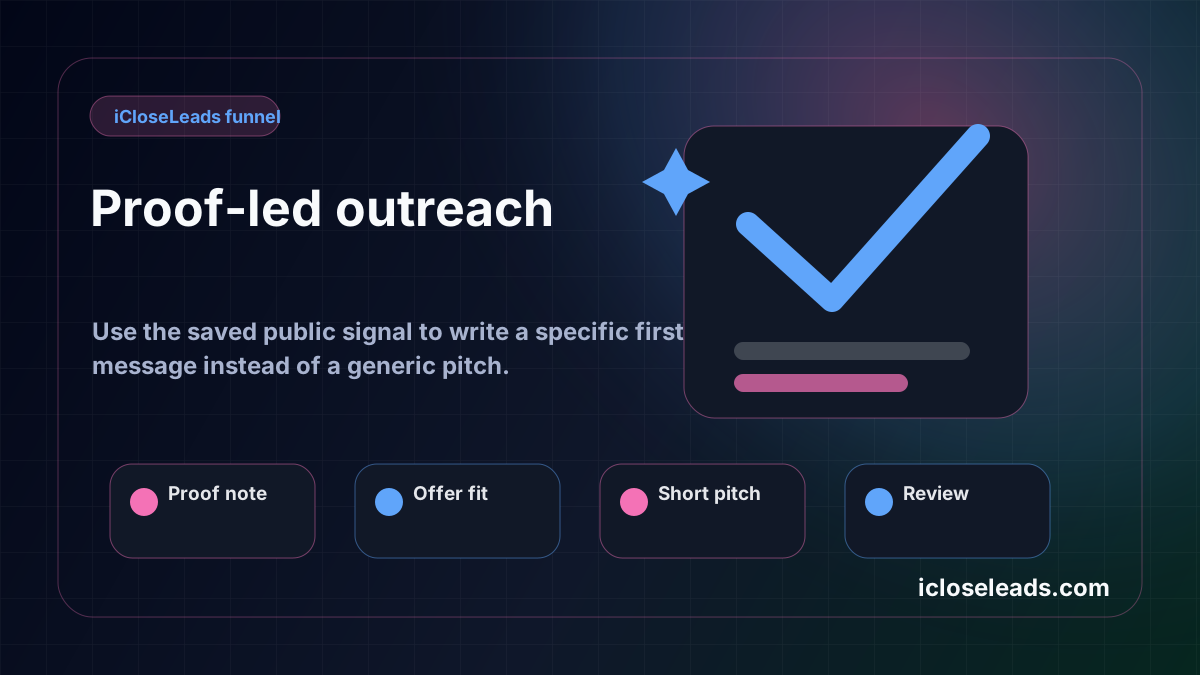
3. Replace vague claims with proof
Swap lines like I can help you grow with concrete examples: faster booking flow, cleaner landing page, better local service page, or a first-week audit. The first message should not sound like a brochure. It should sound like a useful observation from someone who understands the situation.
A strong opening usually follows this pattern:
- I noticed the specific signal.
- That may be affecting a business outcome.
- I help with that outcome.
- Here is a small next step that does not require a big commitment.
This structure works because it respects the buyer's time. It also keeps your message grounded in facts instead of hype.
4. Keep review-first control
The safest workflow prepares a draft for Gmail or manual sending so the freelancer stays responsible for tone, accuracy, and timing. Follow-up is where many freelancers lose easy opportunities. A prospect may miss the first message, plan to reply later, or need a second reason to care. Your follow-up should add one useful detail, not guilt or pressure.
Use saved lead notes to remember the original trigger. If the lead was a local business with a missing website, the follow-up can mention one customer action that would be easier with a simple site. If the lead was a remote job post, the follow-up can offer a short first-week plan.
A 30-Day Action Plan
Use the first month to learn, not to spray messages everywhere. The goal is to build a small operating rhythm that can survive busy client weeks.
Week 1: build the lead view. Choose one niche, one service outcome, and one primary lead type. Save examples of strong and weak prospects so you can see the difference. For AI proposal generator for freelancers, strong prospects usually connect back to lead source, buyer pain, and timeline. Weak prospects may look interesting, but they do not give you a clear reason to reach out.
Week 2: write from patterns. Review the saved leads and look for repeated pains. Are buyers asking for speed? Are local businesses missing trust signals? Are remote posts asking for a platform you know well? Turn the pattern into a pitch angle. This keeps your outreach human because the message comes from observation rather than a copied template.
Week 3: send a small batch. Contact a limited set of qualified prospects. Ten thoughtful messages will teach you more than one hundred generic ones. Track who opened a conversation, which subject lines felt natural, and where the offer was unclear.
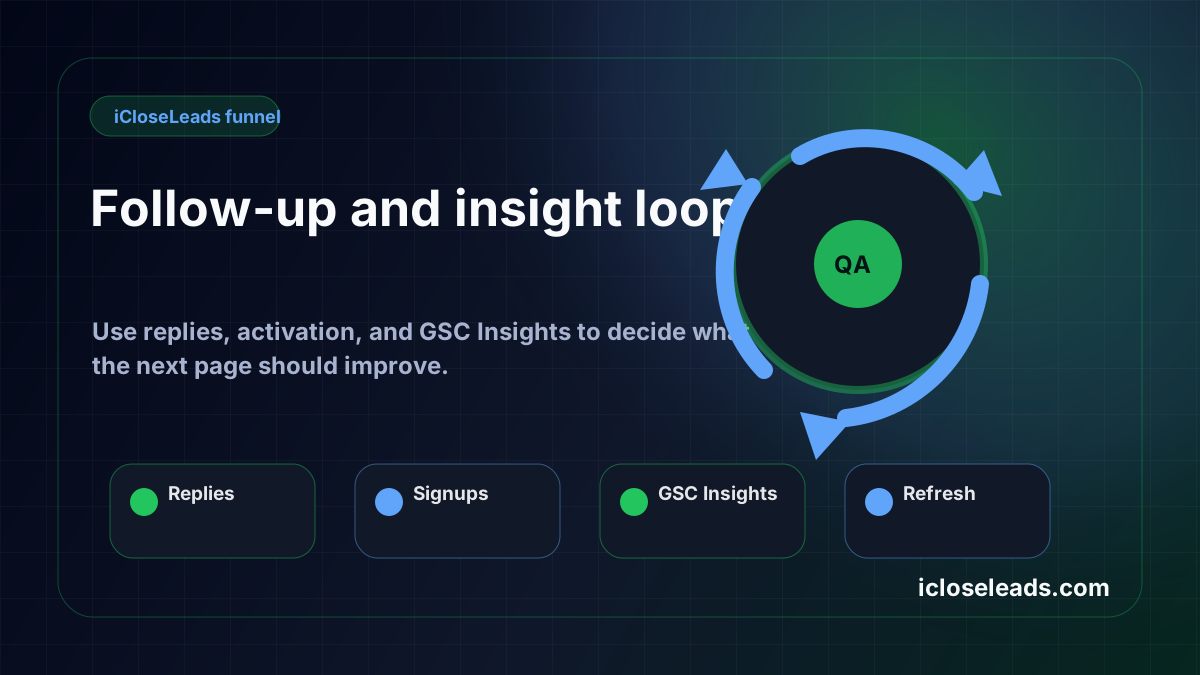
Week 4: refine the system. Keep the source, angle, and offer that produced replies. Cut the rest. A serious freelance pipeline is built from this feedback loop: find, qualify, save, pitch, follow up, and improve.
Qualification Scorecard
Before you spend time on a proposal, score the lead from 1 to 5 on these points:
- Problem clarity: can you name the problem without guessing?
- Offer match: does your service solve that problem directly?
- Timing: is there a recent signal that makes outreach relevant now?
- Contact path: can you reach the buyer responsibly?
- Commercial value: would the project be worth winning?
- Proof fit: do you have a relevant example, portfolio link, or process note?
A lead does not need a perfect score. It needs enough evidence to justify the next action. If the score is low, save it for later or skip it. Good prospecting is as much about subtraction as discovery.
How to Write the First Message
Keep it short. The first message is not the full sales conversation. It is the start of one.
Use this adaptable structure:
Subject: Quick idea about a remote WordPress job
Hi [Name],
I noticed [specific signal]. That stood out because [plain business reason].
I help freelancers who write proposals for remote jobs and direct outreach with a proposal workflow that uses AI for speed while preserving human judgment. Based on what I saw, the first useful step may be [small recommendation].
Would it be useful if I sent a quick 3-point plan?
This format works because it is specific, low-pressure, and easy to answer. It also gives you room to personalize without writing a brand-new essay every time.
What to Save in Your CRM
Do not save only the company name. Save the context that will help you follow up later:
- Lead source.
- Date saved.
- Location or country if relevant.
- The exact signal you noticed.
- The likely business pain.
- Contact path.
- First pitch angle.
- Follow-up date.
- Status.
This is especially important when you are working across multiple lead types. freelance proposal template, AI proposal writer, write freelance proposals, and proposal generator can all produce different conversations. Without notes, those conversations blur together.
Internal Linking and Search Intent
If you are building your own client acquisition content, do not publish isolated articles that never connect. Search engines and readers both need a clear path through the topic. A person reading about AI proposal generator for freelancers may also need help with freelance proposal template, AI proposal writer, write freelance proposals, and proposal generator. That is why a strong content hub links from strategy pages to use-case pages, templates, saved lead workflows, and proposal examples.
For iCloseLeads, the search intent is practical. Visitors are not only researching a definition. They want a way to find prospects, understand whether those prospects are worth contacting, and turn the research into outreach. Every article in this cluster points back to a real workflow inside the product so readers can move from learning to action without feeling pushed into a vague sales page.
That matters for conversion too. A freelancer who lands on a page about AI proposal generator for freelancers should quickly understand three things: the type of lead they can find, the reason that lead may be valuable, and the next step they can take today. If a page does not answer those questions, it may attract traffic but fail to create trust.
Common Mistakes
Avoid these mistakes when working on AI proposal generator for freelancers:
- Sending the first AI draft untouched: this weakens trust and makes the outreach feel less relevant.
- Using fake personalization: this weakens trust and makes the outreach feel less relevant.
- Making the email too long: this weakens trust and makes the outreach feel less relevant.
- Forgetting a clear next step: this weakens trust and makes the outreach feel less relevant.
The biggest mistake is usually not a bad subject line. It is poor targeting. A good message sent to the wrong person will still fail. A useful message sent to a well-qualified prospect has a real chance.
How iCloseLeads Helps
iCloseLeads is built for freelancers who want the full client acquisition loop in one place:
- Find remote, local, and live opportunities.
- Filter leads by niche, source, location, contact readiness, and quality.
- Save leads with notes so context does not disappear.
- Generate AI-assisted proposals from real lead data.
- Prepare Gmail-ready outreach while keeping human review.
- Track saved leads and pipeline movement.
For this topic, start with the AI proposal workflow. Then build a small weekly routine: source leads, save the best ones, draft messages, prepare outreach, follow up, and review which sources created replies.
FAQ
Is AI proposal generator for freelancers only for experienced freelancers?
No. Beginners can use the same system, but they should start with smaller lists and simpler offers. The key is to qualify carefully and avoid pretending to have proof you do not have yet.
How many leads should I contact per week?
Quality matters more than volume. A focused freelancer can learn a lot from 10 to 20 well-qualified leads per week. If the replies are poor, improve targeting before increasing volume.
Should I use AI to write the outreach?
AI can help with structure, subject lines, and first drafts. It should not invent details or send messages without review. The best workflow is AI-assisted and human-approved.
What makes a lead worth saving?
Save a lead when there is a clear signal, a reasonable contact path, and a first offer you can explain. If you cannot name why the prospect might care, it is not ready.
Final Takeaway
The path to better proposal-ready leads is not more noise. It is clearer signals, better qualification, sharper first messages, and consistent follow-up. When you combine those habits with a focused platform, client acquisition becomes a process you can improve instead of a mystery you hope will work.
Start with one niche, one offer, and one lead source this week. Save the best prospects, write from real context, and track what happens.
Visual workflow
See the system before you build it
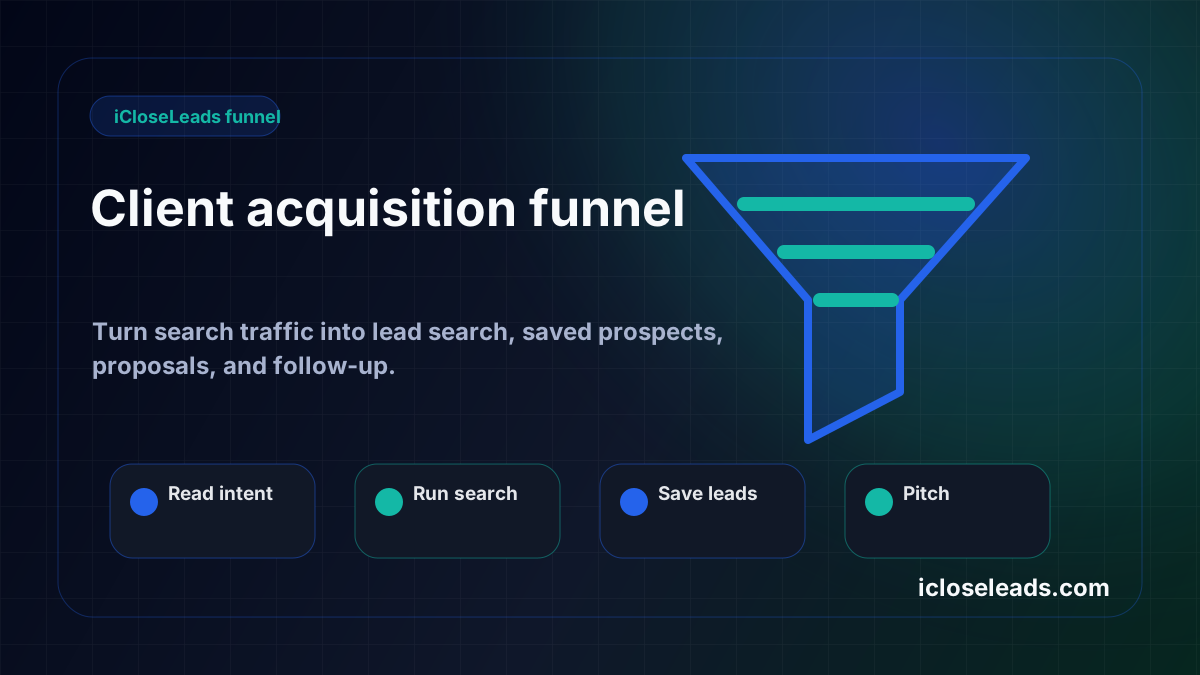
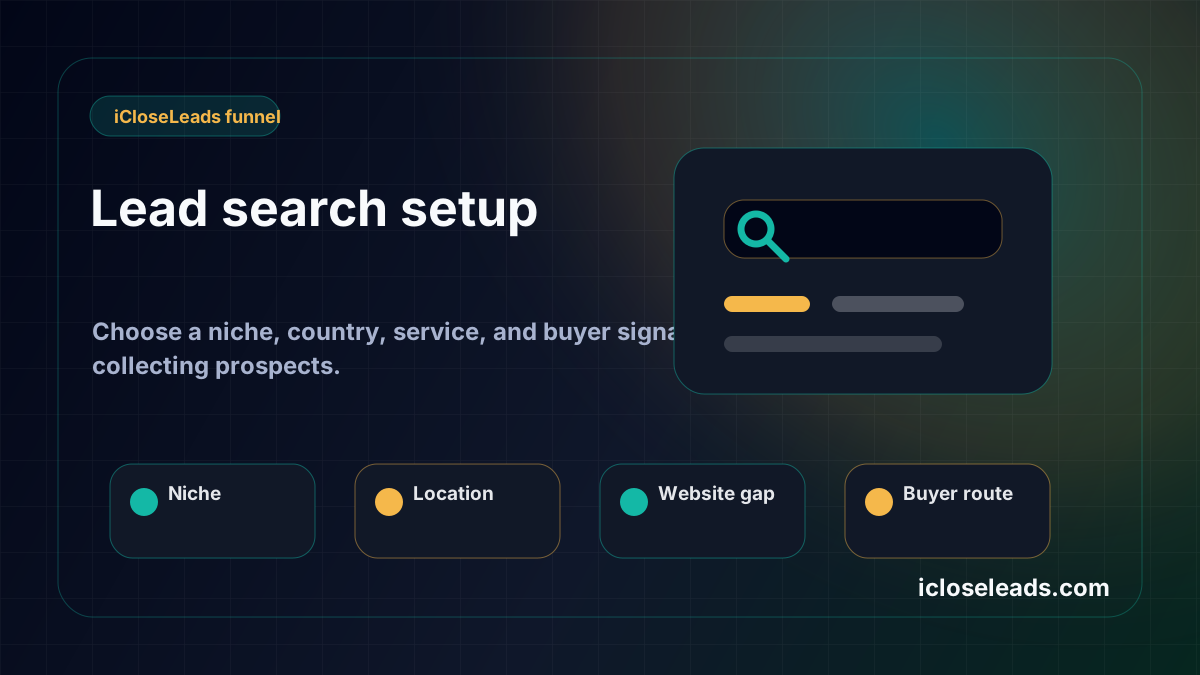
Turn the article into a lead workflow
Use the idea from this guide to find prospects, save only the best opportunities, prepare a specific pitch, and keep the follow-up attached to the original lead. Free users can start with 600 lead searches, then use the first saved lead as the test.
iCloseLeads Team
We study what works in freelance client acquisition so you don't have to. Subscribe for weekly insights.


