The Web Design Lead Generation Blueprint: How to Attract, Convert, and Scale High-Value Clients in 2026
A 2026 pillar guide to web design leads, freelance cold outreach, referrals, SEO, and client acquisition systems that compound instead of resetting every month.

Table of Contents
- Key Takeaways
- Introduction: Why Your Search Data is a Goldmine
- Part 1: The Foundation - Building a Website That Converts
- Part 2: The Pillars of a Predictable Lead Generation System
- 2.1 Master Cold Outreach (Target: "freelance cold outreach")
- 2.2 Build a Predictable Referral Engine
- 2.3 Attract Inbound Leads with SEO & Content Marketing (Target: "exclusive web design leads")
- Part 3: Advanced Strategies for Landing Premium Clients
- 3.1 Niche Down to Command Higher Rates
- 3.2 Showcase ROI-Driven Work in Your Portfolio
- 3.3 Position Yourself as an Industry Authority
- Part 4: The Data-Driven Approach to Lead Generation
- FAQ: Web Design Lead Generation
- Conclusion: From Strategy to Sustainable Growth
- Cluster Content Strategy (Supporting Articles)
Key Takeaways
- Lead generation is a system, not a single tactic.
- Your website must be a lead-generating machine, not just a portfolio.
- Cold outreach is highly effective when personalized and relevant.
- Referrals are the highest-quality leads - systematize the ask.
- Specializing in a niche allows you to charge premium rates.
Introduction: Why Your Search Data is a Goldmine
If your Google Search Console is already showing impressions for terms like web design leads, freelance cold outreach, exclusive web design leads, leads for web design, and freelance client acquisition, you are not starting from zero. You are already sitting on market intelligence.
Most freelancers and small agencies ignore this signal. They publish a few posts, watch random keywords appear, and move on. The smarter move is to treat that query data as a buying-intent map. When someone searches for get web design leads, they are not browsing casually. They are trying to solve a revenue problem. When you see niche modifiers or strange variations like remoteleads, that is still valuable because it reveals how real people compress or combine ideas when they are searching under pressure.
That is why this article matters. It is not another loose list of marketing ideas. It is a full blueprint for freelance web designer lead generation in 2026: how to build a site that converts, how to run freelance cold outreach without sounding mass-produced, how to create a referral engine, and how to build content that attracts higher-intent prospects over time.
The goal is simple: turn your search data into a client acquisition system that compounds. You can use this alongside your freelance cold outreach workflow, your local business lead process, and your lead discovery stack so every channel supports the others instead of competing for your time.
Part 1: The Foundation - Building a Website That Converts
A polished website is not the same as a client-generating website. That distinction is where most web designers lose momentum.
Too many sites are built like portfolios for peers instead of sales assets for buyers. They look expensive, animate beautifully, and say very little. No one books on a beautiful website... the real hero here is clarity. If a visitor cannot understand who you help, what result you create, what proof backs it up, and what the next step is, the design will not save the page.
The best websites for getting leads for web design share four conversion principles:
- Clear value proposition above the fold. A buyer should know the niche, service, and business outcome in five seconds.
- Strong visual hierarchy. Headline first, proof second, call to action third. Do not bury your offer under decorative sections.
- Trust-building content. Case studies, testimonials, outcomes, screenshots, short audits, and specific process explanations reduce perceived risk.
- Focused navigation. If every page is equally important, nothing is. Guide the visitor toward the call, audit request, or contact step that matches your offer.
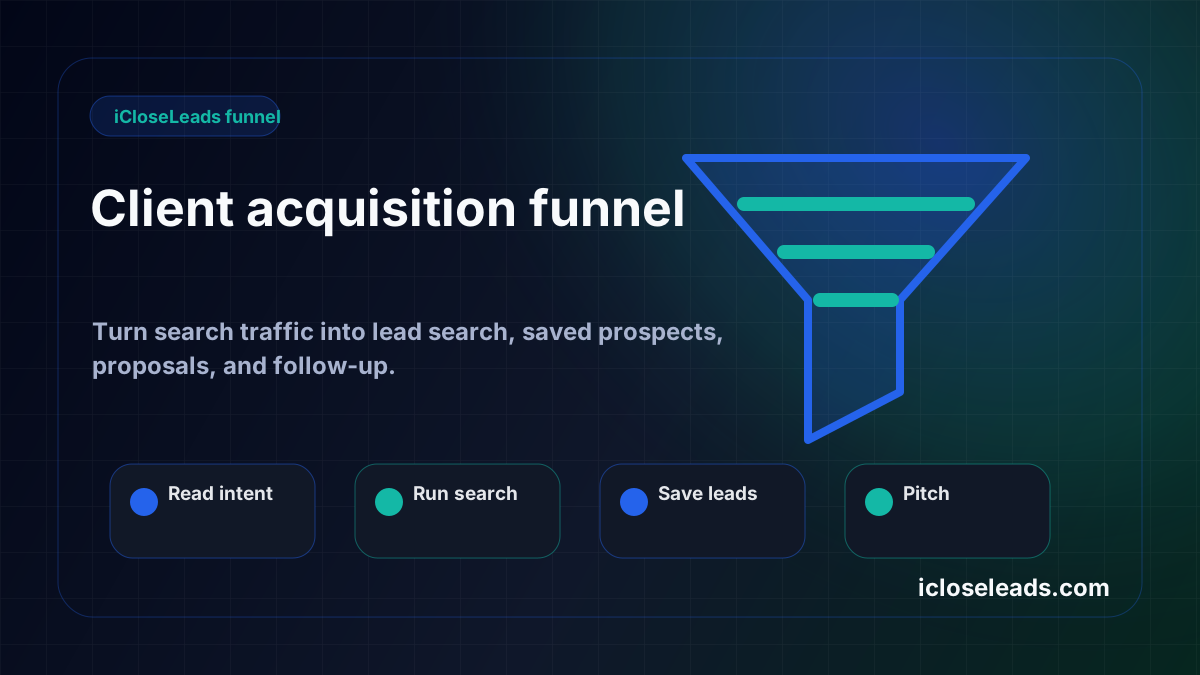
Think of your site as the front end of a web design sales funnel. Search traffic lands on content. Content moves readers to proof. Proof moves readers to an offer. The offer moves the right prospect to a booked call or qualified inquiry.
This is exactly where guidance from Google's SEO Starter Guide becomes practical, not theoretical. Search-friendly pages are not only easier to understand for search engines; they are also easier to understand for humans. The same clarity that improves indexing also improves conversion.
Before you chase more traffic, fix the page that traffic lands on. If your site does not convert, more visitors only create more leakage.
Part 2: The Pillars of a Predictable Lead Generation System
Predictable lead generation happens when multiple channels reinforce the same positioning. You do not need ten tactics. You need three channels that match the kind of clients you actually want.
For most freelancers and boutique agencies, the strongest stack is:
- Cold outreach for speed and control.
- Referrals for trust and conversion quality.
- SEO and content for compounding inbound demand.
This is how you get web design leads without rebuilding your business every 30 days.
2.1 Master Cold Outreach (Target: "freelance cold outreach")
Freelance cold outreach still works in 2026, but only when it feels earned. Generic outreach is dead weight. Specific outreach still opens doors because buyers rarely ignore someone who clearly noticed the real business problem.
Use this five-step framework:
- Refine the offer. Do not sell "web design." Sell a business outcome such as more booked consultations, stronger local visibility, faster quote requests, or a cleaner lead capture flow.
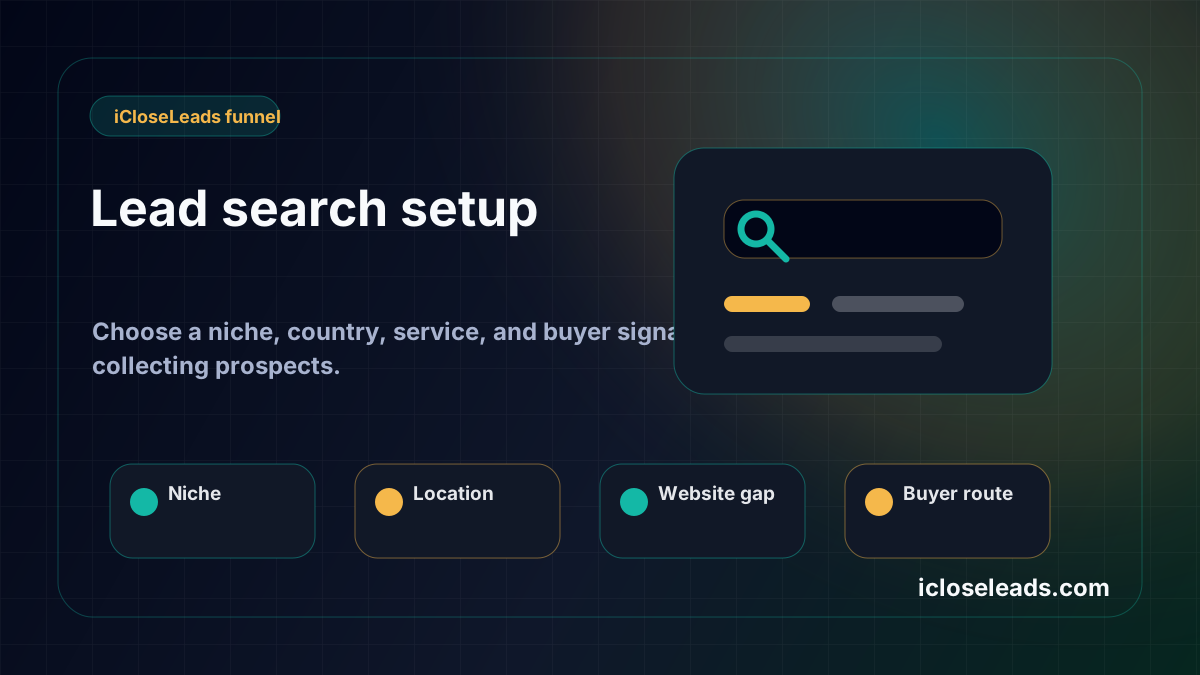
- Build a targeted list. Choose one niche, one region, and one trigger. Examples: med spas with weak mobile booking, SaaS brands with poor demo pages, or law firms with thin service pages.
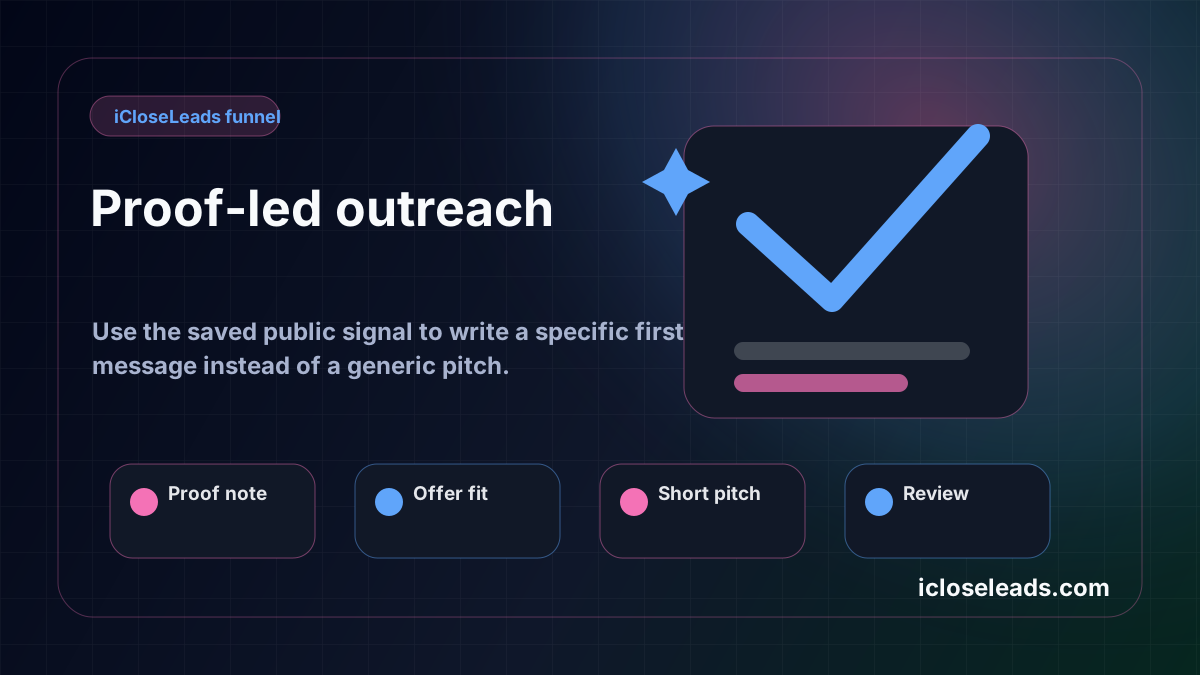
- Write a strong email. Open with the issue you saw, explain the consequence, and offer a small next step.
- Follow up with value. Send a reminder, a short teardown, or a sharper insight. Do not simply ask whether they saw your last message.
- Track metrics. Measure sends, replies, booked calls, and proposals so you can improve the channel instead of relying on memory.
Cold Outreach Checklist
- The list is narrow enough to sound relevant.
- Each prospect has a visible reason to contact now.
- The first sentence mentions something real.
- The CTA is low-friction and specific.
- You have two follow-ups scheduled before you hit send.
- You are tracking reply rate, positive reply rate, and booked calls.
Here is a simple cold email for freelancers template you can adapt:
Subject: Quick idea for your website conversion path
Hi [First Name],
I came across [Company Name] while looking at [industry or city] websites and noticed that [specific issue].
That usually means visitors are interested, but the next step feels less obvious than it should. I help [niche] businesses tighten that path so more of the right visitors turn into calls, quote requests, or demos.
If useful, I can send a short three-point teardown showing what I would change first.
Best,
[Your Name]
What makes this work is not clever wording. It is relevance. The best freelance client acquisition emails read like they were written after ten minutes of thoughtful review, not after pasting a prompt into a tool and blasting two hundred people.
Track three numbers relentlessly:
- Reply rate tells you whether the angle matters.
- Positive reply rate tells you whether the offer fits.
- Booked call rate tells you whether the next step is strong enough.
If reply rate is low, the first line or targeting is weak. If replies happen but calls do not, the offer is too broad. If calls happen but proposals stall, your positioning or proof is not tight enough.
2.2 Build a Predictable Referral Engine
Referrals are usually the highest-trust channel in any service business because the buyer borrows confidence from someone they already know. The problem is that most freelancers treat referrals as luck instead of a system.
A predictable referral engine needs timing, phrasing, and consistency.
The best moments to ask are:
- Right after a measurable win
- At project handoff
- After a positive testimonial
- When a client says something like "this made things much easier"
Use language that is easy to act on:
Referral ask example:
"I'm glad this helped. If you know another [niche] business owner who is dealing with the same website or lead-flow issue, feel free to introduce us. I'm happy to send over a short audit they can use either way."
That works because it reduces pressure. You are not asking the client to make a hard sell for you. You are giving them a simple reason to introduce you.
To go deeper, build referral marketing for agencies around partnerships, not only past clients. Strategic partners often generate better-fit leads than general networking because they sit close to the same buyer.
Useful partners include:
- Brand designers who do not want to build full websites
- SEO consultants who need stronger page design
- Paid media freelancers who need better landing pages
- Developers who do not want to handle positioning and CRO
- Photographers and videographers who serve local businesses
Create one short partner page or PDF that explains:
- The types of clients you want
- The business problems you solve
- The signals that mean a referral is a fit
- What happens after an introduction
That single document will do more for referrals than vaguely telling people, "Send clients my way."
2.3 Attract Inbound Leads with SEO & Content Marketing (Target: "exclusive web design leads")
Inbound demand is where the flywheel starts to compound. Done well, SEO does not just bring more traffic. It brings better questions, warmer sales calls, and more authority before the conversation even starts.
This is where your Search Console data becomes powerful. If you already have impressions for terms like exclusive web design leads, get web design leads, and website design prospect, Google is telling you what topics people trust you to speak about. Your job is to build depth around those signals.
Use a three-layer inbound system:
- Pillar page: one definitive resource on the main topic, which is what this article is.
- Cluster pages: more specific supporting articles that target adjacent long-tail searches.
- Lead magnet: something downloadable or immediately useful that converts readers into leads.
Strong lead magnets for this topic include:
- A cold outreach checklist for designers
- A local lead scoring template
- A homepage teardown rubric
- A proposal follow-up tracker
- A niche audit worksheet
HubSpot's current marketing statistics page continues to reinforce the same pattern: websites, blogs, and SEO are still among the channels marketers lean on for lead generation, and conversion optimization remains one of the strongest levers for improving results. That is why content and page quality belong in the same system, not in separate departments. See HubSpot's marketing statistics if you want a broader view of how teams are prioritizing these channels.
If you want exclusive web design leads, stop publishing broad advice and start publishing decision-stage content. Comparison pages, audit checklists, service pages by niche, pricing explainers, and local intent articles attract people who are much closer to hiring.
Part 3: Advanced Strategies for Landing Premium Clients
Once the basics are in place, premium growth comes from sharper positioning, stronger proof, and clearer authority.
3.1 Niche Down to Command Higher Rates
Niching is not about shrinking your opportunity. It is about shrinking confusion.
When you say, "I design websites for anyone," buyers hear risk. When you say, "I help med spas increase consultation bookings from local search traffic," buyers hear relevance. That difference is pricing power.
Good niches combine:
- Visible commercial intent
- Ongoing demand
- Clear conversion paths
- Enough revenue to pay for improvement
Strong examples include:
- Fintech companies that need trust-heavy landing pages and demo funnels
- Med spas that depend on mobile bookings, reviews, and local visibility
- SaaS companies that need clearer demo paths, onboarding pages, and product positioning
The niche does not need to be permanent. It just needs to be specific enough that your offer sounds like it was built for the buyer.
3.2 Showcase ROI-Driven Work in Your Portfolio
Most portfolios describe output. Premium buyers care about impact.
Every website design prospect wants to know some version of three questions:
- Have you solved a similar problem before?
- Did the work change anything measurable?
- Can you explain your thinking clearly?
Structure your case studies like this:
- Problem: what was broken or underperforming
- Solution: what you changed and why
- Impact: what improved after launch
Here is the shift:
- Weak case study: "We redesigned the website and improved the user experience."
- Strong case study: "The old page buried the quote request below six blocks of generic copy. We rebuilt the hero, clarified the offer, and simplified the form. Quote requests increased within the first month."
That is what premium positioning looks like. Even when the project data is imperfect, you can still document business logic, before-and-after structure, and clearer buyer flow.
3.3 Position Yourself as an Industry Authority
Authority is built when the market sees you teaching, diagnosing, and naming patterns before the sale.
That can come from:
- Publishing sharp content consistently
- Posting teardown threads on LinkedIn
- Running short website audits for a defined niche
- Speaking in niche communities or podcasts
- Offering strategy-first consultations instead of generic intro calls
If your content sounds like everybody else's, your pricing will feel like everybody else's. Authority does not come from sounding louder. It comes from sounding more precise.
The easiest way to start is to publish one clear opinion every week. For example:
- What local businesses get wrong about homepage CTAs
- Why most med spa websites leak consultation leads
- The three conversion blocks every SaaS service page needs
Authority compounds because each post makes the next sales conversation shorter.
Part 4: The Data-Driven Approach to Lead Generation
If you are serious about sustainable growth, set a lead goal in business terms, not vanity terms.
Bad goal: "I want more traffic."
Better goal: "I want two new clients worth $5,000 per month within the next 90 days."
From there, reverse-engineer the system:
- How many qualified conversations do you need?
- How many replies produce one conversation?
- How many targeted outreaches or inbound visits do you need to create those replies?
This is where your query data becomes operational. If Search Console shows recurring interest around web design leads, freelance cold outreach, website design prospect, and even odd shorthand like remoteleads, build content that mirrors those intents instead of guessing at topic ideas.
Use a simple weekly review:
- Check which pages earned impressions and clicks.
- Identify which queries match buyer intent, not just traffic.
- Compare page performance against outreach performance.
- Find the bottleneck.
Typical bottlenecks look like this:
- Impressions but no clicks: your title or description is weak.
- Clicks but no inquiries: the page promise and CTA do not connect.
- Replies but no calls: the offer is too vague.
- Calls but no close: the positioning or proof is not premium enough.
Refine one bottleneck at a time. That is how a lead system gets stronger instead of more complicated.
Also remember that not all growth tactics are exempt from compliance. If you are doing cold outreach at scale, align your process with the FTC CAN-SPAM compliance guide, especially around identification, opt-out handling, and misleading subject lines. Good outreach is not only more effective when it is relevant; it is also safer when it is transparent.
FAQ: Web Design Lead Generation
What is the fastest way to get web design leads?
The fastest path is usually targeted cold outreach to a narrow niche with a visible problem. Pick one industry, one offer, and one trigger, then send short, relevant messages tied to an actual issue on the prospect's site or lead flow.
What makes exclusive web design leads more valuable?
Exclusive web design leads are more valuable when they are intent-rich, well-qualified, and not being chased by dozens of generic sellers. Exclusivity matters less than fit, timing, and the clarity of the business problem.
How many cold emails should a freelancer send each week?
Start with a number you can personalize well. For most freelancers, 15 to 30 strong messages per week will outperform 200 weak ones because quality targeting creates better replies, better calls, and less brand damage.
How long does SEO take to generate web design leads?
SEO takes longer than outreach, but it compounds. You can see impressions early, especially if you already have topical relevance, but qualified inbound leads usually come from consistent publishing, strong internal linking, and conversion-focused pages.
Conclusion: From Strategy to Sustainable Growth
The strongest lead generation systems are boring in the best possible way. They are repeatable, measurable, and easier to improve every month.
If you want more web design leads, do not chase novelty. Build the foundation first: a site that converts, outreach that sounds researched, referrals that are requested on purpose, and content that turns your search data into authority.
Pick one strategy and start today. Tighten your homepage. Send 15 better emails. Ask for two referrals. Publish one cluster article. Review the data next week and keep refining.
That is how a freelancer or agency stops hoping for clients and starts building a pipeline.
Cluster Content Strategy (Supporting Articles)
- The Freelancer's Guide to Cold Email Outreach in 2026 - Target keyword: freelance cold outreach
- How to Choose the Perfect Niche for Your Web Design Business - Target keyword: web design niche
- 10 Lead Magnets That Attract High-Quality Web Design Leads - Target keyword: exclusive web design leads
- Building a Portfolio That Books Calls: The ROI-First Approach - Target keyword: website design prospect
Visual workflow
See the system before you build it
Turn the article into a lead workflow
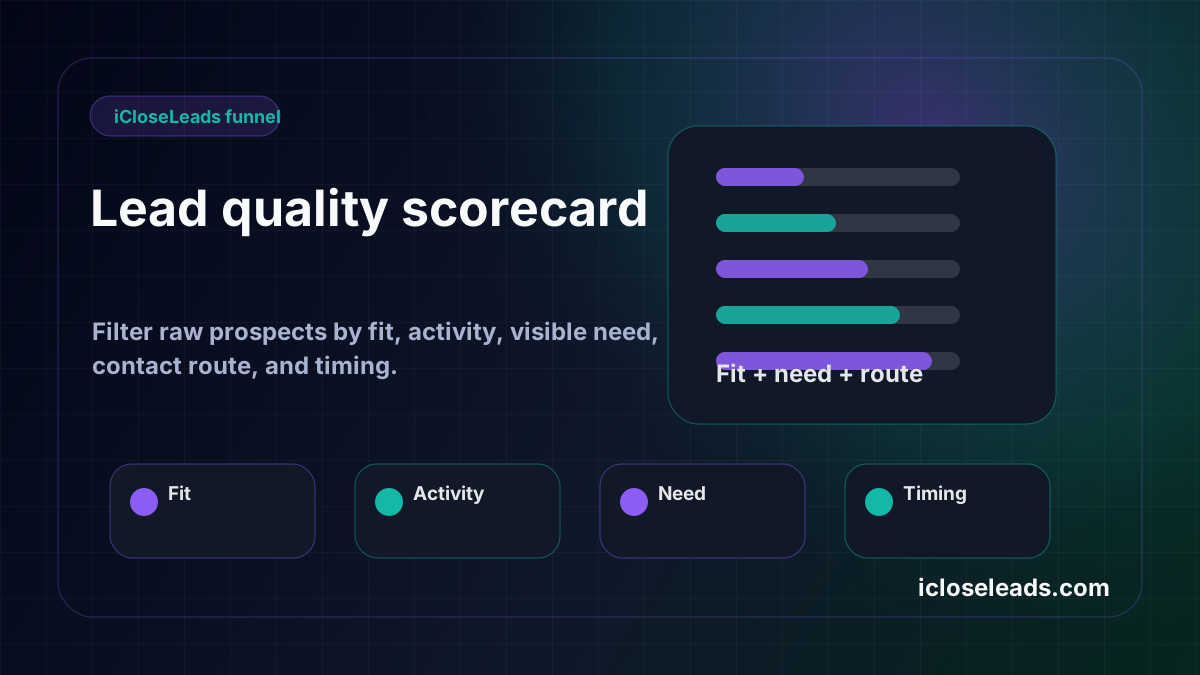
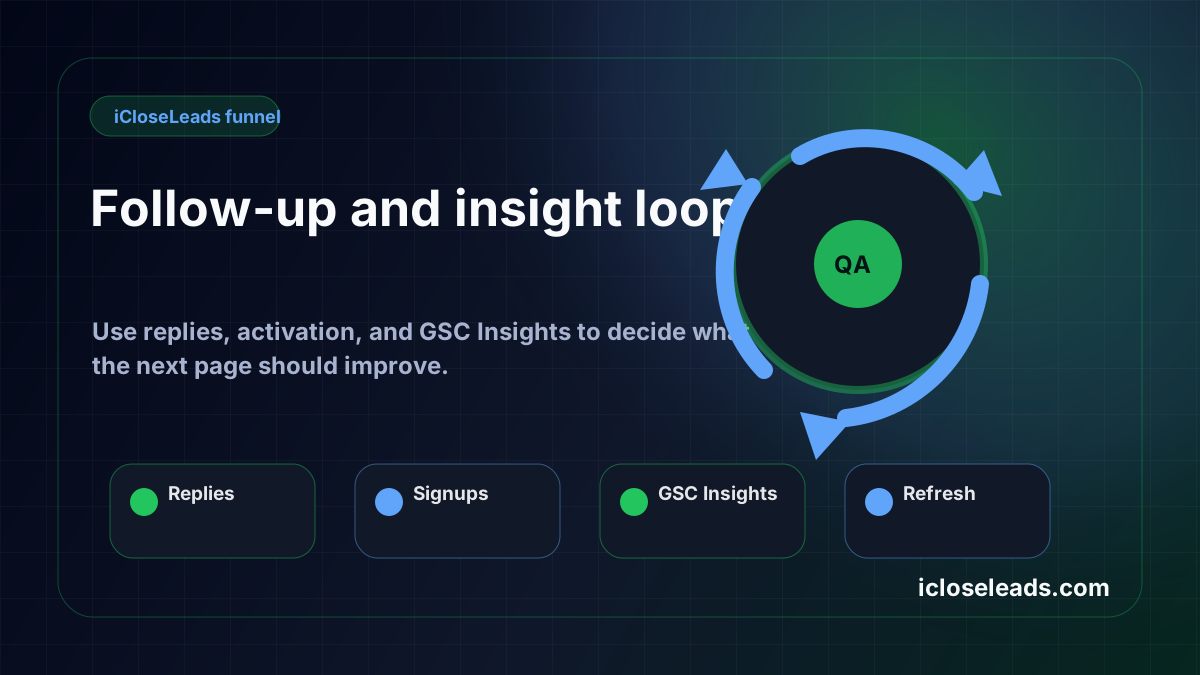
Use the idea from this guide to find prospects, save only the best opportunities, prepare a specific pitch, and keep the follow-up attached to the original lead. Free users can start with 600 lead searches, then use the first saved lead as the test.
iCloseLeads Team
We study what works in freelance client acquisition so you don't have to. Subscribe for weekly insights.


