The Freelancer's Guide to Cold Email Outreach in 2026
A practical 2026 guide to freelance cold outreach: how to build better lists, write sharper emails, follow up with intent, and turn replies into real client conversations.

Table of Contents
- Key Takeaways
- Introduction: Why Freelance Cold Outreach Still Works
- Part 1: Why Most Cold Outreach Fails
- Part 2: Build the Right List Before You Write
- Part 3: Craft an Offer That Earns a Reply
- Part 4: The 5-Part Cold Email Framework
- Part 5: Follow Up Without Sounding Like a Sequence
- Part 6: Deliverability, Compliance, and Reputation
- Part 7: The Metrics That Actually Matter
- FAQ: Freelance Cold Outreach
- Conclusion: Turn Outreach Into a Repeatable Acquisition System
Key Takeaways
- Freelance cold outreach works best when it starts with a visible problem, not a generic introduction.
- A tight prospect list beats a giant spreadsheet every time.
- Your first email should sell the next step, not your entire service stack.
- Follow-ups should add signal, proof, or a sharper observation - not just another nudge.
- If you do not track reply quality, booked calls, and close rates, you cannot improve the channel.
Introduction: Why Freelance Cold Outreach Still Works
Freelancers keep hearing that cold outreach is dead, but what is actually dead is generic outreach. The market is tired of vague intros, fake compliments, and AI-written emails that sound like they were sent to 500 people before lunch. That is not a condemnation of outreach itself. It is a condemnation of lazy execution.
Done well, freelance cold outreach is still one of the fastest ways to create demand on purpose. You do not have to wait for Google rankings, referrals, or marketplaces to send a lead. You can identify a business that clearly needs help, connect your offer to a real problem, and start a conversation this week.
That is especially useful if you are trying to get web design leads, land retainer work, or build a more stable freelance client acquisition system. The advantage of outreach is not volume. The advantage is control. You choose the niche, the geography, the offer, the trigger, and the timing.
This guide breaks down the practical version of cold email for freelancers in 2026: how to choose better targets, write stronger first emails, follow up without sounding robotic, and turn replies into actual revenue instead of vanity metrics. Pair it with the broader web design lead generation blueprint and your freelance cold outreach workflow so outreach becomes one lane in a system, not a random weekly burst of effort.
Part 1: Why Most Cold Outreach Fails
Most freelancers do not fail at outreach because they are bad writers. They fail because the strategy is weak before the message is ever written.
The common pattern looks like this:
- The niche is too broad.
- The offer is too vague.
- The prospect list is built around job titles instead of buying signals.
- The email tries to say too much.
- The follow-up sequence is just repeated asking.
That combination creates a message that feels familiar in the worst way. The buyer can tell the sender did not really notice anything important. Even if the email is polite, it still feels interruptive because it adds no insight.
The fix is simple in theory and disciplined in practice: start with a visible business problem.
For example, if you help local service businesses, your trigger might be:
- strong review count but weak website conversion path
- outdated mobile layout
- no clear quote request path
- paid traffic landing on a generic homepage
If you help SaaS or B2B teams, your trigger might be:
- weak demo page
- buried call to action
- no proof near the conversion point
- job posts that reveal a growth push without the web funnel to support it
The buyer does not need another freelancer saying, "I help businesses grow online." They need someone who can point to something concrete and explain the cost of leaving it untouched.
Here is the simplest way to think about it:
| Weak outreach | Strong outreach |
| --- | --- |
| Starts with who you are | Starts with what you saw |
| Sells a full service stack | Sells one useful next step |
| Uses broad praise | Uses a specific observation |
| Asks for a call immediately | Earns curiosity first |
| Measures sends only | Measures quality of replies |
That table is the whole game. Freelance cold outreach improves when relevance increases and friction decreases.
Part 2: Build the Right List Before You Write
A strong list makes writing easier because every prospect already has a reason to contact now.
The best outreach lists are narrow enough that patterns become obvious. Instead of searching for "business owners" or "marketing managers," build segments like:
- accountants in London with outdated service pages
- med spas in Miami with weak mobile booking
- Shopify brands running paid traffic to generic collection pages
- local contractors with strong reviews and no modern website
- startups hiring growth support without a dedicated demo funnel
That kind of segmentation gives you three things at once:
- a clear offer angle
- repeatable language
- faster research because the same problems keep reappearing
You can build these lists through a mix of search, local lead tools, hiring signals, and manual audits. For local businesses, local business lead discovery is usually the fastest route because you can filter for no website, outdated site, phone presence, and visible commercial intent. For remote or B2B targets, hiring pages, niche directories, and targeted search queries work better.
When you are qualifying a prospect, capture five fields:
- company name
- niche and location
- visible problem
- contact route
- likely paid outcome
That last one matters more than people realize. Do not just note "site needs work." Note the commercial consequence. Maybe the weak homepage is probably costing quote requests. Maybe the missing local landing pages are limiting search reach. Maybe the demo path is too broad for paid traffic. Once you write down the likely business outcome, the email becomes easier to frame.
If you want better web design leads, use buying signals, not random directories. A business with proof of demand and a clear conversion gap is far more valuable than a business that merely exists online.
Part 3: Craft an Offer That Earns a Reply
Cold outreach gets dramatically easier when the offer is specific. Most freelancers sabotage themselves by pitching a general service when the buyer really needs a focused outcome.
Weak offers sound like this:
- I build websites.
- I do SEO and branding.
- I help businesses grow online.
Those lines force the buyer to do the mental work. They have to translate the service into a business result, and most of them will not.
Strong offers compress the value:
- I help local businesses turn more mobile visitors into quote requests.
- I help agencies tighten landing pages before they scale paid traffic.
- I help service businesses clean up outdated websites that are losing trust in search.
- I help B2B teams improve demo page conversion before they add more traffic.
Notice what changes: the offer becomes easier to evaluate because it is tied to an obvious business problem.
A good freelance outreach offer usually has four parts:
- Audience - who the work is for
- Problem - what is not working
- Outcome - what improves
- Delivery shape - audit, sprint, page, cleanup, redesign, system, or retainer
For example:
"I help local law firms improve consultation bookings by tightening homepage clarity, service page structure, and mobile call flow."
That sentence does more work than a paragraph full of general promises.
If you are selling web work, this is where a lot of website design prospect conversations go wrong. The buyer may not think they need a redesign. They may only know that calls are soft, forms are weak, or pages feel dated. Your offer should bridge that gap.
Part 4: The 5-Part Cold Email Framework
Once the list and offer are clear, the writing can stay simple. Most high-performing outreach emails follow a similar structure.
1. Lead with the trigger
Start with the real reason the email exists.
Examples:
- I was looking at [Company] after seeing your Google profile and noticed the website still routes visitors through a fairly generic contact page.
- I came across your [service] page and noticed there is no dedicated local page for the higher-intent searches you should probably own.
- I saw your hiring push around growth and noticed the demo path still sends everyone to the same broad inquiry form.
This is the part that makes the email feel earned.
2. Connect it to a business consequence
Do not assume the buyer will make the leap for you. Explain the cost in plain English.
Examples:
- That usually means interested visitors have to work harder than they should before they call.
- It can be a real leak when paid traffic lands on a page that does not match the offer.
- When the next step is unclear on mobile, quote intent often drops before anyone contacts you.
3. Introduce the offer with restraint
You are not trying to sell the full engagement in the first email. You are trying to earn the reply.
Examples:
- I help local businesses tighten that path so more of the right visitors become calls or quote requests.
- I work with service businesses on exactly this kind of conversion cleanup before a full redesign is even necessary.
4. Offer a low-friction next step
Make it easy to say yes.
Examples:
- I can send a short three-point teardown if useful.
- Happy to share the first fixes I would test.
- If it helps, I can send a quick before-and-after outline for the page flow.
5. Close cleanly
Do not overexplain. A simple question is enough.
Examples:
- Worth sending over?
- Would that be useful?
- Open to that?
A practical template
Subject: Quick idea for your website conversion path
Hi [First Name],
I came across [Company Name] while reviewing [city / niche] businesses and noticed [specific issue].
That usually creates friction for people who are ready to [call / request a quote / book a demo], because the next step is less obvious than it should be.
I help [niche] businesses tighten that path so more of the right visitors turn into [business outcome].
If useful, I can send a short three-point teardown showing what I would change first.
Best,
[Your Name]
A local business version
Subject: Small website win I noticed for [Business Name]
Hi [First Name],
I was looking at [Business Name] after finding your Google profile and noticed the site still makes visitors dig a bit before they can take the next step.
For local businesses, that often means fewer calls and quote requests than the demand is actually there for.
I help businesses fix that with clearer page structure, stronger service messaging, and a cleaner mobile path.
If you want, I can send a quick teardown with the first improvements I would make.
Best,
[Your Name]
If you want a deeper pool of subject line angles, pair this guide with cold email templates that actually get responses. The key is still the same: the best template is the one built around a real observation.
Part 5: Follow Up Without Sounding Like a Sequence
Most outreach sequences fail because every follow-up sounds like a lighter version of the first email. "Just bumping this up" is not a strategy.
A good follow-up either adds context, sharpens the angle, or reduces the size of the ask.
Use a simple cadence:
- Day 0: first email
- Day 3 or 4: follow-up with one additional observation
- Day 7 or 8: follow-up with proof or a more direct call-out
- Day 12 or 14: short close-the-loop message
Here is what each one can do:
Follow-up 1: Add a sharper point
"One reason I thought of reaching out is that your mobile call path still takes a couple of steps before someone can request a quote. For local search traffic, that can be enough to lose intent."
Follow-up 2: Add proof
"We recently helped a similar business simplify the quote path and make the service offer clearer above the fold. Happy to share the structure if that would help."
Follow-up 3: Close the loop
"I will leave this here after this note, but if you ever want a quick outside view on the page flow, I am happy to send one."
That sequence feels human because it changes shape. It respects attention instead of trying to force it.
If the lead replies with interest, move quickly. The entire point of freelance cold outreach is timing. Reply while the thread is warm, summarize the problem clearly, and move them toward the smallest useful next step. Once the conversation turns real, your proposal work should be just as sharp, which is why it helps to keep a better freelance proposal structure close at hand.
Part 6: Deliverability, Compliance, and Reputation
Outreach performance is not just about copy. It is also about whether the message lands, whether the subject line is honest, and whether your sending behavior protects your reputation over time.
Three rules matter here:
- Do not mislead. Your subject line and first line should reflect the real reason for the email. The FTC CAN-SPAM compliance guide is still worth reading because a lot of freelancers casually ignore the basic rules and create risk for themselves.
- Warm your sending pattern. Even if you are not sending at huge volume, consistency matters more than random bursts. Sudden spikes are harder on inbox placement than a steady weekly rhythm.
- Protect trust. Google's email sender guidelines reinforce the same bigger point: send wanted, relevant mail, authenticate properly, and avoid behavior that looks abusive or deceptive.
For freelancers, the practical version is straightforward:
- send fewer, better emails
- keep domains and signatures clean
- avoid fake reply-forward tricks
- do not use misleading subject lines
- stop emailing people who clearly are not a fit
If you are using a tool to prepare outreach, keep the human review step. That is one reason a review-first system such as Gmail-ready outreach is safer than pretending everything should auto-send.
Part 7: The Metrics That Actually Matter
A lot of freelancers say outreach is not working when what they really mean is that they are not learning from it.
Track these metrics in a simple sheet or CRM:
- emails sent
- positive replies
- total replies
- booked calls
- proposals sent
- deals closed
- average deal size
Then read them in order:
- Low reply rate: the list or first line is weak
- Replies but low positive replies: the offer is off
- Positive replies but few calls: the ask is too big or unclear
- Calls but few proposals: qualification is loose
- Proposals but few closes: proof, pricing, or positioning needs work
You do not need a complicated dashboard to make this useful. You just need consistency. The outreach channel improves when you notice which niches answer faster, which triggers create curiosity, and which offers generate calls instead of vague interest.
This is where your broader pipeline matters. The freelancer who wins is rarely the one who wrote the prettiest first email. It is usually the one who kept good notes, followed up on time, and refined the system every week. That is why a visible pipeline such as a 30-day freelance pipeline compounds so much more than a loose inbox habit.
FAQ: Freelance Cold Outreach
How many cold emails should a freelancer send per week?
Start with a number you can personalize properly. For most freelancers, 15 to 30 strong emails per week are more valuable than 200 weak emails because the targeting stays tighter and the reputation cost stays lower.
What is the best niche for freelance cold outreach?
The best niche is the one where you can spot a real problem quickly and tie it to a business outcome. Local services, SaaS landing pages, med spas, agencies, and consultants often work well because the buying signals are visible.
Should I sell the full project in the first email?
No. Sell the next step. The first email should create curiosity and trust, not force a full decision. A teardown, quick audit, or short recommendation usually works better than asking for a long call immediately.
How long should a cold outreach email be?
Short enough to scan in seconds. In most cases, five compact paragraphs are enough: what you saw, why it matters, what you do, the useful next step, and a clean close.
What if nobody replies?
Check the list before you rewrite the copy. Most reply problems start with weak targeting, not weak writing. If the prospect does not have an obvious problem or timing cue, even a good email will struggle.
Conclusion: Turn Outreach Into a Repeatable Acquisition System
The strongest freelance client acquisition systems are not built on constant hustle. They are built on clear targeting, useful observations, tighter offers, and disciplined follow-up.
That is what makes cold email for freelancers still so practical in 2026. You can create pipeline on purpose instead of waiting for luck. But it only works when the outreach is specific enough to feel relevant and small enough to feel easy to answer.
If you want the best next step, pick one niche, one offer, and one visible trigger. Build a list of 20 prospects, write five truly researched emails, and track what happens. That is enough to tell you more about your market than another month of generic networking ever will.
Visual workflow
See the system before you build it
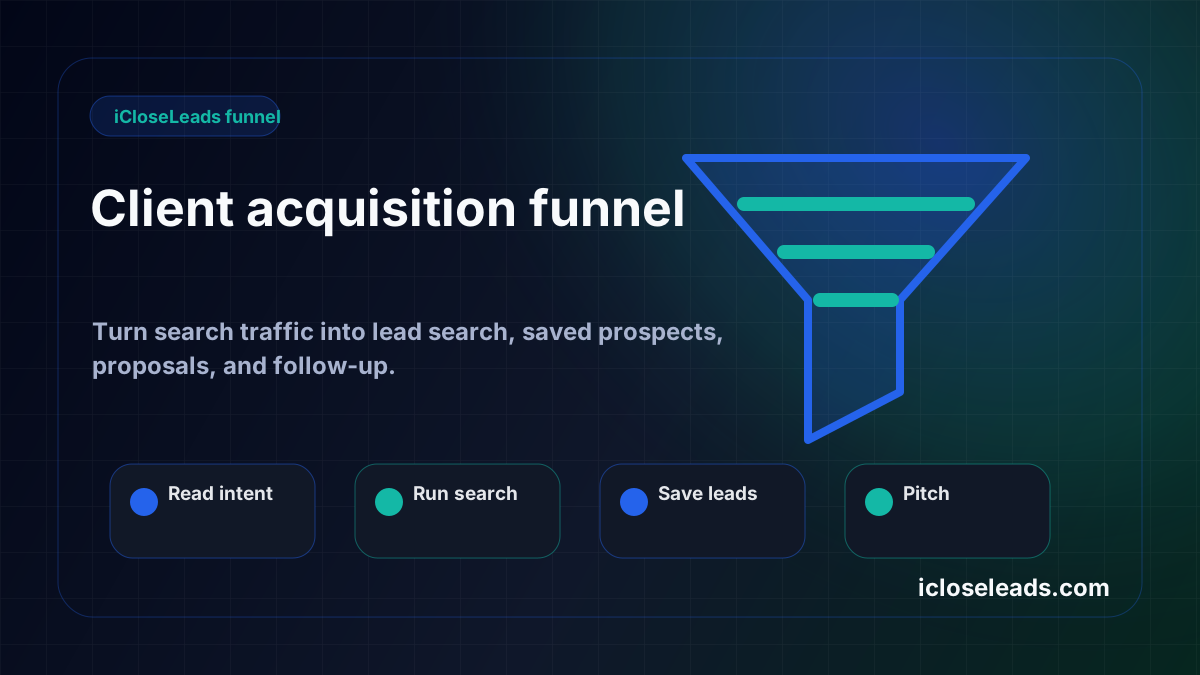
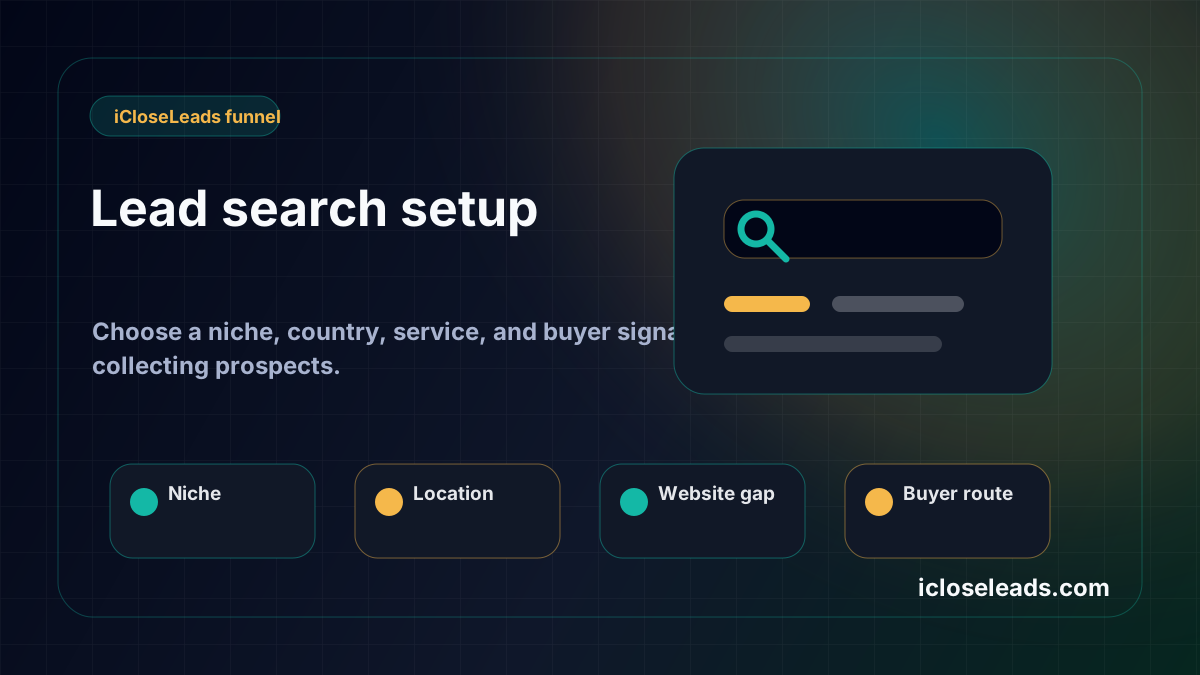
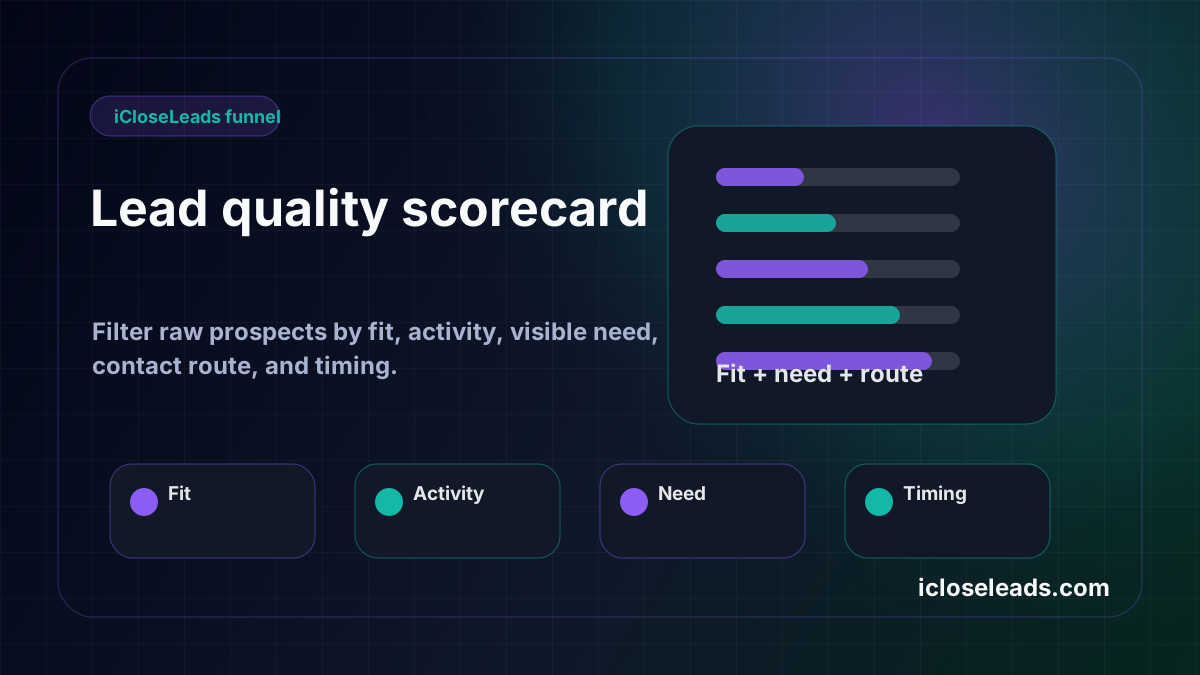
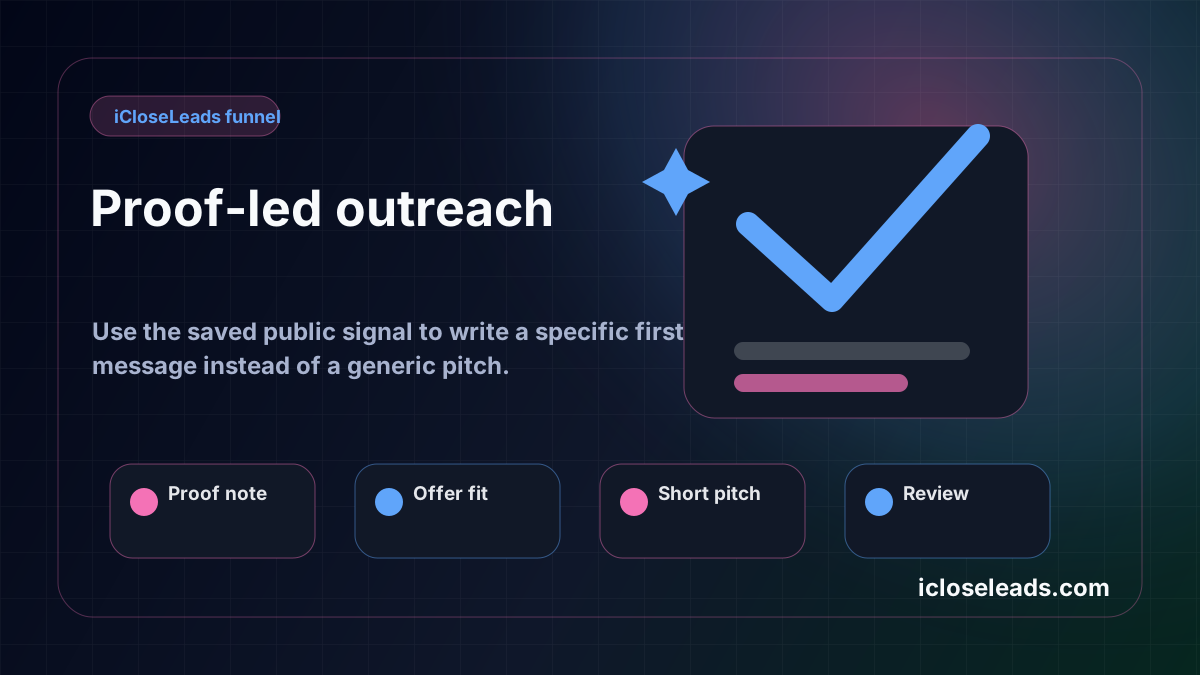
Turn the article into a lead workflow
Use the idea from this guide to find prospects, save only the best opportunities, prepare a specific pitch, and keep the follow-up attached to the original lead. Free users can start with 600 lead searches, then use the first saved lead as the test.
iCloseLeads Team
We study what works in freelance client acquisition so you don't have to. Subscribe for weekly insights.


