10 Lead Magnets That Attract High-Quality Web Design Leads
Ten practical lead magnets for freelancers and agencies who want exclusive web design leads, better-fit inquiries, and a cleaner path from search traffic to booked calls.

Table of Contents
- Key Takeaways
- Introduction: Why Lead Magnets Still Matter for Web Designers
- Part 1: What Makes a Lead Magnet Attract High-Quality Leads
- Part 2: 10 Lead Magnets That Attract Better Web Design Clients
- Part 3: How to Package the Lead Magnet So It Converts
- Part 4: The Follow-Up System That Turns Downloads Into Calls
- Part 5: How to Measure Lead Quality, Not Just Volume
- FAQ: Exclusive Web Design Leads
- Conclusion: Build a Lead Magnet That Qualifies Before You Sell
Key Takeaways
- The best lead magnets do not attract everyone - they attract the right problem-aware buyer.
- A useful lead magnet should connect naturally to your paid offer.
- Specificity beats size; a sharp checklist often outperforms a bloated ebook.
- Exclusive web design leads usually come from content that qualifies the buyer before the first call.
- The follow-up sequence matters as much as the download itself.
Introduction: Why Lead Magnets Still Matter for Web Designers
If you are trying to get web design leads, the internet will tell you to create a free guide, launch a newsletter, or give away a checklist. That advice is not wrong, but it is incomplete. A lead magnet is not valuable because it is free. It is valuable because it helps the right buyer raise their hand.
That distinction is what separates low-fit downloads from exclusive web design leads.
Most freelancers create lead magnets that are too broad, too educational, or too disconnected from what they actually sell. The result is predictable: a few email signups, very little buying intent, and no reliable path from content to conversation.
The better approach is to design lead magnets around the exact problems your ideal client already feels. If your buyer is a local business with an outdated site, give them a tool that shows where trust and conversions are leaking. If your buyer is a SaaS founder, give them a resource that helps them see why demos are not converting. If your buyer is a consultant, give them a fast way to diagnose whether the current site supports authority.
That is how freelance web designer lead generation becomes more strategic. You are not bribing people with free information. You are helping a real website design prospect understand a problem they are already trying to solve.
This article shows you how to do that with ten practical lead magnets, a stronger landing page structure, and a follow-up system that turns downloads into booked calls. Read it alongside the broader web design lead generation blueprint if you want the full content hub around these topics.
Part 1: What Makes a Lead Magnet Attract High-Quality Leads
Before we get into the list, it helps to define what we are actually trying to attract.
High-quality leads are not just people who click. They are people who:
- match the niche you want
- have a problem you can actually solve
- can afford the outcome
- are close enough to action that a conversation makes sense
That means a strong lead magnet should do four things:
1. Speak to a specific problem
"Free website tips" is weak. "Homepage conversion checklist for home service businesses" is strong. Specificity tells the reader that the resource was made for someone like them.
2. Create a natural bridge to your paid work
If your lead magnet is a general branding ebook but you sell conversion-focused web design, the handoff is awkward. The best lead magnets preview the logic of the paid offer.
3. Deliver quick value
People do not want homework. They want clarity. A checklist, scorecard, audit snapshot, mini-template, or before-you-buy worksheet often works better than a fifty-page PDF.
4. Filter the wrong fit out
The goal is not maximum volume. The goal is better-fit demand. If the resource is so broad that hobbyists, students, and bargain shoppers all want it, the list may grow while sales quality drops.
This lines up with what Google's SEO Starter Guide keeps reinforcing in a broader sense: pages that are clear, useful, and built around real user intent perform better than pages built around vague publishing habits. Helpful content and lead generation are not separate conversations. They support each other.
Part 2: 10 Lead Magnets That Attract Better Web Design Clients
Here are ten lead magnets that work especially well for freelancers, studios, and agencies that want leads for web design without flooding the funnel with weak-fit downloads.
1. Homepage conversion checklist
This is one of the simplest and strongest lead magnets for service businesses because it helps a buyer self-diagnose quickly. The checklist should cover headline clarity, trust proof, primary CTA, mobile layout, speed basics, and contact friction.
Why it works: a business owner can immediately see gaps on their own site. That creates urgency without you having to force it.
Best fit: local services, consultants, agencies, med spas, legal practices.
Paid offer bridge: homepage rewrite, conversion sprint, redesign proposal.
2. Local visibility snapshot
Create a one-page template that shows how a business appears across Google, service keywords, reviews, local trust signals, and website quality. This is especially strong if you already work in local SEO or local business web design.
Why it works: it turns an invisible problem into something concrete. A business owner who sees weak local coverage understands the cost faster.
Best fit: trades, clinics, salons, restaurants, repair shops, local B2B services.
Paid offer bridge: local landing pages, Google Business Profile improvements, full site modernization.
3. Quote request friction audit
This lead magnet focuses on one thing: how hard it is for a visitor to become a lead. Audit the quote path, call buttons, forms, trust sections, and mobile friction points.
Why it works: it frames web design as a revenue conversation, not an aesthetic one.
Best fit: home services, professional services, renovation, automotive, law firms.
Paid offer bridge: conversion cleanup, UX sprint, full quote flow redesign.
4. Competitor gap report template
Give prospects a simple framework to compare their site against two local or niche competitors. Categories can include trust signals, speed, messaging, service page depth, and CTA clarity.
Why it works: buyers become more motivated when they can see what the stronger competitor is doing better right now.
Best fit: crowded local markets and high-intent service categories.
Paid offer bridge: competitive positioning refresh, service page buildout, design + SEO retainer.
5. Website ROI calculator
A calculator can estimate the commercial upside of better conversion. You do not need fake precision. Even a simple worksheet based on traffic, conversion rate, lead value, and close rate can create a powerful conversation.
Why it works: it shifts the discussion from cost to potential return.
Best fit: businesses with active traffic, ads, or steady referral flow.
Paid offer bridge: redesign, CRO retainer, landing page optimization.
6. Redesign readiness scorecard
Not every business needs a full rebuild. A scorecard helps the buyer decide whether they need messaging fixes, page additions, local SEO support, or a full redesign.
Why it works: it builds trust because you are not assuming the most expensive answer.
Best fit: established businesses with older sites and uncertain next steps.
Paid offer bridge: strategy audit, roadmap session, staged redesign.
7. Industry-specific content brief
Offer a content brief tailored to one vertical, such as med spas, law firms, accountants, or contractors. Include the pages they usually need, the trust questions buyers ask, and the conversion elements missing on most competitor sites.
Why it works: niche specificity attracts better buyers than broad "web design guide" resources.
Best fit: any freelancer who has chosen a niche.
Paid offer bridge: website copy, content architecture, full site build.
8. Service page template pack
This resource gives prospects a repeatable structure for one high-value page: hero, proof, service explanation, FAQs, CTA, and local relevance blocks.
Why it works: it lets the buyer imagine the upgraded site clearly and quickly.
Best fit: agencies, consultants, local businesses, solo operators selling one main service.
Paid offer bridge: service page design, messaging strategy, SEO page build.
9. Lead follow-up email starter pack
This one surprises people, but it works well because many businesses lose leads after the site conversion point. Give them three short templates for replying to inquiries, quote requests, or form leads.
Why it works: it proves you understand the entire funnel, not just the website.
Best fit: small operators, local businesses, busy teams with weak response habits.
Paid offer bridge: CRM setup, email sequence work, consultation flow design, website + follow-up optimization.
10. AI website diagnosis with a human summary
Use your own workflow to review a website quickly, but do not send raw AI output. Package it into a clean scorecard with your summary, top issues, and first-priority fixes.
Why it works: the buyer gets something fast, but it still feels expert-led instead of obviously automated.
Best fit: almost any niche, especially local businesses and service brands with outdated sites.
Paid offer bridge: discovery session, teardown call, redesign proposal, conversion sprint.
Which lead magnet fits which buyer?
| Lead magnet | Best for | Buyer stage | Strongest paid next step |
| --- | --- | --- | --- |
| Homepage conversion checklist | local and service businesses | problem-aware | homepage or conversion sprint |
| Local visibility snapshot | local businesses | problem-aware | local SEO + site upgrade |
| Quote request friction audit | high-intent services | urgent | redesign or quote-flow cleanup |
| Competitor gap report | crowded local markets | solution-aware | competitive redesign |
| Website ROI calculator | traffic-rich businesses | decision-stage | full redesign or CRO |
| Redesign readiness scorecard | older websites | consideration | strategy session |
| Industry-specific content brief | niche buyers | awareness to consideration | content + design build |
| Service page template pack | service brands | consideration | service page project |
| Lead follow-up email starter pack | small operators | post-conversion | CRM and funnel support |
| AI website diagnosis | broad use | early to mid consideration | teardown call or proposal |
That table matters because not every lead magnet belongs at the same stage of the web design sales funnel. A calculator or readiness scorecard usually works later in the buying cycle than a general checklist.
Part 3: How to Package the Lead Magnet So It Converts
Even a strong lead magnet can underperform if the landing page is vague.
Your page only needs a few blocks:
- A sharp promise - what the person will understand or fix after using the resource
- A strong audience cue - who this is for
- A quick preview - what is inside
- A low-friction form - ask only for what you need
- A next-step hint - what happens after the download
Weak landing page headline:
"Download our free resource."
Stronger landing page headline:
"See the 7 homepage issues that quietly cost local businesses calls and quote requests."
The better version is more specific, more visual, and more outcome-driven.
Two packaging rules help a lot:
Keep the ask proportional
If the lead magnet is a short checklist, do not ask for ten form fields. Name and email are usually enough. If the resource is higher value, such as a competitor gap report, then asking for industry, website, or location can help qualification.
Make the next step visible but optional
The thank-you page should not immediately hard-sell. It should do one of three things:
- offer a related audit
- invite the reader to reply with their site
- point to a next article or case study
That keeps the experience helpful while still moving the best leads forward.
HubSpot's marketing statistics research continues to reinforce a simple point that applies here: the channels that perform well are the ones tied to real intent and stronger conversion paths. In practice, that means a lead magnet page should feel more like a focused offer page and less like a resource archive.
Part 4: The Follow-Up System That Turns Downloads Into Calls
Many freelancers build the lead magnet, collect the email, and then do nothing useful with the moment. That is where a lot of potential disappears.
Your follow-up should mirror the resource.
If someone downloaded a homepage checklist, the email sequence should help them interpret what they found. If someone used a redesign readiness scorecard, the follow-up should help them see which path makes sense next.
A simple three-email flow is enough:
Email 1: Delivery plus framing
Deliver the resource and explain how to use it in one or two lines. Keep the tone practical.
Example:
"Here is the checklist. Start with the hero, CTA, and mobile path first. Those three areas usually tell you most of what is going wrong."
Email 2: Clarify the common mistake
Two or three days later, send one short lesson tied to the resource.
Example:
"The biggest pattern we see is businesses using generic copy where visitors need proof and specificity. A clearer above-the-fold message often changes results before a full rebuild is even discussed."
Email 3: Invite a light next step
Offer a teardown, quick reply audit, or shortlist of recommended changes.
Example:
"If you want, reply with your homepage and I can tell you which one or two issues I would fix first."
This works because it keeps the momentum aligned with the problem the person already cared about.
If you prepare these emails through a review-first workflow such as Gmail-ready outreach, you can keep the tone sharp without letting the process turn into mass automation.
Also remember that nurture still counts as outreach. Stay honest about what the person signed up for and keep the sequence compliant with the broad principles in the FTC's CAN-SPAM guidance.
Part 5: How to Measure Lead Quality, Not Just Volume
If you only track downloads, you will overvalue the wrong resources.
Measure the lead magnet across the full path:
- landing page conversion rate
- email open and reply behavior
- qualified call rate
- proposal rate
- close rate
- average deal size by lead magnet source
This is where the term exclusive web design leads becomes more useful. Exclusivity is not about hiding the resource behind a vault. It is about attracting people whose problem, timing, and budget line up with your offer.
For example:
- A homepage checklist might convert at a higher rate but bring more early-stage leads.
- A redesign readiness scorecard might convert at a lower rate but produce stronger calls.
- A competitor gap report might generate fewer total leads but more premium conversations.
That is not a problem. That is the point. Better-fit leads almost always look "smaller" at the top of the funnel and stronger at the bottom.
If you want to systemize this, track lead source inside your CRM or saved leads workflow. Then you can compare which content angle produces the best buyer type, not just the biggest email list.
The real job of a lead magnet is not to grow your vanity metrics. It is to sharpen your pipeline.
FAQ: Exclusive Web Design Leads
What is the best lead magnet for web designers?
The best lead magnet is usually the one tied most closely to the paid service. For many freelancers, that means a homepage checklist, conversion audit, or redesign scorecard because those naturally lead into real project work.
How do I get web design leads without attracting freebie hunters?
Use narrower positioning. Build the lead magnet around a specific buyer, problem, and outcome. The more specific the resource, the more likely it is to attract a real website design prospect instead of a casual browser.
Should I make the lead magnet long or short?
Short is usually better if it delivers real clarity fast. A checklist, worksheet, template, or scorecard often outperforms a long ebook because the reader can use it immediately.
Where should I promote a lead magnet?
Start with search-driven blog posts, your homepage or service pages, thank-you pages after audits, relevant LinkedIn posts, and targeted outreach where appropriate. The lead magnet should support your broader acquisition system, not live in isolation.
Can lead magnets help local business web design services?
Yes. In local markets they can work especially well because business owners respond quickly to resources that make trust, visibility, and conversion gaps obvious.
Conclusion: Build a Lead Magnet That Qualifies Before You Sell
The smartest lead magnets do not just collect emails. They qualify the buyer, clarify the problem, and make your paid offer feel like the natural next step.
That is why they are so effective for leads for web design and broader freelance web designer lead generation. A strong resource helps the right person understand the cost of inaction before you ever get on a call.
Start with one lead magnet that is tightly connected to the service you most want to sell. Keep it specific. Keep it fast to use. Build a short follow-up sequence around it. Then measure the quality of conversations it produces, not just the size of the list.
That is how you turn traffic into better-fit demand instead of more noise.
Visual workflow
See the system before you build it

Turn the article into a lead workflow
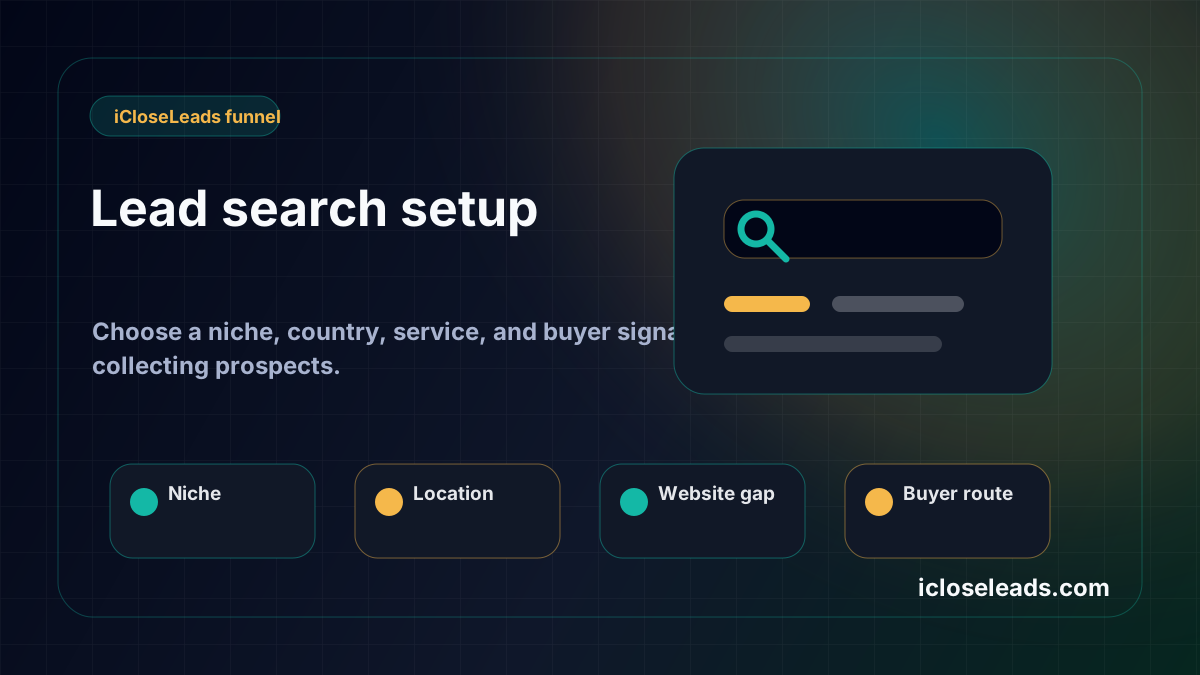
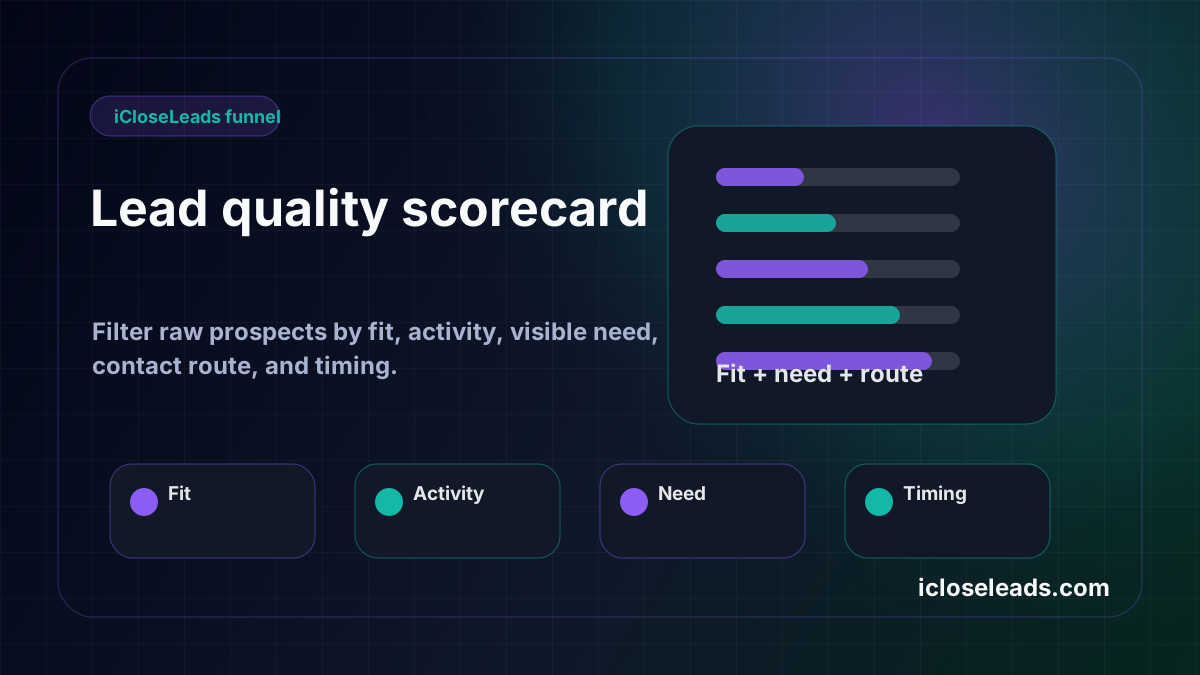
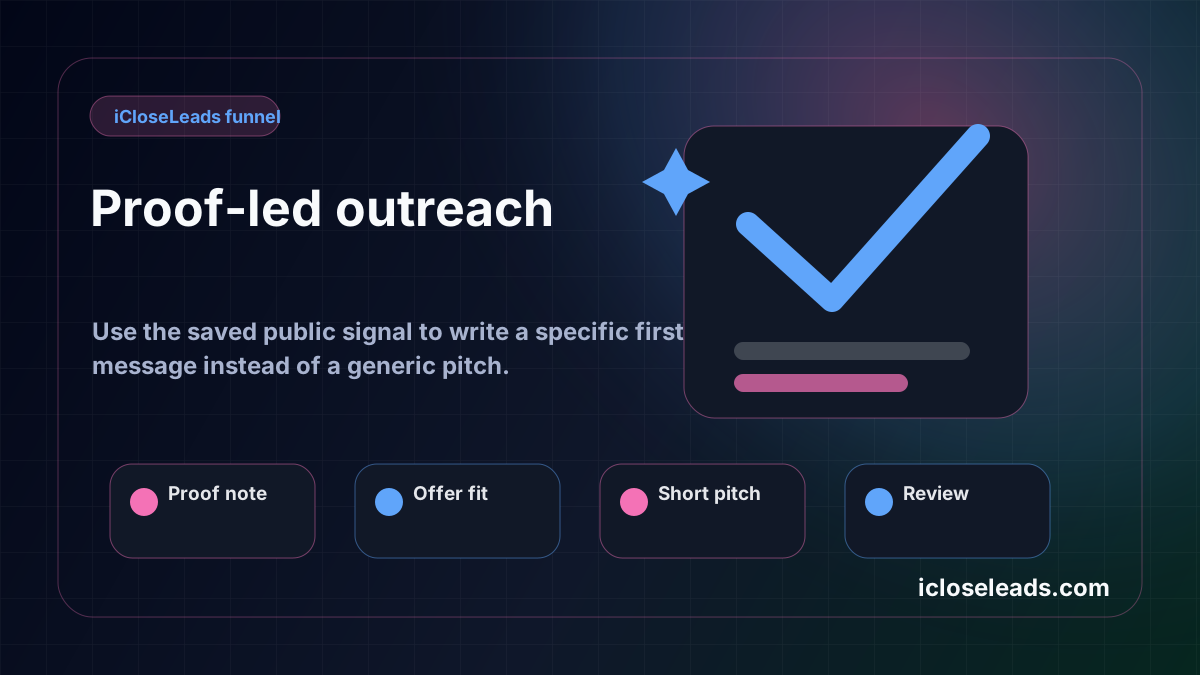
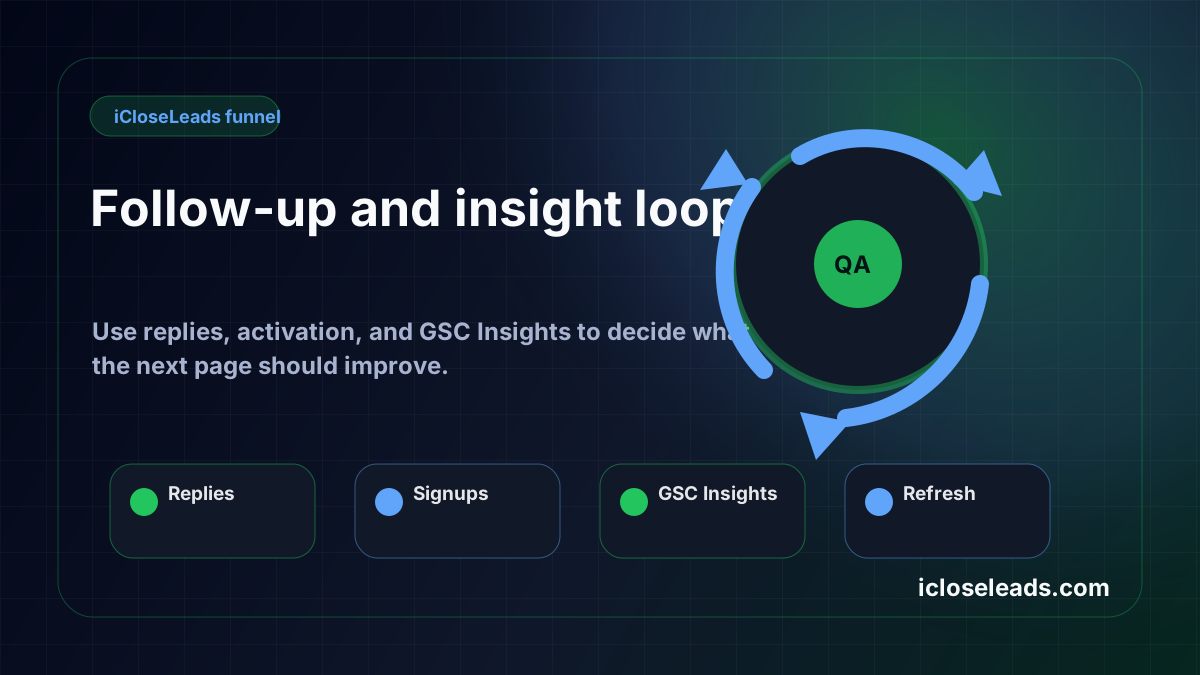
Use the idea from this guide to find prospects, save only the best opportunities, prepare a specific pitch, and keep the follow-up attached to the original lead. Free users can start with 600 lead searches, then use the first saved lead as the test.
iCloseLeads Team
We study what works in freelance client acquisition so you don't have to. Subscribe for weekly insights.


