600 Free Trial Leads for Web Designers: Turn Local Searches Into Website Projects
A focused trial sprint for web designers using 600 lead results to find businesses with no website, outdated pages, weak mobile CTAs, and proposal-ready proof.

Run a weekly web design lead sprint
Use the free allowance to find active businesses with visible website gaps, save proof, and draft audit-style outreach.
This article is built for readers who need a practical next step: choose one market, search for visible signals, save qualified leads, and draft a proof-led message.
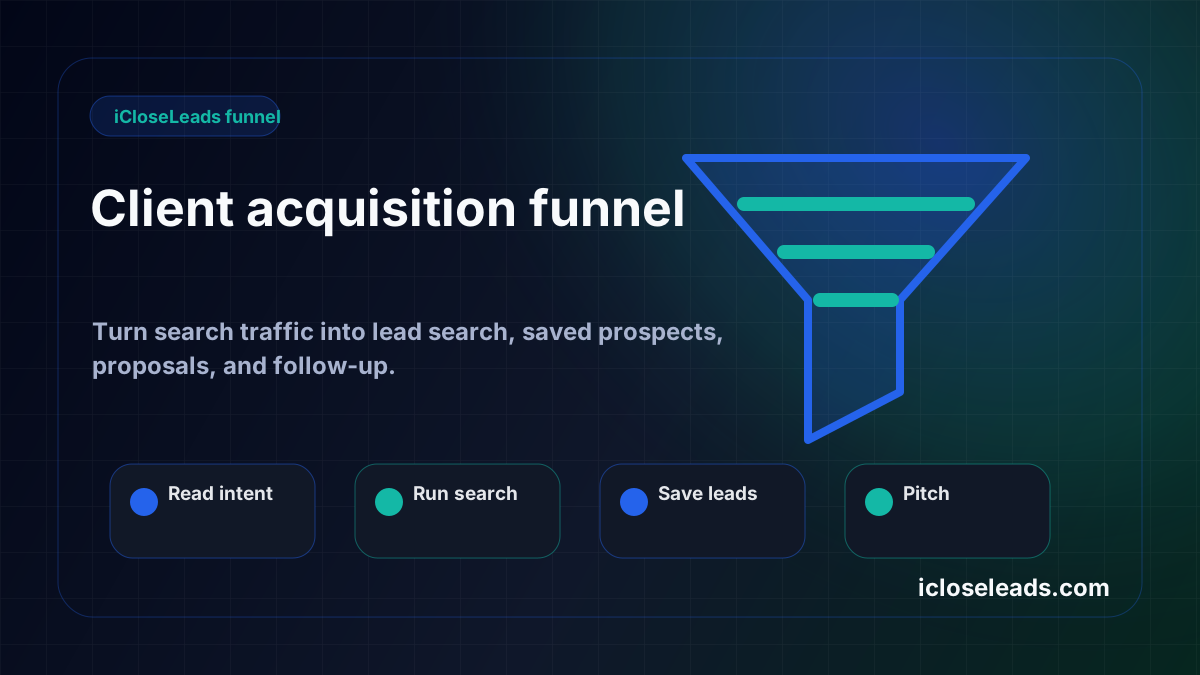
Run a free lead search- 1Choose the buyer
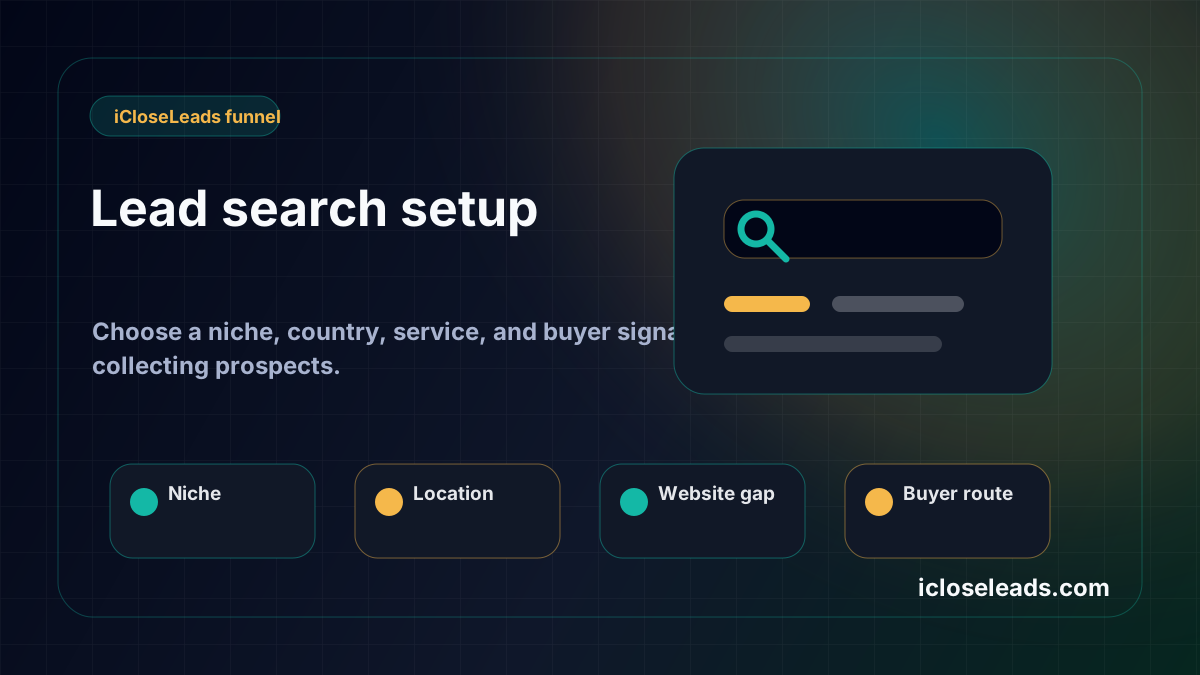
Pick one niche, location, service, or marketplace angle before searching.
- 2Search for proof
Look for website gaps, hiring signals, public profiles, weak conversion paths, or clear demand.
- 3Save only qualified leads
Keep the lead only when the fit, proof, contact route, and first offer are clear.
- 4Pitch and follow up
Draft from saved context, review the message, and schedule the next action.
Web designers do not need every business on the internet.
They need a repeatable way to find the smaller group of businesses where a better website could create more calls, bookings, quotes, or trust. That is why the 600-result free trial can work well for web designers. It gives enough search capacity to test a niche without turning the trial into blind outreach.
Quick answer
Use the 600 lead results in the free 3-day trial to run one focused web design sprint: choose a niche and city, search local businesses, score website gaps, save only prospects with visible proof, draft a short audit-style pitch, and follow up inside the same pipeline.
The best web design lead signals
A good web design lead usually has one or more of these signals:
- No website attached to an active business profile.
- Outdated website that still belongs to an active business.
- Weak mobile call, booking, or quote path.
- Strong reviews but thin service pages.
- Service pages that do not answer buyer questions.
- Competitors with clearer pages and stronger trust proof.
- Active ads or social posts pointing to weak pages.
Those signals matter because they turn your pitch from "I build websites" into "I noticed a conversion gap that may affect calls or bookings."
Day 1: Pick one niche and one offer
Do not search every category. Pick one:
- Dentists.
- Med spas.
- Landscapers.
- Cleaning companies.
- Remodelers.
- CPA firms.
- Chiropractors.
- Immigration lawyers.
Then choose the first offer. Examples:
- Homepage and quote-path cleanup.
- Service landing page.
- Website redesign audit.
- Booking or contact form improvement.
- Local trust page with reviews, FAQs, and service proof.
Day 2: Search 150 local leads
Use local business leads to search one niche and location. Do not save everything. Open each business profile and website, then score the prospect.
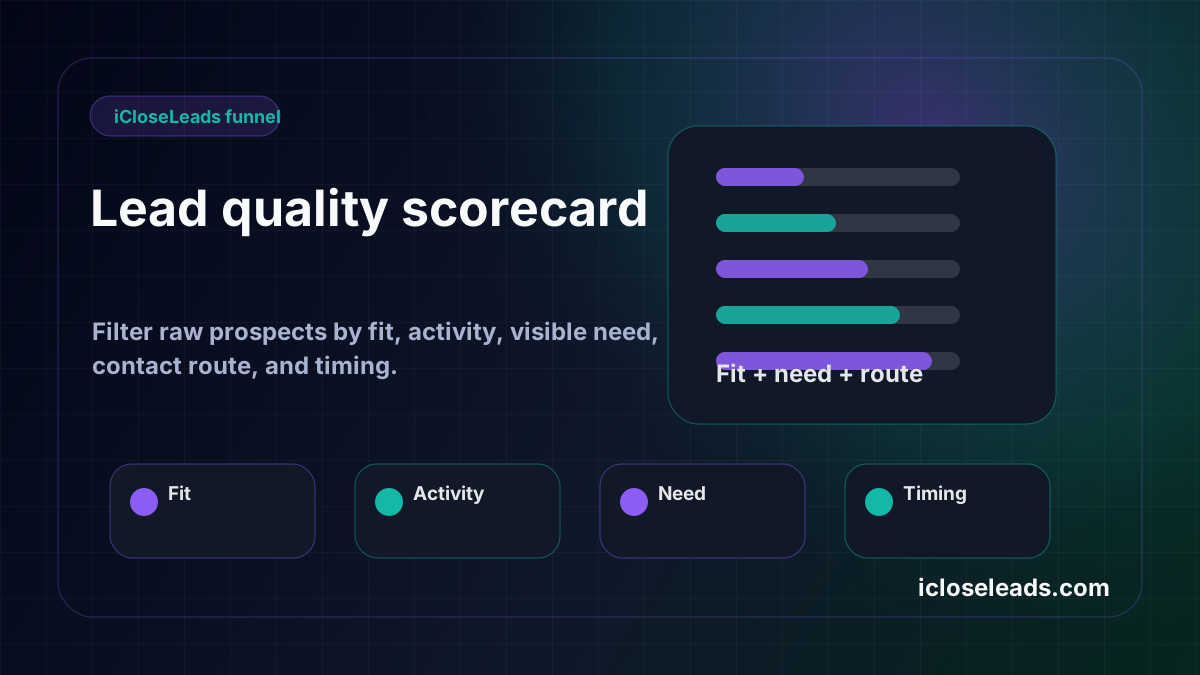
The score:
- Fit: does the business match your offer?
- Proof: is the website gap visible?
- Value: would fixing it plausibly help calls, quotes, or bookings?
- Contact: is there a respectful business route?
- Follow-up: can you return to this lead later?
Day 3: Search 150 no-website or weak-website leads
This is where web designers often find the clearest opportunities. Use resources like businesses without websites and how to find businesses without websites on Google Maps to keep the workflow specific.
The strongest prospect is not just "no website." It is an active business with reviews, contact route, service demand, and a clear reason an owned website would help.
Day 4: Search 100 competitor-gap leads
Pick a service category and compare local pages. If competitors answer questions better, show proof in your notes.
Examples:
- Competitor has financing FAQ; prospect does not.
- Competitor has service-area pages; prospect has one thin homepage.
- Competitor has before/after proof; prospect has none.
- Competitor has a sticky call button; prospect buries contact details.
Day 5: Save the best 20 prospects
The output of the week is not 600 names. It is 20 strong prospects with proof notes.
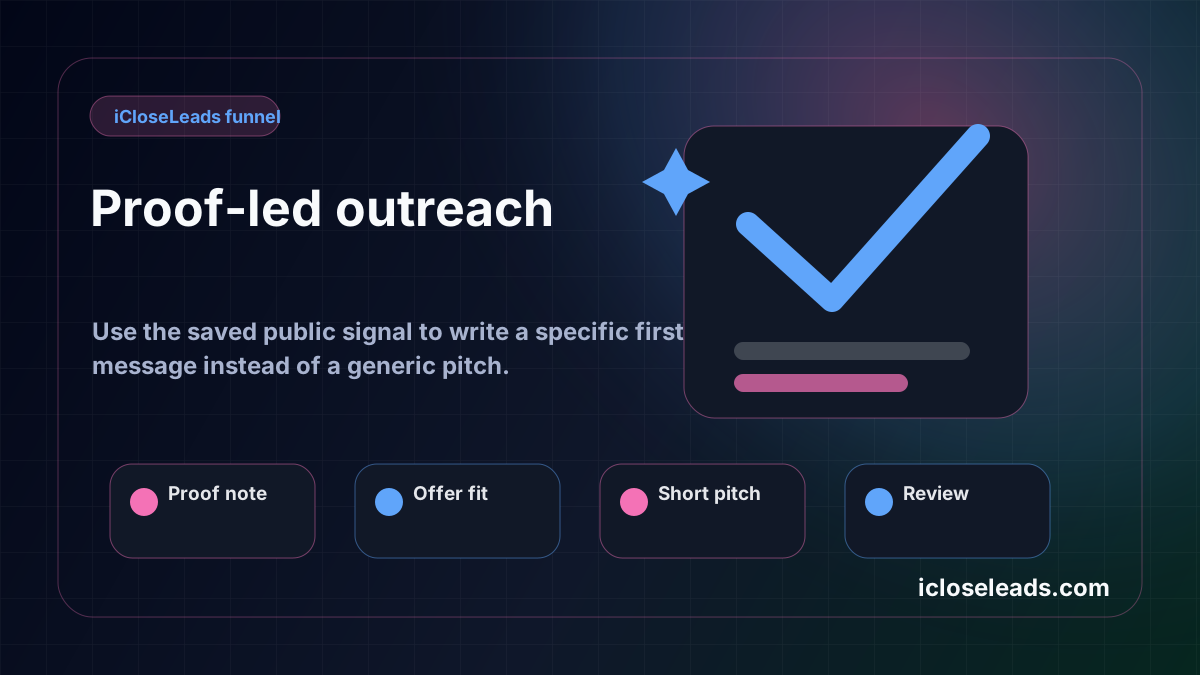
A saved proof note should look like:
"Kitchen remodeler in Phoenix, active reviews, service page is thin, no project gallery near quote CTA, competitor pages show before/after proof and financing FAQs. Pitch angle: short redesign audit focused on quote-page trust."
That note is enough to write a useful first message.
Day 6: Draft five audit-style pitches
A strong web design pitch is small and specific.
"I found your business while checking local remodelers with active review demand. Your site has the basics, but the quote path could use stronger trust proof near the first call-to-action. I help service businesses improve that path with clearer service pages and quote sections. Want me to send a quick 3-point audit?"
Avoid fake case studies. Avoid unsupported claims. Keep the ask low-friction.
Day 7: Review and repeat the winning niche
Ask:
- Which niche produced the clearest website gaps?
- Which businesses had the best contact routes?
- Which pitch angle was easiest to explain?
- Which saved leads deserve follow-up?
- Which searches should be repeated next week?
If one niche produced weak leads, change the niche before increasing volume.
How this supports iCloseLeads growth
This sprint connects three strong iCloseLeads paths:
- Freelance client acquisition system for the overall weekly plan.
- 600 lead results in a free 3-day trial for the product offer.
- free local business leads for web designers for the signup page.
Together, they move a reader from search intent to product action.
Final takeaway
For web designers, 600 free trial lead results are valuable only when the search is narrow. Choose one niche, find visible website gaps, save proof, draft audit-style pitches, and follow up. That is how a free allowance becomes a real website project pipeline.
Visual workflow
See the system before you build it
Turn the article into a lead workflow
Use the idea from this guide to find prospects, save only the best opportunities, prepare a specific pitch, and keep the follow-up attached to the original lead. Free users can start with 600 lead searches, then use the first saved lead as the test.
iCloseLeads Team
We study what works in freelance client acquisition so you don't have to. Subscribe for weekly insights.


