Upwork Leads vs Direct Freelance Leads: Which Pipeline Should You Build First?
Compare Upwork leads and direct freelance leads by intent, competition, control, qualification, follow-up, and how iCloseLeads helps freelancers build an owned pipeline.

Build a second pipeline beside marketplace applications
Use marketplace language to understand demand, then search direct prospects with visible proof and better follow-up control.
This article is built for readers who need a practical next step: choose one market, search for visible signals, save qualified leads, and draft a proof-led message.
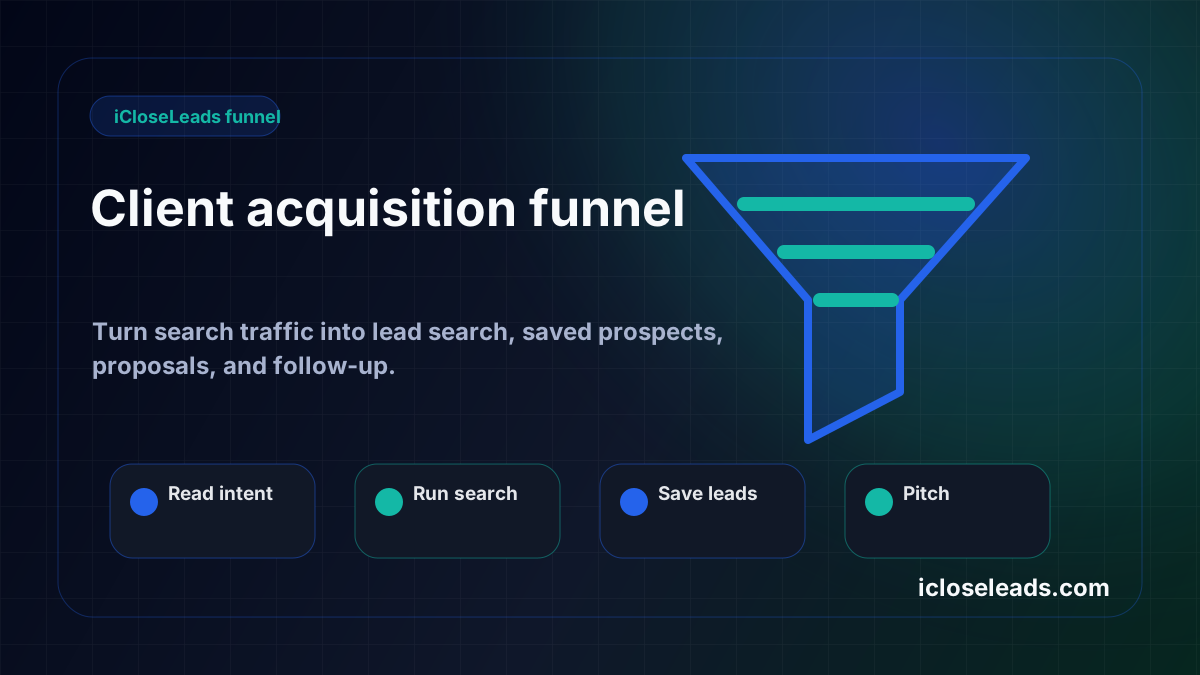
Run a free lead search- 1Choose the buyer
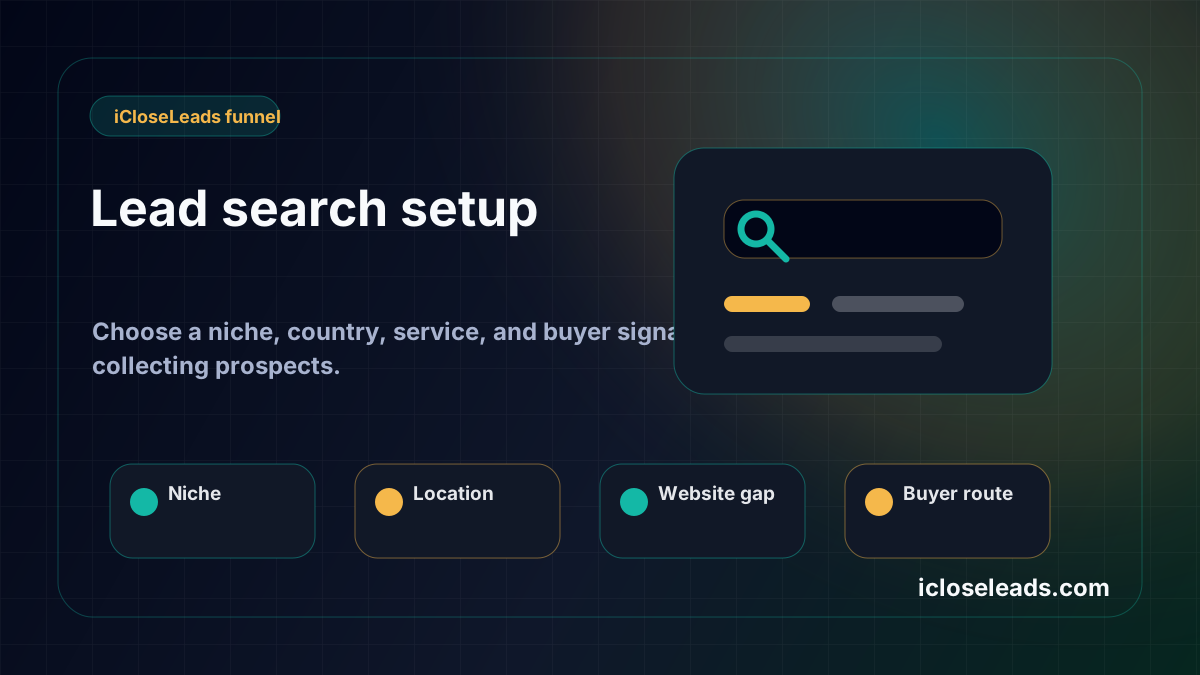
Pick one niche, location, service, or marketplace angle before searching.
- 2Search for proof
Look for website gaps, hiring signals, public profiles, weak conversion paths, or clear demand.
- 3Save only qualified leads
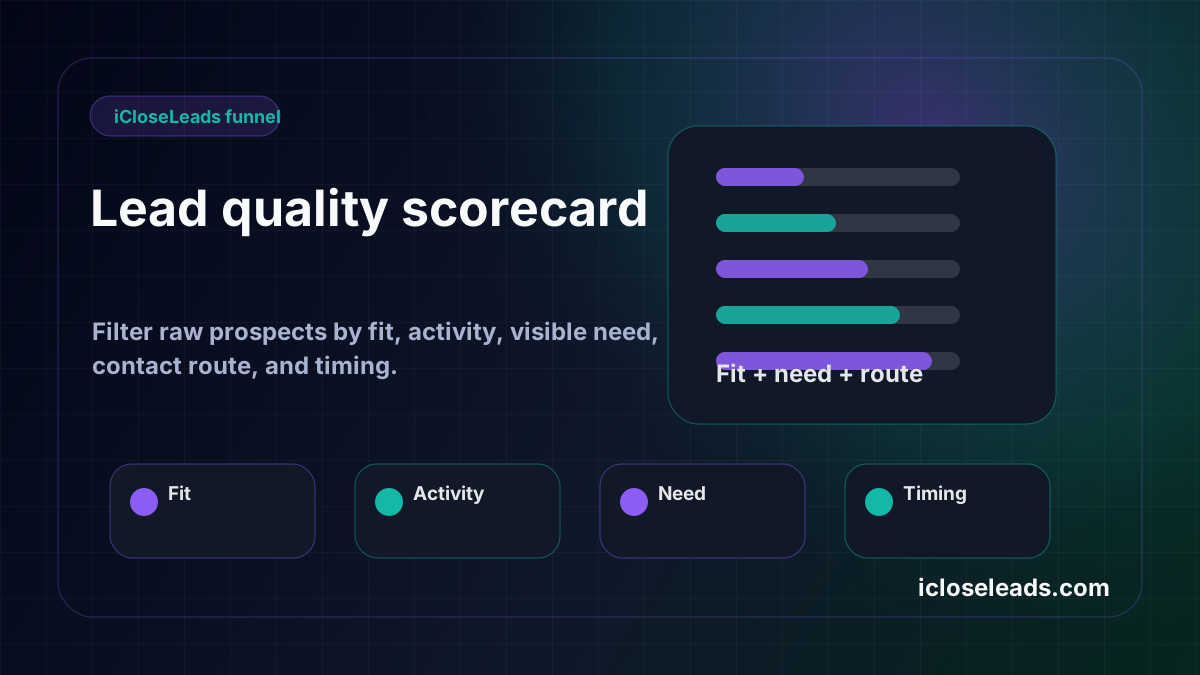
Keep the lead only when the fit, proof, contact route, and first offer are clear.
- 4Pitch and follow up
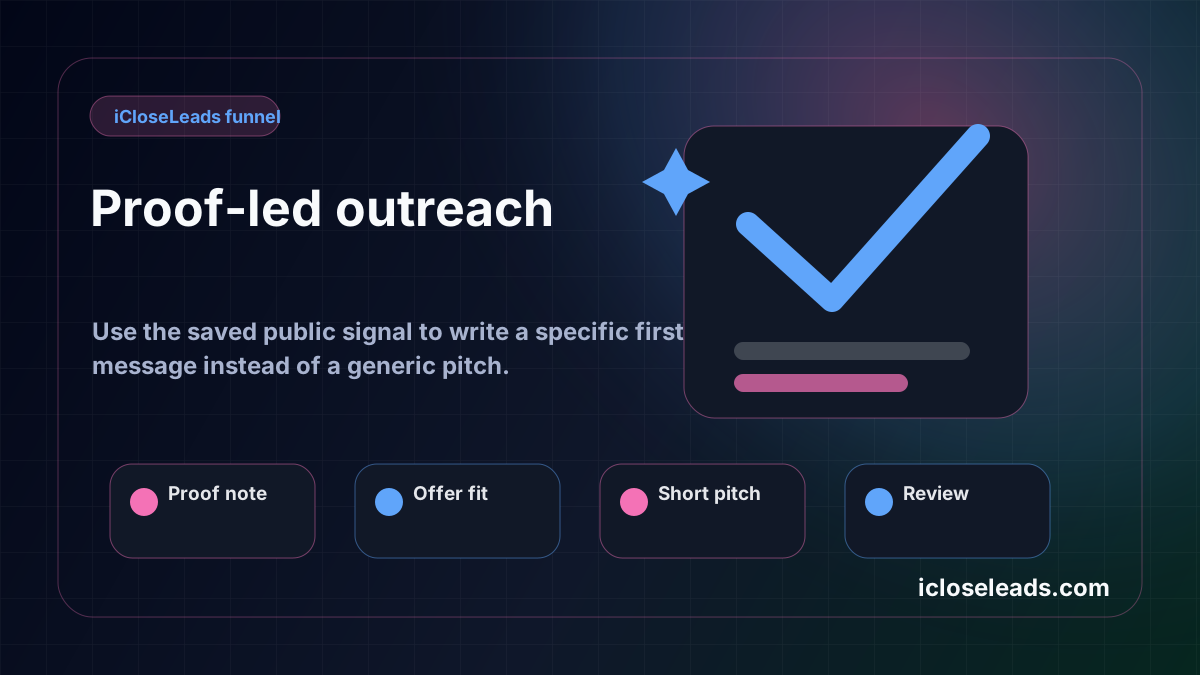
Draft from saved context, review the message, and schedule the next action.
Upwork leads and direct freelance leads solve different problems.
Upwork is useful when a client has already decided to hire and posted a project. Direct freelance leads are useful when you want to find businesses before they enter a crowded marketplace. A healthy freelancer can use both, but they should not treat them the same.
This guide helps you choose which pipeline to build first.
Quick answer
Use Upwork when you need validated project demand and are willing to compete inside a marketplace. Use direct freelance leads when you want more control, lower platform dependence, and a chance to contact businesses based on visible public signals before they post a job.
What Upwork does well
Upwork is still one of the best-known marketplaces for freelancers. Its own resources explain that freelancers can use a niche, portfolio, networking, and strong proposals to win clients. That is valid advice.
See Upwork's guide here: How to get clients as a freelancer.
The advantage is buyer intent. A posted job means someone has a problem, budget, and project language. You do not have to convince them that the category exists.
The disadvantage is competition. The demand is public. Many freelancers see the same job. The platform also owns the relationship, rules, profile visibility, and lead flow.
What direct leads do better
Direct leads are not automatically better. They require more research. But they create more control.
Direct leads let you:
- Choose a specific niche.
- Find businesses before they post a job.
- Build a reusable outreach system.
- Save proof and context.
- Follow up outside a marketplace queue.
- Test local, remote, agency, and service-specific angles.
The cost is that you must qualify the lead yourself.
The best use cases for Upwork leads
Use Upwork first if:
- You need fast proof that your offer is wanted.
- Your profile already has reviews.
- You sell a service buyers commonly search for on marketplaces.
- You can write strong proposals quickly.
- You want to learn how clients describe their problems.
Lead generation jobs on Upwork can also show what buyers are actively requesting. Upwork's lead generation hiring pages describe lead generation as research, qualification, scoring, and connecting potential customers with the sales process. That language is useful because it confirms that quality and qualification matter, not just list size.
The best use cases for direct leads
Use direct leads first if:
- You sell local websites, SEO, landing pages, automation, copywriting, or niche consulting.
- You can identify visible business gaps.
- You want less dependence on one platform.
- You can send a short, specific, respectful first message.
- You are willing to track follow-up.
Direct leads work especially well when the prospect has a public signal: no website, outdated website, active reviews, hiring activity, weak service page, or poor booking path.
The owned pipeline workflow
Here is the clean way to combine both:
- Use Upwork to study buyer language and demand.
- Extract the repeatable problem patterns.
- Search direct leads that show similar problems.
- Save only leads with visible proof.
- Draft outreach that references the proof.
- Track follow-up inside a CRM.
For example, if Upwork jobs keep asking for landing pages for coaches, search direct leads for coaches with active offers but weak landing pages. If Upwork buyers ask for Google Business Profile help, search local profiles with missing or weak website paths.
How iCloseLeads fits
iCloseLeads is not a replacement for every marketplace. It is the owned pipeline layer.
Use the Upwork lead generation alternative resource to understand the difference, then use Lead Discovery for direct searches and CRM Pipeline for follow-up.
If you are still early, start with the free allowance. Run a small direct lead sprint beside your Upwork applications. Compare which source produces better conversations, not just more leads.
Decision table
Choose Upwork when:
- Demand is already posted.
- You can compete with proof.
- You want to learn buyer language.
- You are comfortable with platform rules.
Choose direct leads when:
- You can find visible business gaps.
- You want your own pipeline.
- You need niche control.
- You can follow up consistently.
Final takeaway
Upwork leads are demand that is already public. Direct freelance leads are demand you discover before the market gets crowded. The strongest freelancer does not argue about which one is always better. They build a system that uses Upwork for market learning and direct leads for pipeline control.
Visual workflow
See the system before you build it
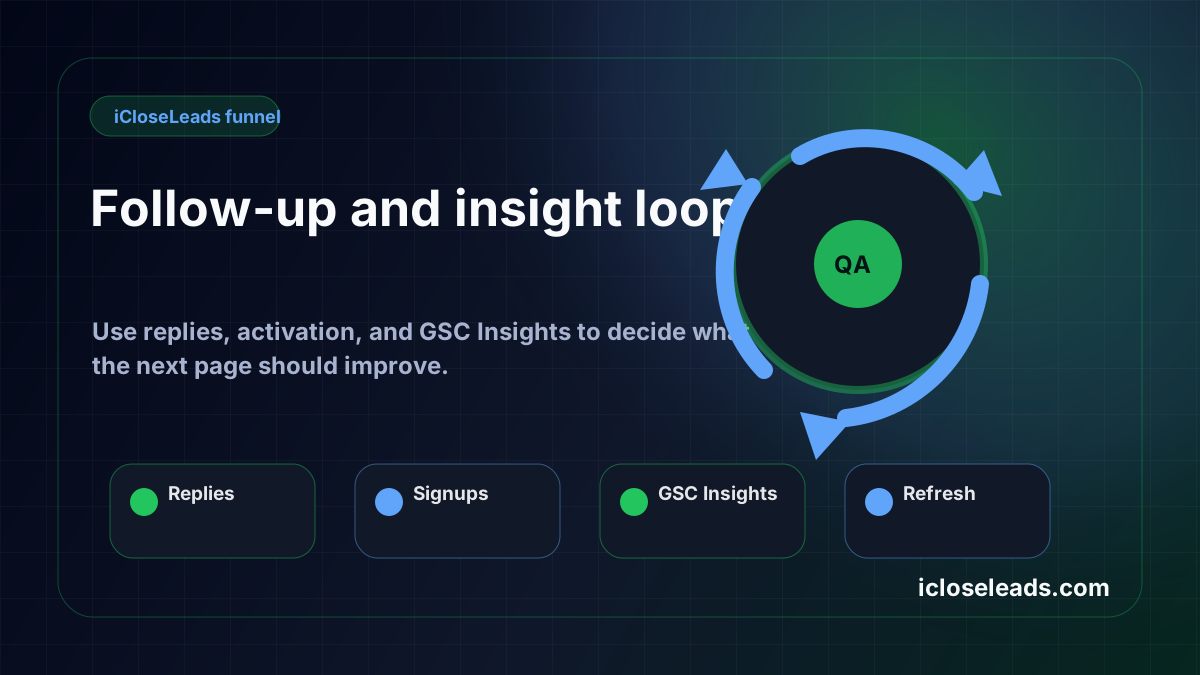
Turn the article into a lead workflow
Use the idea from this guide to find prospects, save only the best opportunities, prepare a specific pitch, and keep the follow-up attached to the original lead. Free users can start with 600 lead searches, then use the first saved lead as the test.
iCloseLeads Team
We study what works in freelance client acquisition so you don't have to. Subscribe for weekly insights.


