Small Business Lead Generation in the USA, UK, and Canada: What Actually Works
A practical cross-market guide to finding local small business leads in the USA, UK, and Canada without relying on stale scraped lists.

The searcher wants to generate small business leads across multiple countries while respecting local data differences.
A lead workflow that works in one country can break in another because addresses, registries, phone formats, categories, and outreach norms differ.
That is why small business lead generation USA UK Canada should not be treated as a shortcut or a scraping trick. It should be treated as a careful prospecting workflow: find a real business signal, verify what can be verified, label uncertainty honestly, and turn the result into a useful next step for the buyer.
iCloseLeads is built around that idea. The platform is not trying to make freelancers send more empty outreach. It helps you find better lead signals, preserve context, draft stronger proposals, and keep your pipeline organized.
Why this topic matters now
Agencies can now sell across borders, but they need country-aware filters and realistic proof links instead of pretending every market has the same owner database.
Search behavior is also changing. Buyers compare vendors across search results, AI answers, local profiles, websites, social pages, and public proof before they ever reply. That means a freelancer or agency needs content and outreach that answers real questions, not pages created only to chase a keyword. The best SEO and lead generation work now has the same foundation: be clear, be useful, show evidence, and make the next action easy.
For agencies selling to English-speaking local markets, this matters because every wasted lead has a hidden cost. It costs time to research, emotional energy to pitch, and pipeline space that could have gone to a better opportunity. A smaller list of verified prospects usually beats a huge list of names with no reason to buy.
The core keyword and related searches
Primary keyword: small business lead generation USA UK Canada
Related search intent cluster:
- small business leads USA
- UK business leads
- Canada business leads
- local business lead generation
- agency lead generation
These searches usually come from people who are not looking for theory. They want a working process. They want to know where to look, what to trust, what to ignore, how to avoid bad data, and what to say once a lead looks promising.
The content strategy behind this page is simple: answer the whole workflow, not just the definition. A reader should leave knowing how to identify the lead, qualify it, save it, and write the first message.
What a qualified lead should look like
For this use case, a qualified lead is not just a business name. A qualified lead has a reason, a route, and a next action.
The reason is the visible business problem or opportunity. The route is the public way to contact or verify the business. The next action is what you will do after saving the lead.
Strong proof signals include:
- country detected from address
- state, county, province, or postcode clue
- phone format matches country
- profile link opens exact business
- website domain or social page matches business
- registry guidance fits the jurisdiction
One signal alone is rarely enough. A phone number without a matching business profile may be noisy. A website gap without evidence that the business is active may be weak. A possible owner name without a proof link may create false confidence. The strongest leads are the ones where two or three signals point in the same direction.
The workflow
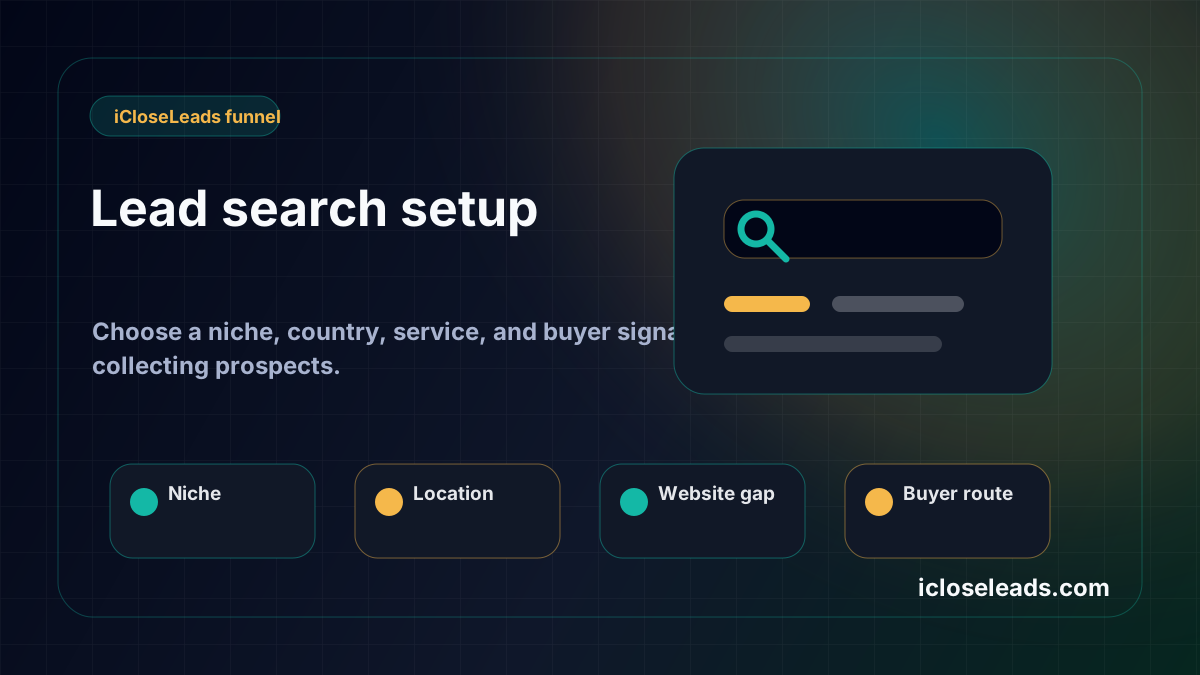
- Start with a country filter so saved leads do not mix US, UK, and Canada records invisibly.
- Use city and category searches that reflect local language, such as postcode, county, state, province, or service area.
- Treat registry checks as guidance rather than guaranteed owner discovery.
- Label phone data conservatively when mobile, landline, and WhatsApp cannot be confirmed.
- Keep source names hidden from customers while showing confidence and actionability.
- Save notes that explain the opportunity in plain language.
This workflow keeps the search honest. It also helps the user avoid the most common failure mode in prospecting: collecting a lead, forgetting why it mattered, and then writing a generic message later.
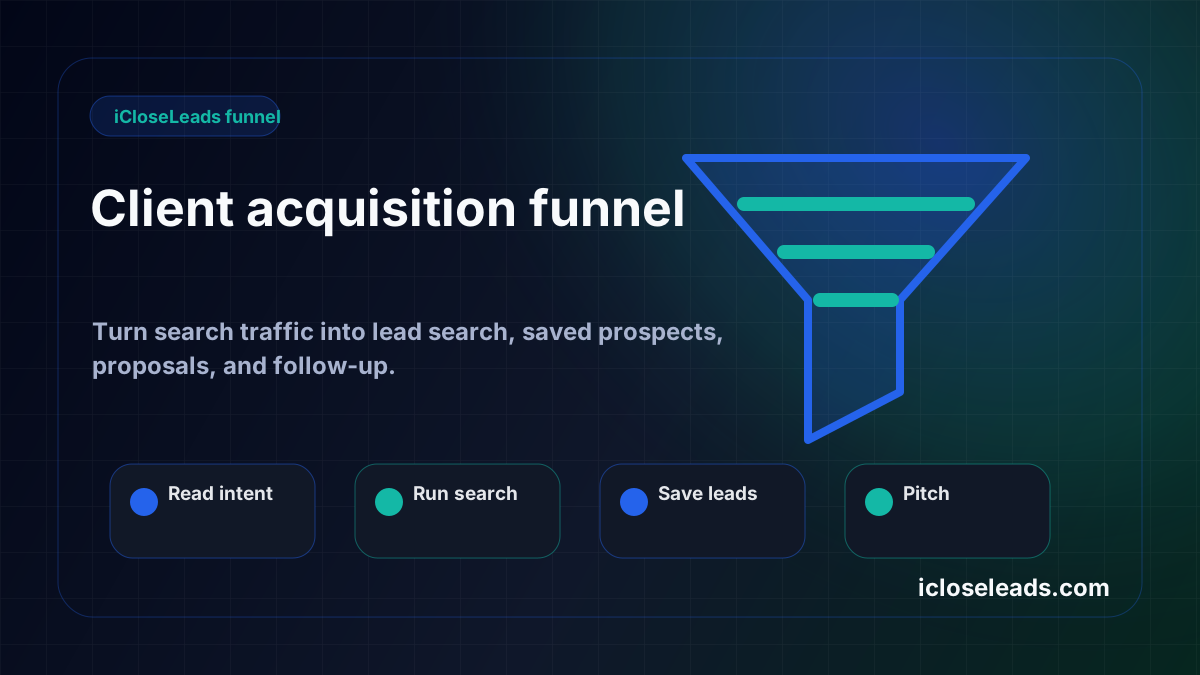
When you use iCloseLeads, the practical flow is to move from discovery to qualification to saved context. Start with the relevant dashboard area, such as /dashboard/local-leads. Search by the category, niche, country, or lead type that matches your offer. Open the lead only when there is enough signal to justify attention. Add a note while the context is fresh. If the route needs a person, send it into decision-maker research. If it needs a proposal, generate a draft from the lead context and review it before sending.
How to score the lead
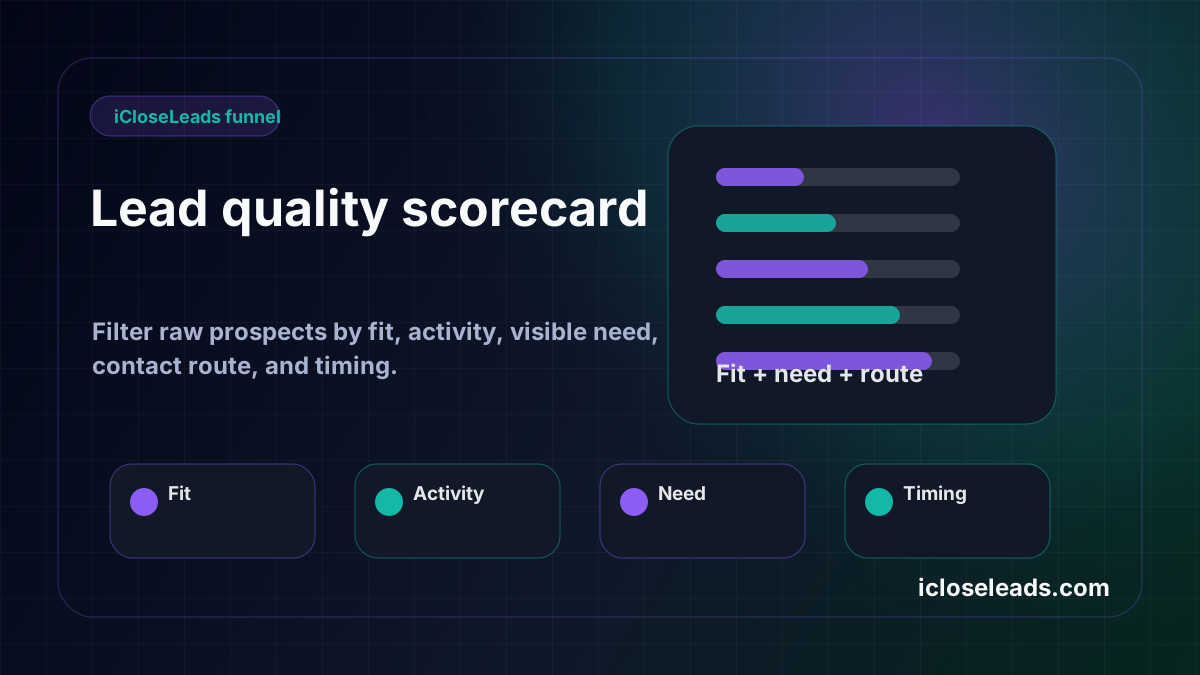
Use a simple five-part score. You do not need a complicated model. You need discipline.
1. Fit
Does the business match the service you sell? If you sell starter websites, a no-website service business may be a fit. If you sell Meta ads, you need an offer that can convert paid traffic. If you sell local SEO, the lead should have a search visibility or service-page problem.
Fit matters because a good contact at the wrong business is still a weak lead. Do not pitch just because contact data exists.
2. Activity
Is the business alive and current? Look for recent reviews, fresh posts, active hours, working website pages, public phone routes, or current job posts. Activity does not guarantee budget, but it suggests the business is operating and may care about customer acquisition.
3. Visible need
Can you explain the opportunity without insulting the business? The best messages do not say "your website is bad." They say something specific: the quote button is hard to find, the mobile call route is unclear, the service pages do not answer local search intent, or the profile sends interested customers to a weak next step.
4. Contact route
Can you reach the business through a public, business-facing route? This may be a phone number, email, contact form, public profile, owner page, or verified social route. If the route is generic, write the message accordingly. Ask for the person who handles the relevant decision instead of pretending you already reached them.
5. Timing
Is there a reason to reach out now? Timing can come from a fresh job post, a new location, a visible website issue, a recent review pattern, a seasonal service, an active social campaign, or an owner-level profile update. Timing gives the message context.
Outreach angles that do not sound generic
Use these as starting points, not as copy-paste scripts:
- I work with local service businesses in your market and noticed a clear online opportunity.
- Your public profile and website path could make customer inquiries easier.
- I can send a short audit specific to your city and service category.
The best outreach is short, specific, and easy to answer. It should make the buyer feel that you noticed something real. It should not make them feel like they were dropped into a bulk campaign.
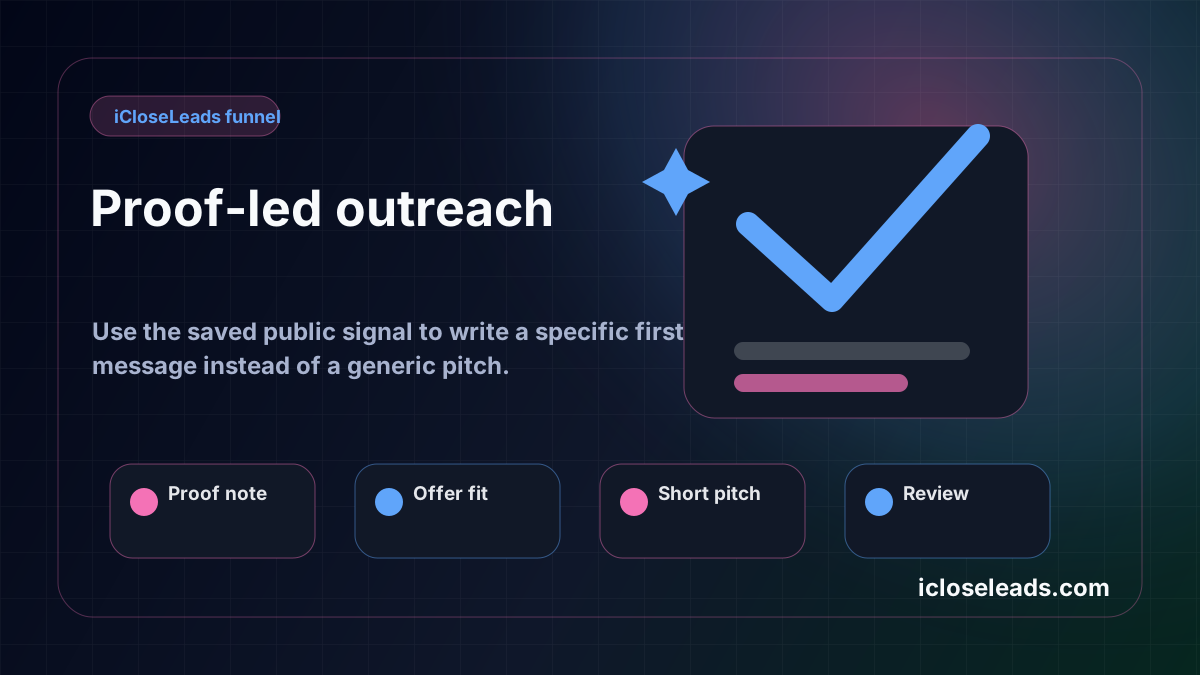
Here is a simple structure:
- Mention the public signal.
- Connect the signal to a business outcome.
- Offer a small next step.
- Let the recipient redirect you if they are not the right person.
Example structure:
"I noticed [specific public signal]. It looks like [customer or conversion impact]. I can send a short audit showing [one useful outcome]. If you are not the right person, who handles [website, marketing, bookings, growth, or customer acquisition]?"
This structure works because it respects the buyer's time. It also avoids fake personalization. You are not pretending to know the business better than the owner. You are showing a useful observation and asking for the right next step.
Examples
A US cleaning service
This is the kind of prospect where the research has to stay grounded. Confirm the business identity first, then look for the contact route and the reason the outreach would be useful. If the visible issue does not connect to a country-aware local lead system for the USA, UK, and Canada, do not force the pitch. Save the lead only when the signal is strong enough to explain in one sentence.
A UK trades business
This is the kind of prospect where the research has to stay grounded. Confirm the business identity first, then look for the contact route and the reason the outreach would be useful. If the visible issue does not connect to a country-aware local lead system for the USA, UK, and Canada, do not force the pitch. Save the lead only when the signal is strong enough to explain in one sentence.
A Canadian clinic or home service company
This is the kind of prospect where the research has to stay grounded. Confirm the business identity first, then look for the contact route and the reason the outreach would be useful. If the visible issue does not connect to a country-aware local lead system for the USA, UK, and Canada, do not force the pitch. Save the lead only when the signal is strong enough to explain in one sentence.
Common mistakes to avoid
- using US-only assumptions in the UK or Canada
- not filtering saved leads by country
- overstating registry data
- ignoring phone formatting
- forgetting local spelling and terminology
These mistakes are easy to make because lead generation tools can make data feel more certain than it is. A senior workflow keeps uncertainty visible. If the source says unknown, keep it unknown. If the result is a possible owner, call it possible. If the phone type cannot be confirmed, do not label it as mobile just because that would make the filter look better.
Trust is a product feature. When users see honest confidence labels, exact proof links, and preserved notes, they can make better decisions.
QA checklist before outreach
- Does the country filter return saved leads correctly?
- Is the location retained after navigation?
- Are phone labels country-safe?
- Are registry links relevant?
- Is the pitch language local?
Run this checklist before sending anything. It is faster than cleaning up a bad pitch later.
A 30-day plan
Week 1: Build the niche and signal map
Choose one audience, one offer, and one location or remote category. Write down the exact signals that would make a lead worth saving. Do not search broadly yet. Build a narrow definition of quality.
Week 2: Collect and qualify
Run searches, but stop after the first strong batch. Save leads only when they pass your fit, activity, visible need, contact route, and timing checks. Add notes immediately. If you cannot explain why the lead matters, do not save it.
Week 3: Improve the decision route
Use decision-maker research where it helps. Look for owner, manager, founder, director, marketing, operations, or contact clues. Save proof links. When no person is found, keep the lead as a business contact and ask for the right person in the message.
Week 4: Draft, review, and follow up
Use AI to prepare drafts from real lead context, then edit manually. Send or prepare in Gmail only after the message is accurate. Track replies, meetings, and objections. At the end of the week, review which signals produced conversations, not just which searches produced the most leads.
How iCloseLeads supports this workflow
iCloseLeads connects the practical parts of prospecting:
- Lead discovery across remote jobs, live jobs, and local businesses.
- Local filters for website status, phone availability, country, and lead type.
- Decision-maker research from local business profiles and websites.
- Saved leads with notes, dates, country filters, and contact context.
- AI proposal drafting that uses the lead data instead of starting from a blank prompt.
- Safer outreach preparation so the user reviews the message before sending.
The goal is not to replace judgment. The goal is to remove the busywork that makes good judgment hard to apply consistently.
Frequently asked questions
Is this legal?
Use public, business-facing information and respect platform terms, privacy rules, and opt-out requests. Do not collect private personal data or pretend uncertain data is verified. When in doubt, use the business route and ask for the right decision maker.
How many leads should I collect?
Start smaller than you think. Ten verified leads with notes and a clear pitch angle are usually more valuable than one hundred vague entries. Quality compounds because your follow-up gets better.
Should I use AI for the outreach?
Use AI for structure, speed, and first drafts. Do not use it to invent proof, exaggerate results, or remove your judgment. A good AI-assisted message still needs a real signal from the lead.
What if no owner name is found?
Do not force one. Use the public business contact route and ask who handles the relevant decision. A truthful business contact can be stronger than a guessed owner name.
What makes this page different from a generic lead generation article?
It focuses on the complete action path: search intent, qualification, proof, contact route, notes, proposal context, and follow-up. That is what the user needs to act.
What should I do next?
Open /dashboard/local-leads, run a focused search for your niche, save a small batch of qualified leads, and write one note per lead explaining the exact reason it is worth contacting.
Visual workflow
See the system before you build it
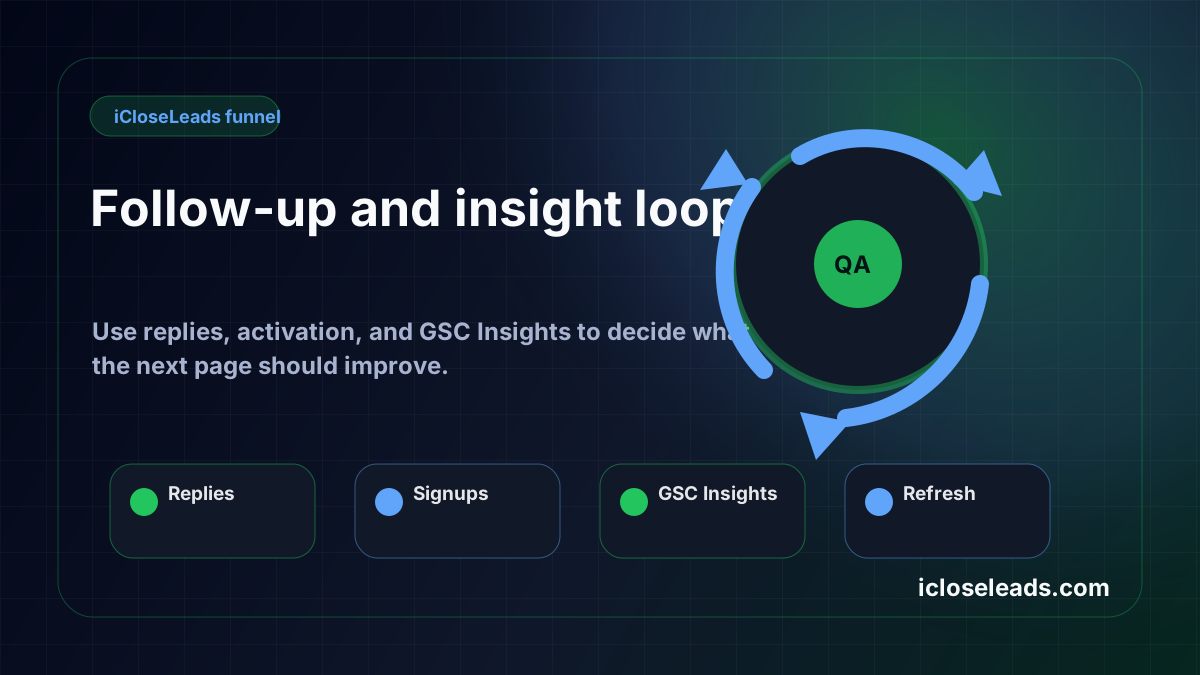
Turn the article into a lead workflow
Use the idea from this guide to find prospects, save only the best opportunities, prepare a specific pitch, and keep the follow-up attached to the original lead. Free users can start with 600 lead searches, then use the first saved lead as the test.
iCloseLeads Team
We study what works in freelance client acquisition so you don't have to. Subscribe for weekly insights.


