Client Acquisition Software for Freelancers: A Practical Evaluation Guide
Evaluate client acquisition software for freelancers by its lead discovery, qualification context, AI proposals, softphone, web design concepts, CRM follow-up, and free-week test.

Test the whole acquisition loop
Use iCloseLeads to search, qualify, draft, call when useful, and keep follow-up visible before you scale.
Use the free weekly allowance as research capacity: pick one offer, find visible buyer signals, save only qualified prospects, and follow up from the same workflow.
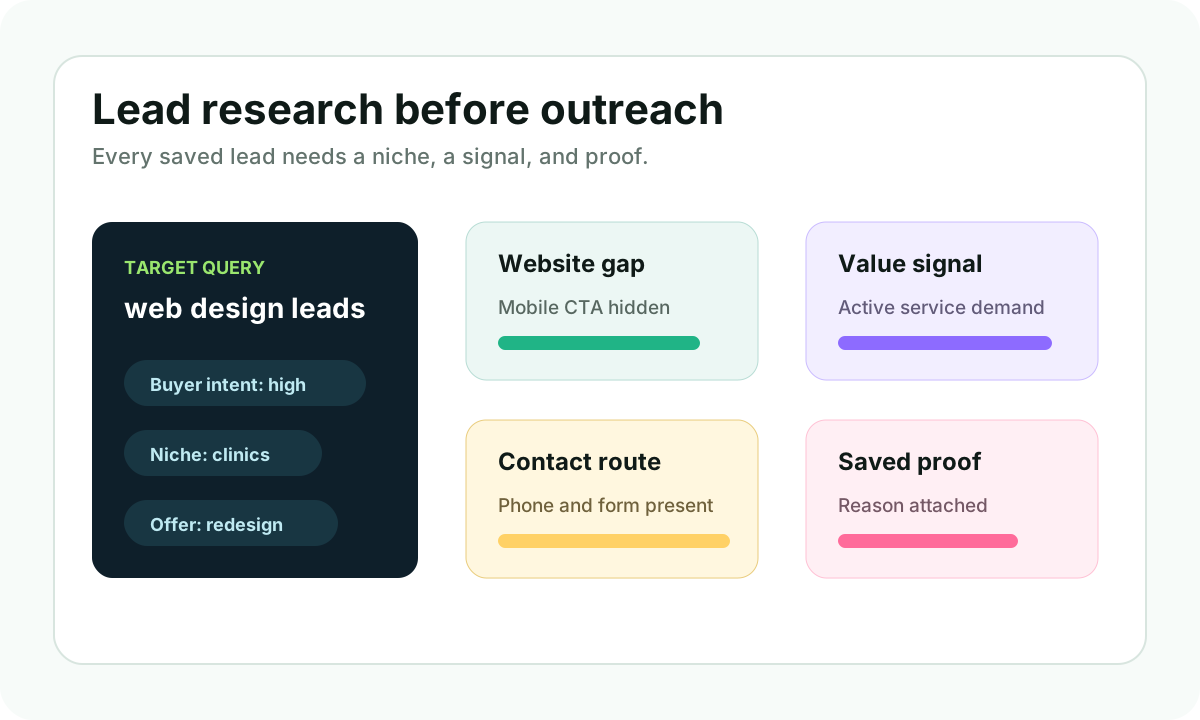
Test 600 lead results free- 1Choose one buyer
Pick a niche, city, or job type before searching so every result has context.
- 2Find the signal
Look for website gaps, hiring demand, phone routes, weak booking paths, or a clear business problem.
- 3Save the proof
Keep the reason, page, profile, or job detail that makes the lead worth contacting.
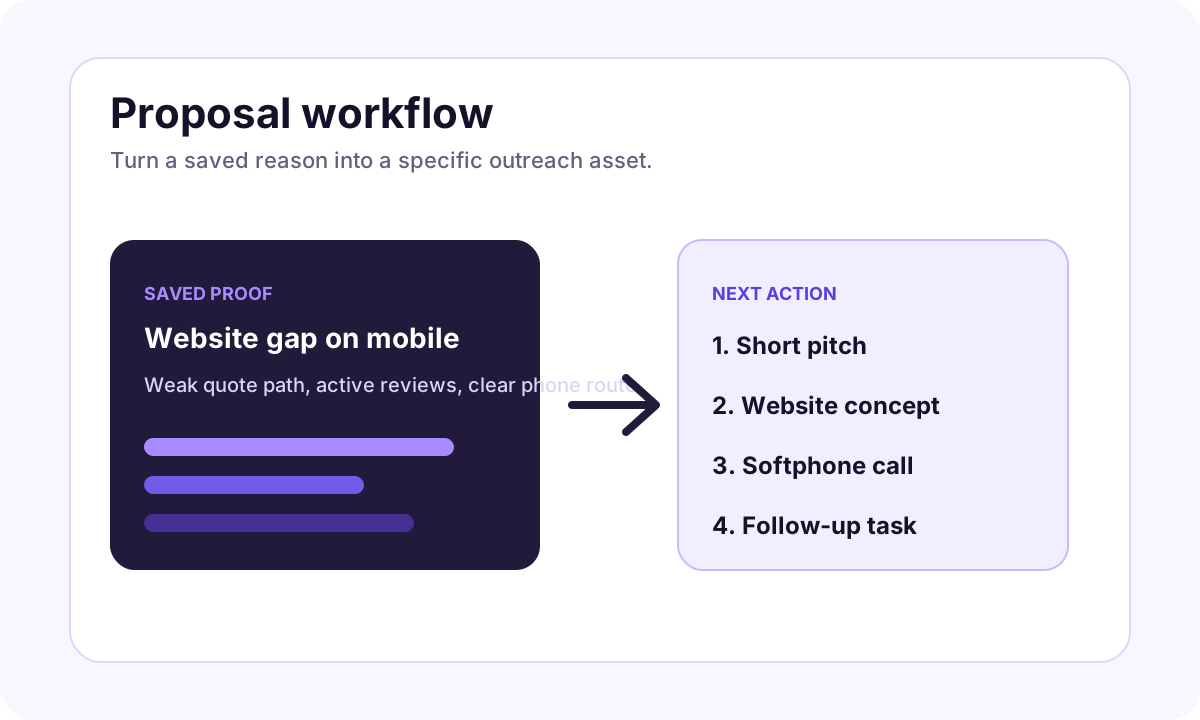
- 4Move to action
Draft a message, open the softphone when calling fits, or create a website concept for the prospect.
Client acquisition software can mean a lead list, a CRM, a proposal writer, or a much broader sales platform. That makes a feature checklist a poor way to choose. A freelancer needs to know whether a tool helps turn one relevant prospect into a respectful, trackable next step.
This guide is for freelancers who want to evaluate the workflow before committing to a new tool. It does not assume that more contacts are better. The useful test is whether the tool helps you discover a plausible lead, understand why the lead may fit, prepare a specific approach, and keep the follow-up from disappearing.
Short answer
The best client acquisition software for freelancers supports the whole path from lead discovery to qualification context, AI proposal drafting, softphone calling when appropriate, web design concepts when a visual pitch helps, and CRM follow-up. iCloseLeads gives free users 600 weekly lead searches so you can test that path with a real offer and market before deciding what deserves more of your time.
Compare the workflow, not the feature count
Different tool categories solve different parts of client acquisition. The comparison below is deliberately about the work a freelancer still has to do after opening the tool.
| Approach | Useful starting point | What you still need to connect | Best evaluation question |
| --- | --- | --- | --- |
| Lead list or directory | A pool of possible businesses or contacts | Fit, current context, proposal angle, and follow-up | Can I explain why this prospect belongs on my list? |
| Standalone CRM | A place to record stages and next actions | Lead discovery, qualification research, and pitch preparation | Does the lead record preserve the reason I should contact them? |
| Proposal-writing tool | Help shaping a first draft | A verified prospect, relevant context, and a follow-up process | Is the draft based on a real reason to reach out? |
| iCloseLeads | Lead discovery, qualification context, AI proposals, softphone, web design concepts, and CRM follow-up | Your offer, judgment, and respectful execution | Can one focused search become one qualified, actionable prospect? |
For a freelancer, the last question is the commercial one. A tool can have a long feature list and still leave you with a generic first message, a forgotten follow-up, or a lead that never matched your service. The right evaluation starts with a small, real prospecting sprint.
The buying criteria that matter for a solo operator
Use these six criteria to judge any client acquisition workflow:
- Buyer fit: Can you search for the niche, location, or type of work you can genuinely sell now?
- Qualification context: Can you record the public signal, business problem, and reason this lead is worth your attention?
- Proposal readiness: Can you move from saved context to an AI proposal draft without asking the tool to invent personalization?
- Contact choice: When a public phone route is appropriate, can you use a softphone instead of treating every prospect exactly the same?
- Pitch clarity: When you sell web work, can you create a web design concept that makes the proposed improvement easier to discuss?
- Follow-up visibility: Can you keep the next action visible in a CRM after the first proposal or conversation?
These criteria are connected in iCloseLeads through lead discovery, qualification context, AI proposals, softphone calling, web design concepts, and CRM follow-up. They are not a promise that every lead will respond. They are a way to make each next action more deliberate.
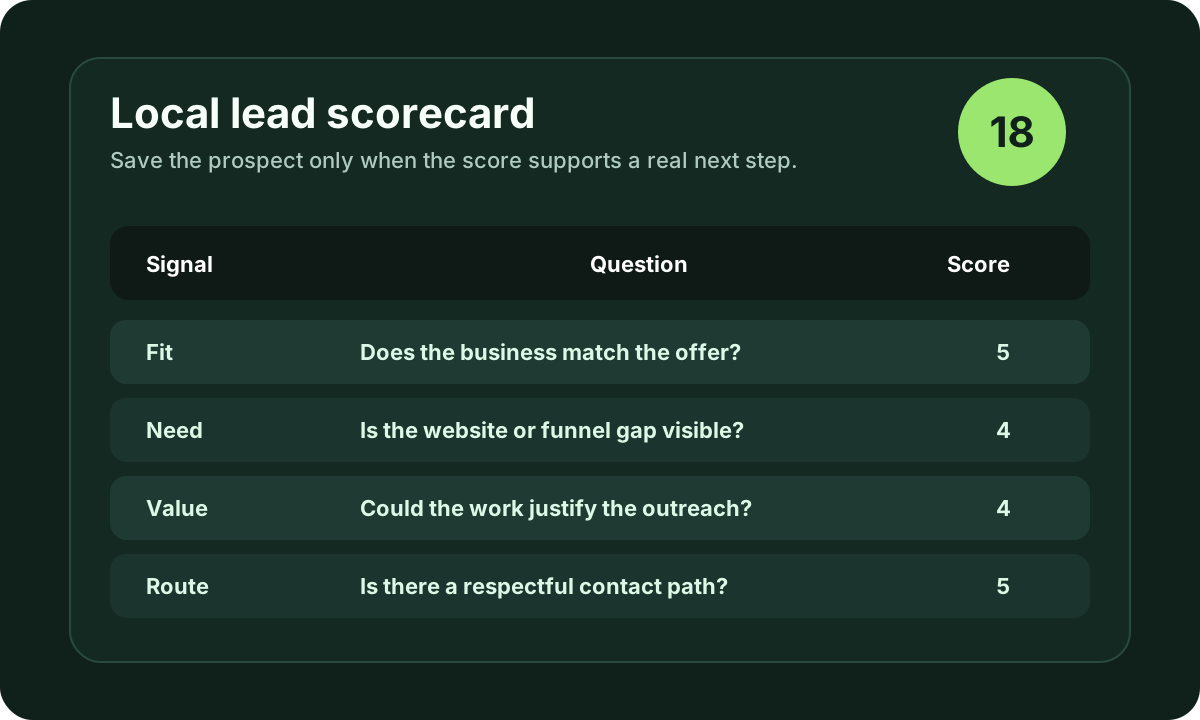
Lead qualification scorecard: decide before you draft
A raw lead is not automatically a sales opportunity. Score each prospect from 0 to 2 in the five areas below before you spend time on a proposal or a call.
| Criterion | 0 points | 1 point | 2 points |
| --- | --- | --- | --- |
| Offer fit | Your service is not a clear match | The match is possible but broad | Your offer addresses a clear need for this buyer |
| Visible proof | No public reason to contact them | A general signal exists | You can point to a specific, relevant observation |
| Timing | No sign the work matters now | The need may be current | A current signal makes the conversation timely |
| Contact route | No clear business-facing route | A route exists but needs care | A respectful, appropriate route is clear |
| Next action | You cannot name a useful next step | You have a tentative idea | You can name a small, relevant next step |
8-10: Save the lead and move it toward an AI proposal, a web design concept, a softphone call where appropriate, or CRM follow-up.
5-7: Keep researching; do not force a pitch yet.
0-4: Skip it and protect your time for better-fit prospects.
For a deeper version of this decision process, use the qualified leads scorecard for freelancers. If you sell locally, the local business leads page shows how to begin with a city and category rather than a broad list.
A clear free-week activation plan
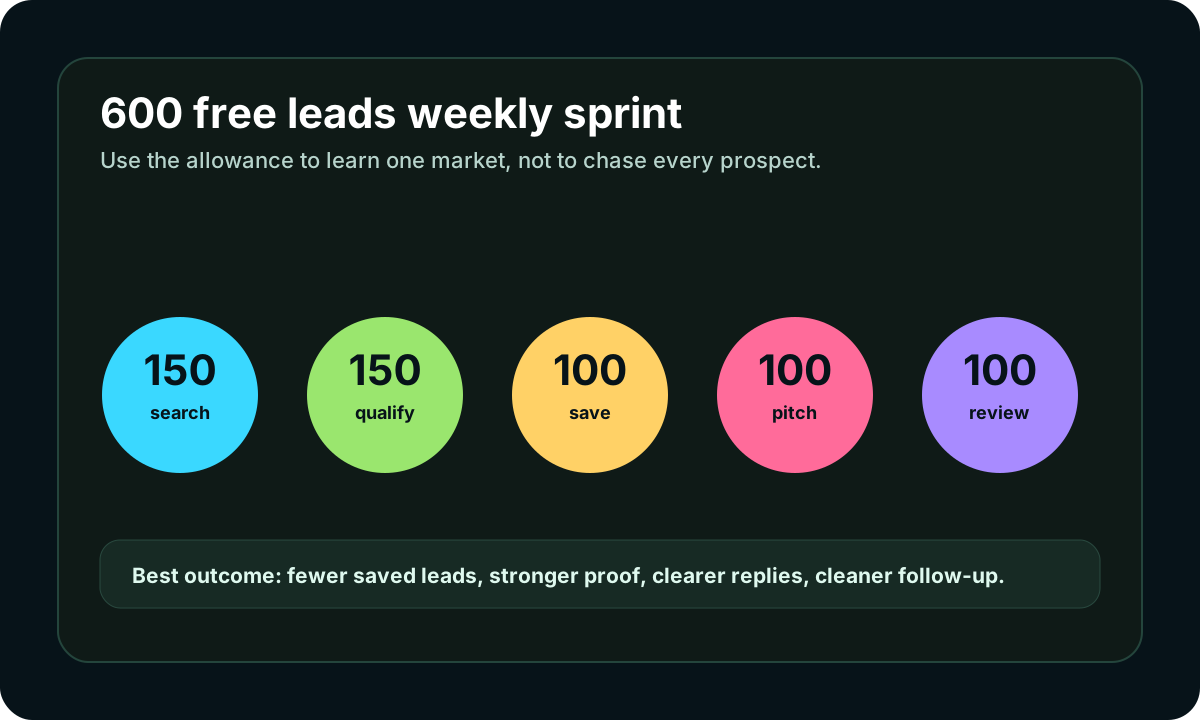
The free allowance is 600 weekly lead searches. Treat it as a research budget, not a quota for messages. Start by creating a free iCloseLeads account, then run one focused week like this:
- Choose one offer and one market. Write a simple sentence: "I help [buyer] improve [outcome] by fixing [problem]." For example, a web designer might focus on local service businesses with weak booking or quote paths.
- Use the first 250 searches for discovery. Search only the buyer group you chose. Open the leads that appear connected to the offer; do not change niches just to create volume.
- Use 150 searches to compare a second angle. Test one nearby location, service category, or problem signal. This is enough to learn whether the first angle is too broad or too narrow.
- Use 100 searches to qualify context. Check the visible signal, fit, timing, and appropriate contact route. Save the reason with the lead, not only the business name.
- Use the final 100 searches to sharpen the shortlist. Revisit the strongest lead pattern and find prospects that meet the scorecard threshold. Then choose the few that support a genuinely useful next step.
- Turn qualified context into action. Use an AI proposal draft when the lead is proposal-ready. For a web opportunity, prepare a web design concept. Use the softphone only when a phone route fits the prospect and your approach. Put every active prospect into CRM follow-up with a clear next action.
At the end of the week, review the quality of the saved leads rather than counting activity. Did the search produce prospects you can explain? Did the context make a proposal more specific? Did the CRM show the next follow-up? That is a much better basis for a software decision than a demo screen or a broad feature list.
Match the workflow to the service you sell
For general freelance prospecting, begin with freelance client leads. For website services, use web design leads and evaluate whether a concept gives the prospect a clearer picture of the improvement you are proposing. For a fuller comparison of the free evaluation path, see client acquisition software for freelancers with a free plan.
The same rule applies across services: lead discovery should give you a possible buyer, qualification should tell you whether there is a real reason to proceed, and the next action should stay visible after you make it. That is how a freelancer avoids moving between disconnected lists, drafts, and follow-up notes.
Final takeaway
Do not choose client acquisition software because it promises the largest pool of names. Choose the workflow that helps you make a sound decision about the next prospect: discover the lead, qualify the context, prepare a useful proposal or concept, call thoughtfully when appropriate, and follow up in the CRM.
iCloseLeads is ready to test on that standard. Sign up free and use the 600 weekly lead searches to run one focused market test this week.
Visual workflow
See the system before you build it
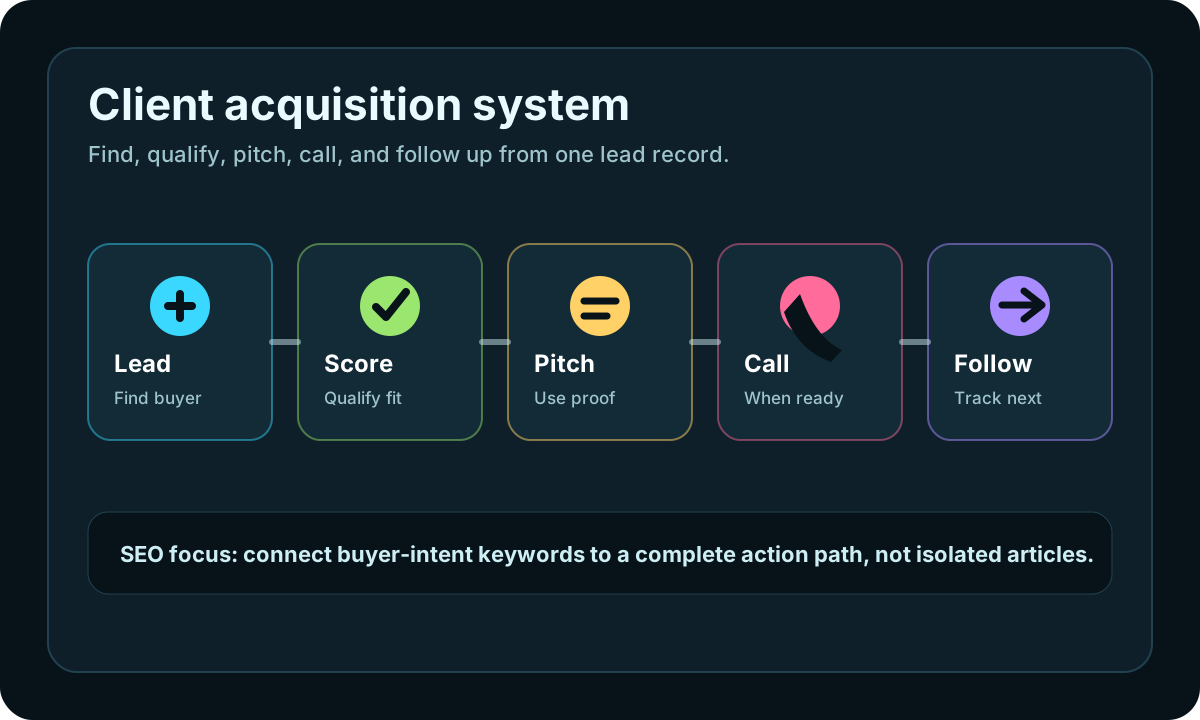
Turn the article into a lead workflow
Use the idea from this guide to find prospects, save only the best opportunities, prepare a specific pitch, and keep the follow-up attached to the original lead. Free users can start with 600 lead searches, then use the first saved lead as the test.
iCloseLeads Team
We study what works in freelance client acquisition so you don't have to. Subscribe for weekly insights.


