Client Acquisition Agency vs Software: What Should a Freelancer Use?
Compare a client acquisition agency with client acquisition software by cost, control, speed, lead quality, outreach ownership, and the stage of your freelance business.

Test client acquisition with 600 lead results in 3 days
Choose one niche, save the prospects with visible buyer signals, and move the strongest matches into outreach, proposals, softphone calls, or CRM follow-up.
The free allowance is research capacity, not permission to spam. Qualify every prospect and use business-facing contact routes responsibly.
Start a free lead sprint- 1Pick one buyer
Choose one niche, location, and offer before starting the search.
- 2Save the signal
Keep the public website, profile, hiring, or conversion evidence that makes the lead relevant.
- 3Choose the action
Draft a short message, build a proposal, or call only when the route and context fit.
- 4Review the result
Track replies and qualified conversations before expanding the campaign.
A client acquisition agency and client acquisition software solve the same business problem in very different ways. One gives a third party responsibility for parts of research and outreach. The other gives you a system for doing the work yourself.
The right choice depends less on which option sounds more impressive and more on whether your offer, audience, and sales message are already proven.
Short answer
Freelancers should usually start with client acquisition software when they still need to test a niche, refine an offer, and learn which buyer signals create replies. An agency can make sense later when the offer already converts, the economics support managed outreach, and the freelancer has a clear process for reviewing lead quality and compliance.
DataForSEO found U.S. search demand for client acquisition agency with a strong commercial CPC signal, while iCloseLeads already ranks first in the sampled results for client acquisition software for freelancers. That creates a useful comparison intent: searchers need help choosing the operating model, not another generic list of tools.
Client acquisition agency vs software at a glance
- Best fit: software is useful for testing and running your own pipeline; an agency is useful for outsourcing a proven process.
- Control: software keeps prospect approval and messaging with you; an agency shares those decisions with the provider.
- Learning speed: software shows you every lead and reply; agency learning depends on the quality of its reporting.
- Upfront cost: software is usually lower; a managed agency engagement is usually higher.
- Time required: software requires your research, review, and contact time; an agency handles the tasks defined in its scope.
- Main risk: software goes unused without a weekly routine; an agency can consume budget before offer-market fit is clear.
- Quality control: software lets you approve every prospect; an agency requires written lead-acceptance rules.
When software is the better first step
Software is usually the stronger choice when you are still answering basic sales questions:
- Which niche understands my offer fastest?
- What public signal makes a business worth contacting?
- Which message creates a reply without sounding generic?
- Should I email, call, send an audit, or prepare a website concept?
- How many qualified prospects can I handle each week?
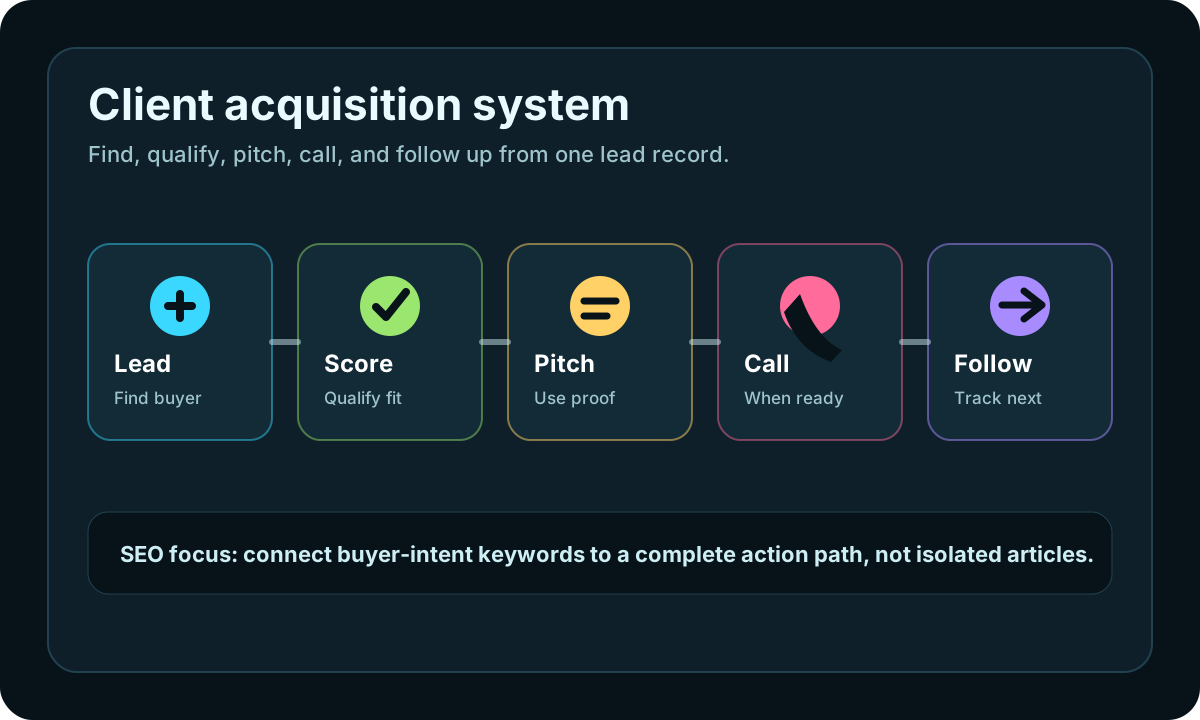
iCloseLeads supports that learning loop with lead discovery, AI-assisted proposals, US, Canada, and UK softphone calling, prompt-based website concepts, and CRM follow-up.
The product does not remove judgment. It keeps the evidence and the next action connected so you can make better decisions with less tab switching.
When an agency can make sense
An agency may be useful when all of these are true:
- Your service has a clear buyer and outcome.
- You know the rough value of a qualified meeting or closed client.
- Your case studies and proof are strong enough to support outreach.
- You can describe an acceptable lead in writing.
- You have capacity to take the meetings the agency creates.
- The agency explains data sources, contact practices, reporting, and opt-out handling.
Without those conditions, outsourcing can hide the most useful feedback. A freelancer may receive meetings but never learn why a niche responds, which messages fail, or whether the leads actually match the offer.
The hidden cost: weak lead definitions
Both software users and agencies fail when a lead is defined as a company name plus contact details.
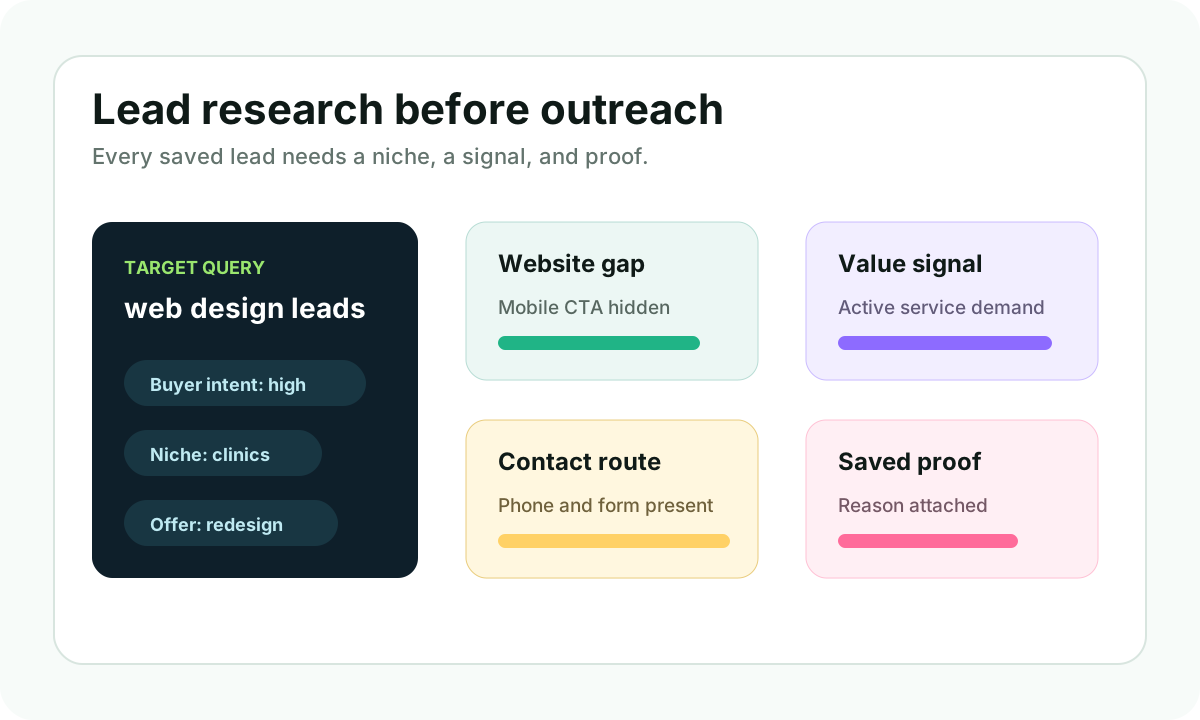
A useful lead should include:
- offer fit
- a visible business need or timing signal
- a public proof source
- a respectful business contact route
- one clear next action
For a web designer, the signal might be an active local profile with no website, a weak mobile quote path, or a dated service page. For an SEO consultant, it might be an important service with no dedicated page, poor internal linking, or a competitor answering the search intent more clearly.
The signal is what turns a list into a reason to talk.
A low-risk way to test the software route
Use one week as a controlled experiment.
Day 1: define the buyer
Write one sentence: "I help [buyer] improve [business result] by fixing [visible problem]."
Days 2 and 3: find and score prospects
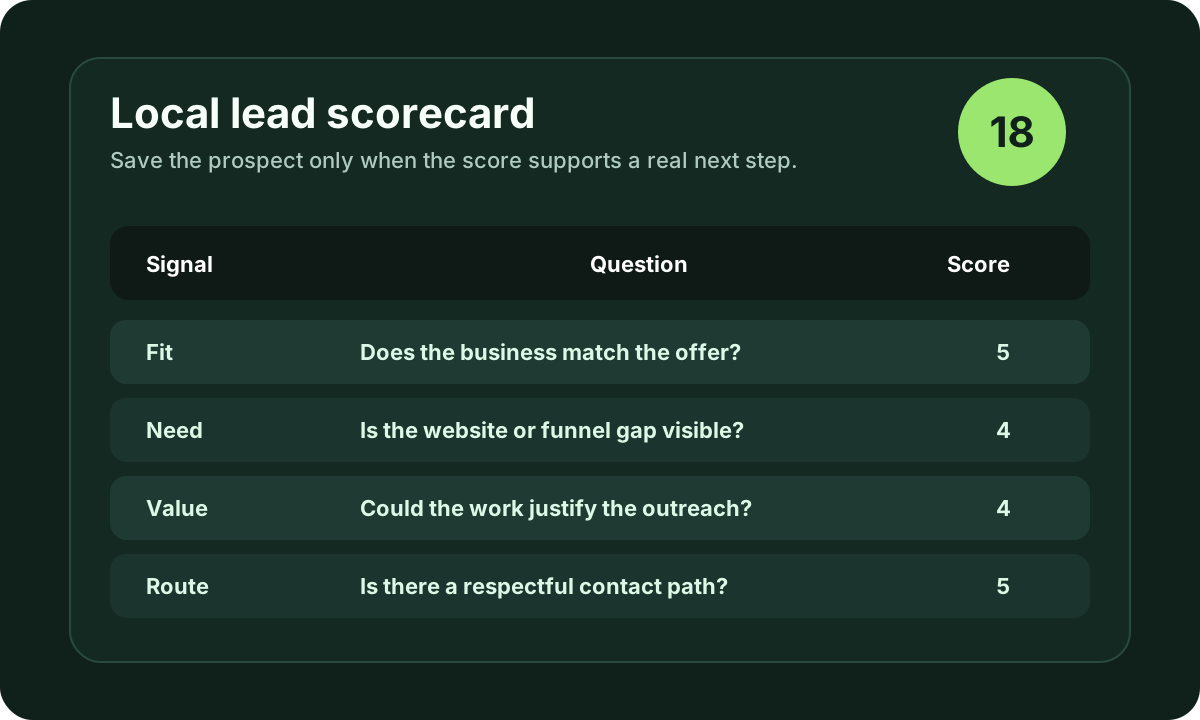
Use the free weekly allowance to search one category and location. Save only the businesses where the fit, proof, timing, and contact route are clear.
Day 4: prepare the next action
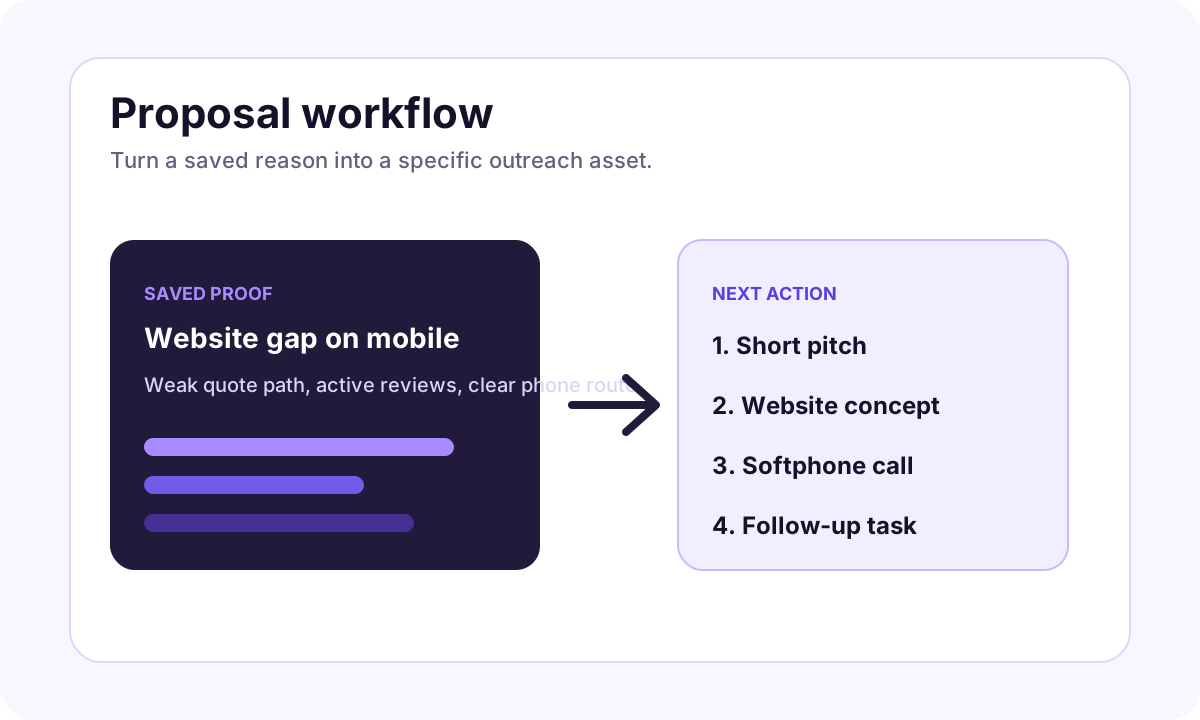
For website work, create a small audit or prompt-based concept. For a public phone route, prepare a short softphone opener. For email, reference the visible signal and offer a small next step.
Days 5 to 7: follow up and review
Track replies, objections, calls, and qualified conversations. Do not judge the experiment by how many records you found. Judge it by whether the process taught you which prospects deserve attention.
Questions to ask a client acquisition agency
Before hiring a provider, ask:
- Where does lead data come from?
- How do you verify that a company matches my offer?
- Who approves the messaging?
- How are opt-outs and local outreach rules handled?
- What counts as a qualified meeting?
- Can I see the source evidence behind each lead?
- Who owns the account, data, and reply history?
- What happens if the niche or offer needs to change?
These questions protect you from a campaign that reports activity without creating business value.
Responsible outreach still matters
Neither software nor an agency makes indiscriminate outreach acceptable. Use business-facing routes, keep messages relevant, identify yourself honestly, respect opt-outs, and review the rules that apply to the markets you contact.
For U.S. commercial email, review the FTC CAN-SPAM compliance guide. For the content itself, follow Google's people-first content guidance rather than producing pages only to capture variations of the same keyword.
Final recommendation
Start with software when you need to learn and control the process. Consider an agency when the process is already proven and the time saved is worth more than the management cost.
For most freelancers, the best first move is a small, evidence-led weekly sprint: choose one buyer, find qualified signals, contact a manageable number of prospects, and improve the message from real replies.
Visual workflow
See the system before you build it
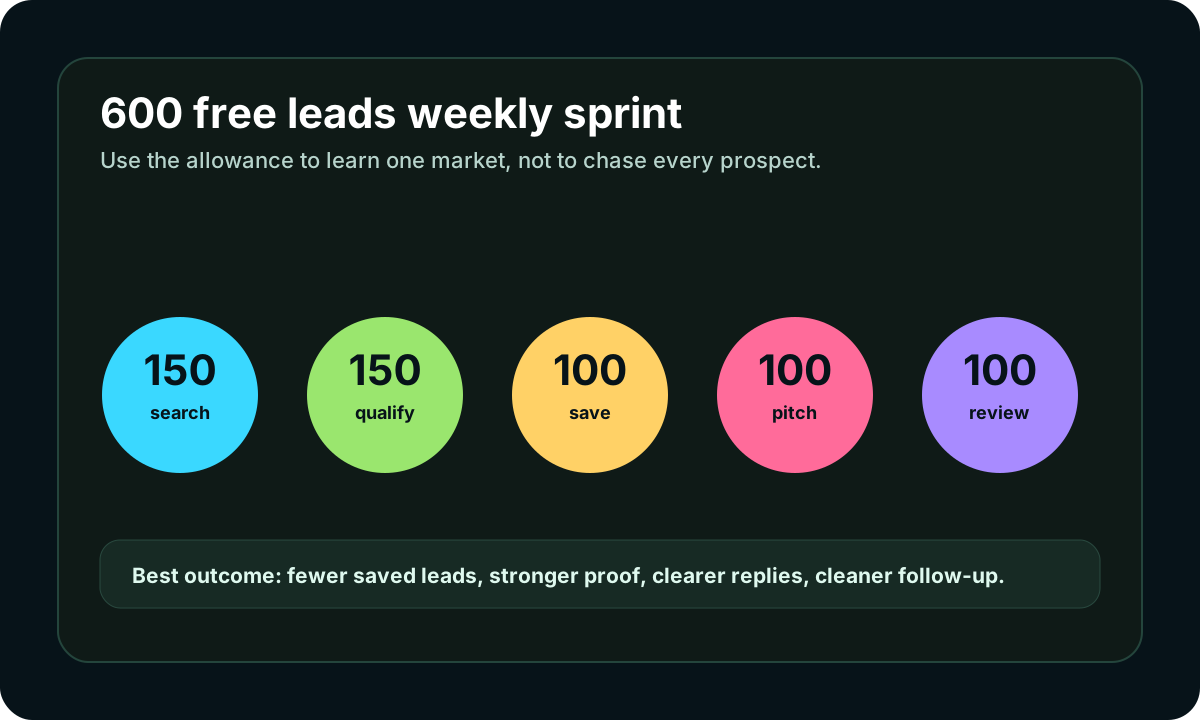
Turn the article into a lead workflow
Use the idea from this guide to find prospects, save only the best opportunities, prepare a specific pitch, and keep the follow-up attached to the original lead. Free users can start with 600 lead searches, then use the first saved lead as the test.
iCloseLeads Team
We study what works in freelance client acquisition so you don't have to. Subscribe for weekly insights.


