Agency Google Maps Prospecting: A Better Local Lead List Recovery Plan
A recovery plan for agencies whose Google Maps prospecting pages or lead lists are losing impressions: focus on proof, qualification, internal links, and signup intent.

Build agency lead lists around proof, not scraping
Turn local profiles into qualified agency prospects with saved evidence, pitch angles, and follow-up.
This article is built for readers who need a practical next step: choose one market, search for visible signals, save qualified leads, and draft a proof-led message.
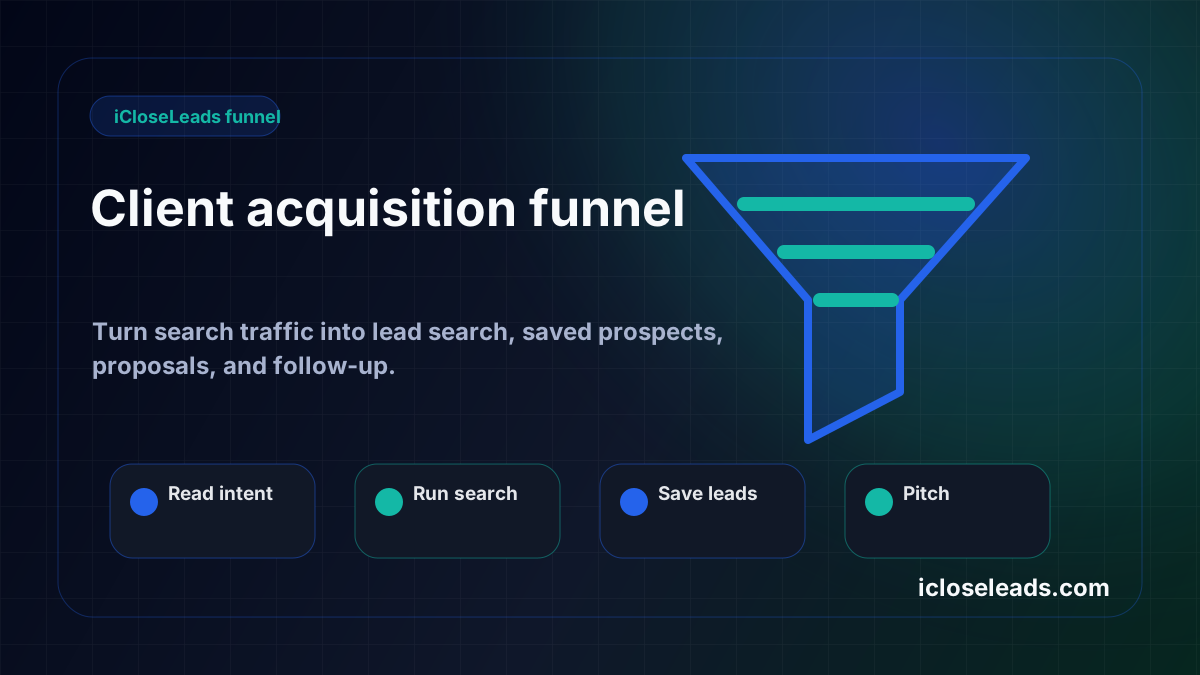
Run a free lead search- 1Choose the buyer
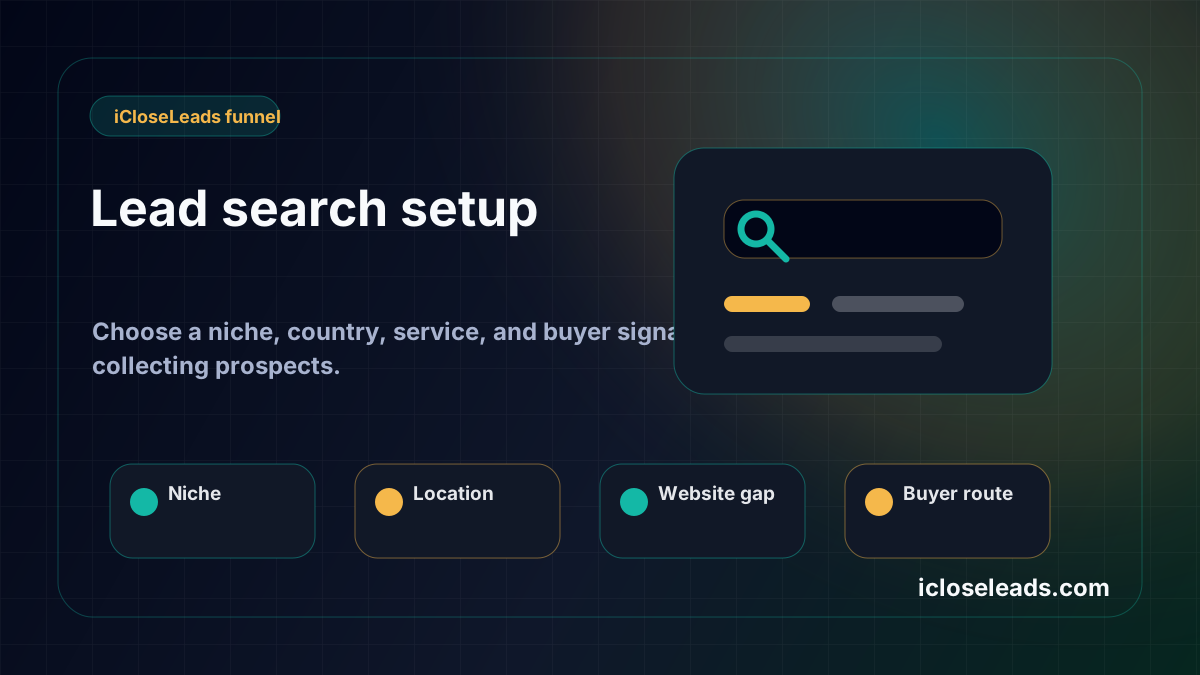
Pick one niche, location, service, or marketplace angle before searching.
- 2Search for proof
Look for website gaps, hiring signals, public profiles, weak conversion paths, or clear demand.
- 3Save only qualified leads
Keep the lead only when the fit, proof, contact route, and first offer are clear.
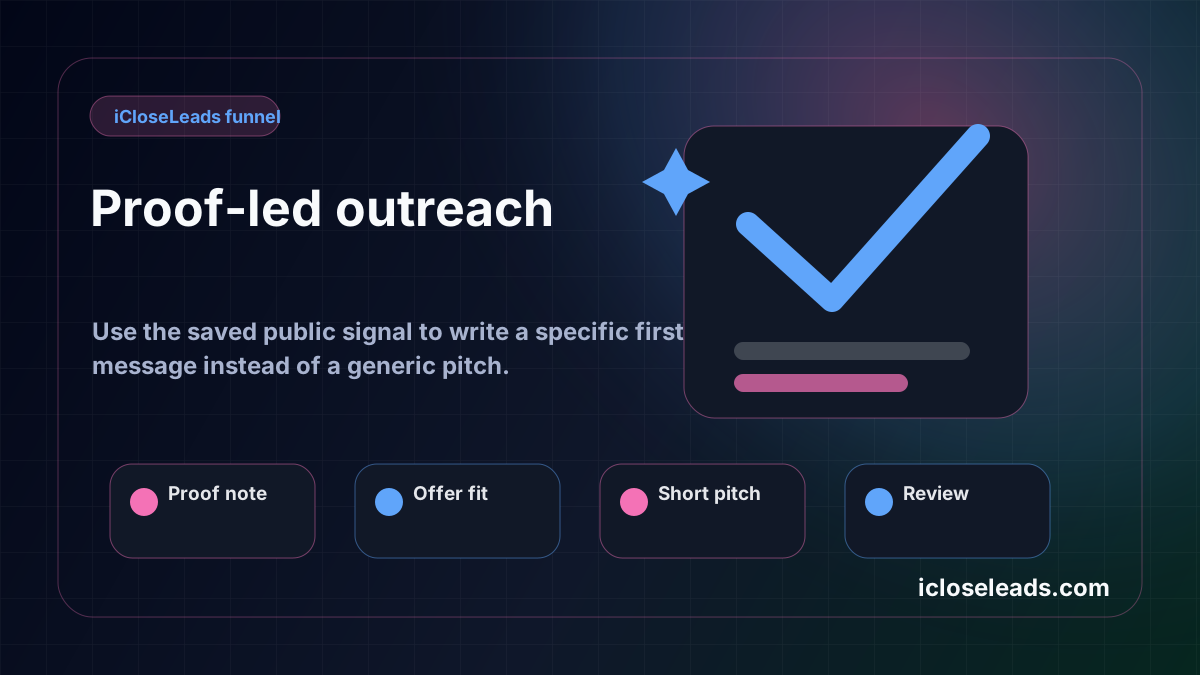
- 4Pitch and follow up
Draft from saved context, review the message, and schedule the next action.
Agency Google Maps prospecting pages often start strong and then fade.
The reason is usually not that local lead intent disappeared. The reason is that the page became too generic. It talks about scraping, exporting, or finding many businesses, but it does not help the reader decide which businesses are worth pitching.
If an agency wants better local lead lists, the page needs to go deeper than "find businesses on maps." It should explain buyer signals, qualification, website-gap proof, decision-maker routes, outreach angles, and follow-up.
Quick answer
The best agency Google Maps prospecting workflow is not a raw map scrape. It is a qualified local lead system: choose a niche, identify visible business gaps, verify the contact route, save source proof, write a pitch angle, and move only the strongest leads into follow-up.
Why agency pages lose momentum
Fresh SERPs around Google Maps lead generation and local prospecting are full of tool comparisons, scraper pages, Reddit discussions, and how-to guides. Many pages compete on volume. Few explain how an agency turns map data into a lead that can actually become a client.
That creates a content gap.
Agencies do not only need names and phone numbers. They need a reason to contact each business. Without that reason, outreach becomes generic and the list loses value.
The recovery plan
1. Reframe the page around quality
Open with the useful answer:
"Google Maps prospecting works when agencies use public local signals to find businesses with visible gaps, not when they scrape every listing in a city."
That single position separates the page from tool lists.
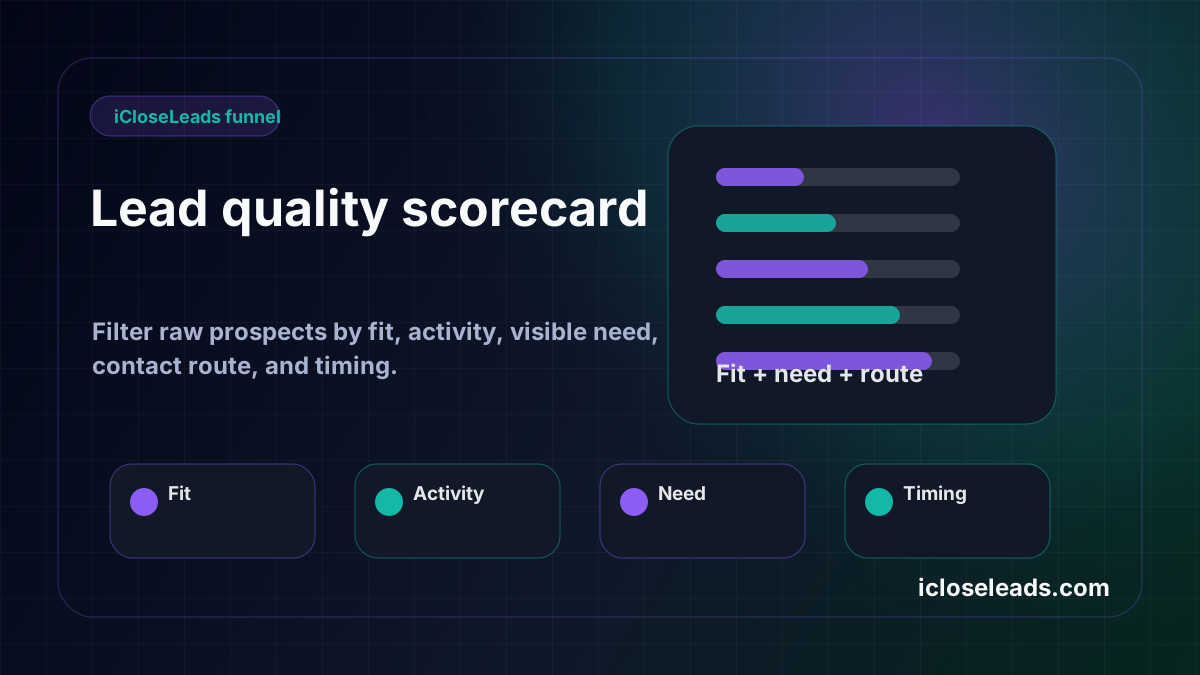
2. Add a lead quality score
Score each local lead by:
- Fit with the agency offer.
- Visible website or profile gap.
- Review or activity signal.
- Contact route quality.
- Pitch angle clarity.
- Follow-up potential.
This gives the page a practical structure and gives the product a reason to exist.
3. Add examples by service
An agency selling websites needs a different lead than an agency selling SEO, ads, automations, or branding.
Examples:
- Web design: active local profile, outdated website, weak mobile quote path.
- SEO: good service category, thin service pages, weak local content, missing FAQ coverage.
- Ads: paid-looking offer but weak landing page.
- Automation: phone-only intake, no booking flow, manual follow-up problem.
- Branding: inconsistent profile, old images, weak trust assets.
4. Link to the freelancer and resource pages
Internal links help both users and search engines understand page relationships. Google's Search Central documentation explains that links help Google discover pages and understand what a linked page is about.
Use descriptive anchors to connect the agency page to:
- Google Maps listing pitch for freelancers
- Google Maps prospecting tool for freelancers
- local business lead workflow
- businesses without websites on Google Maps
5. Push the reader into one search
The page should not end with "learn more." It should end with one action:
"Choose one city, one niche, and one service offer. Run a local lead search and save 10 businesses where the pitch reason is visible."
What a better agency lead list includes
A useful agency lead list should include:
- Business name.
- Category and city.
- Profile or source URL.
- Website status.
- Public phone or contact route.
- Review/activity signal.
- Gap summary.
- First pitch angle.
- Follow-up owner.
- Next action date.
If a list does not include the gap summary and pitch angle, it is not ready for outreach.
Example agency workflow
Say the agency sells landing pages to local clinics.
The search is not "clinics USA." It is "dermatology clinics in Austin" or "med spas in Dallas." The agency checks each profile and site for service pages, booking clarity, mobile CTA, review strength, and competitor page quality.
The best lead note might say:
"Active med spa profile, 80+ reviews, site has service menu but no dedicated injectable landing page, mobile booking button is buried, competitors answer pricing and safety questions better."
That note can become a specific pitch.
How iCloseLeads supports it
iCloseLeads should be used as the local lead workflow, not just the data source. Start with Lead Discovery, route local prospects into CRM Pipeline, and use AI Proposals only after the lead proof is saved.
The agency advantage is not more volume. It is faster qualification and more specific outreach.
Final takeaway
If a Google Maps prospecting page is losing attention, make it more useful. Teach the agency how to decide which local businesses are worth pitching, what proof to save, and how to move the lead into follow-up. That is the content and product angle that can recover impressions and signups.
Visual workflow
See the system before you build it
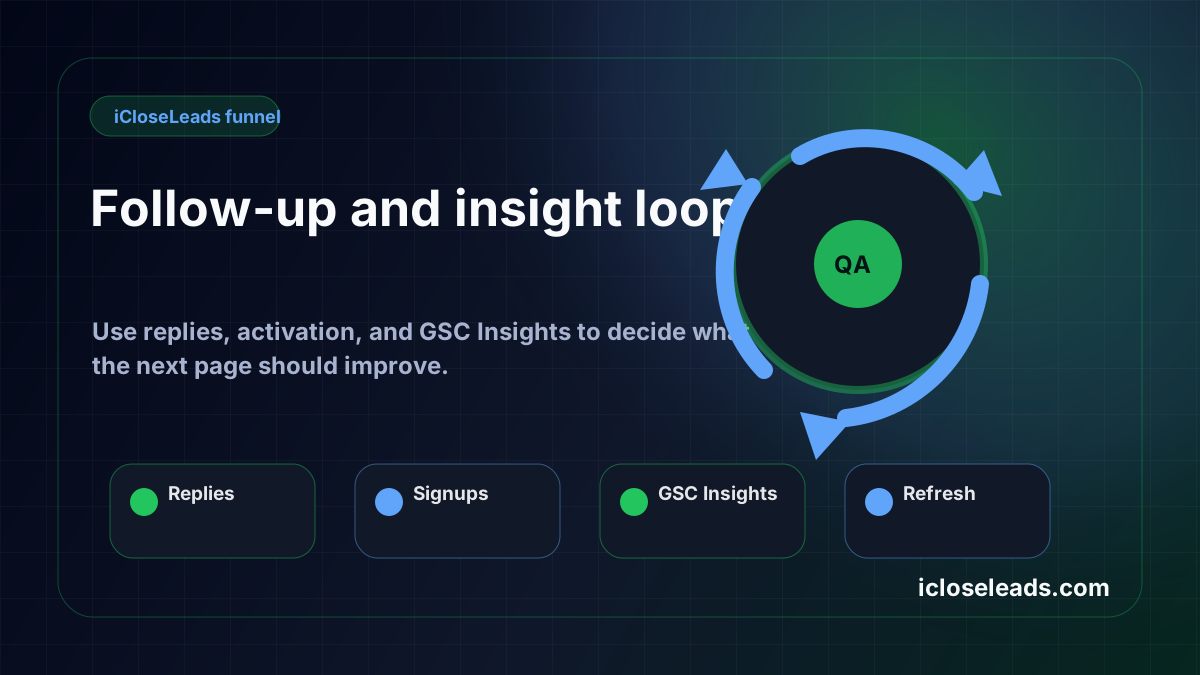
Turn the article into a lead workflow
Use the idea from this guide to find prospects, save only the best opportunities, prepare a specific pitch, and keep the follow-up attached to the original lead. Free users can start with 600 lead searches, then use the first saved lead as the test.
iCloseLeads Team
We study what works in freelance client acquisition so you don't have to. Subscribe for weekly insights.


